




15 In-Store Brand Activation Ideas to Get Shoppers to Stop, Engage & Buy
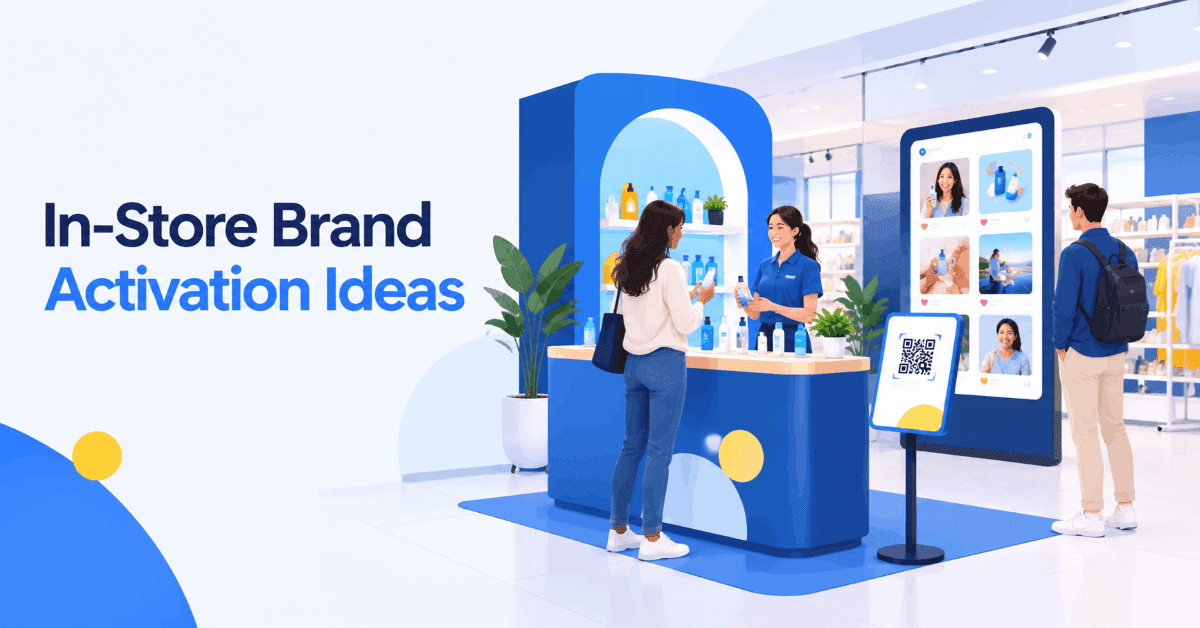
Getting shoppers into your store is only the first step. The bigger challenge is getting them to stop, explore, try your products, and eventually buy.
That’s where in-store brand activation ideas can make a difference. From product demonstrations and sampling to games, QR experiences, social content, and live events, brand activations give shoppers a reason to do more than simply browse the shelves.
Here are 15 in-store brand activation ideas to attract attention, encourage participation, and turn store visits into better shopping experiences and more sales.
What is an In-Store Brand Activation?
An in-store brand activation is a marketing experience designed to actively engage shoppers inside a retail environment and encourage a specific action, such as trying a product, making a purchase, joining a loyalty program, creating content, or entering a contest.
Unlike traditional in-store advertising, which primarily communicates a message or promotion, a brand activation gives shoppers a reason to interact with the brand.
An in-store activation can include:
- Product demonstrations
- Product sampling
- Interactive displays
- Games and challenges
- Brand ambassadors
- Pop-up experiences
- Social media experiences
- Exclusive events
- Personalized experiences
- Digital experiences
- Giveaways and rewards
The goal is to turn attention into participation and participation into actions such as product trial, purchase, content creation, or loyalty.
Why In-Store Brand Activations Matter
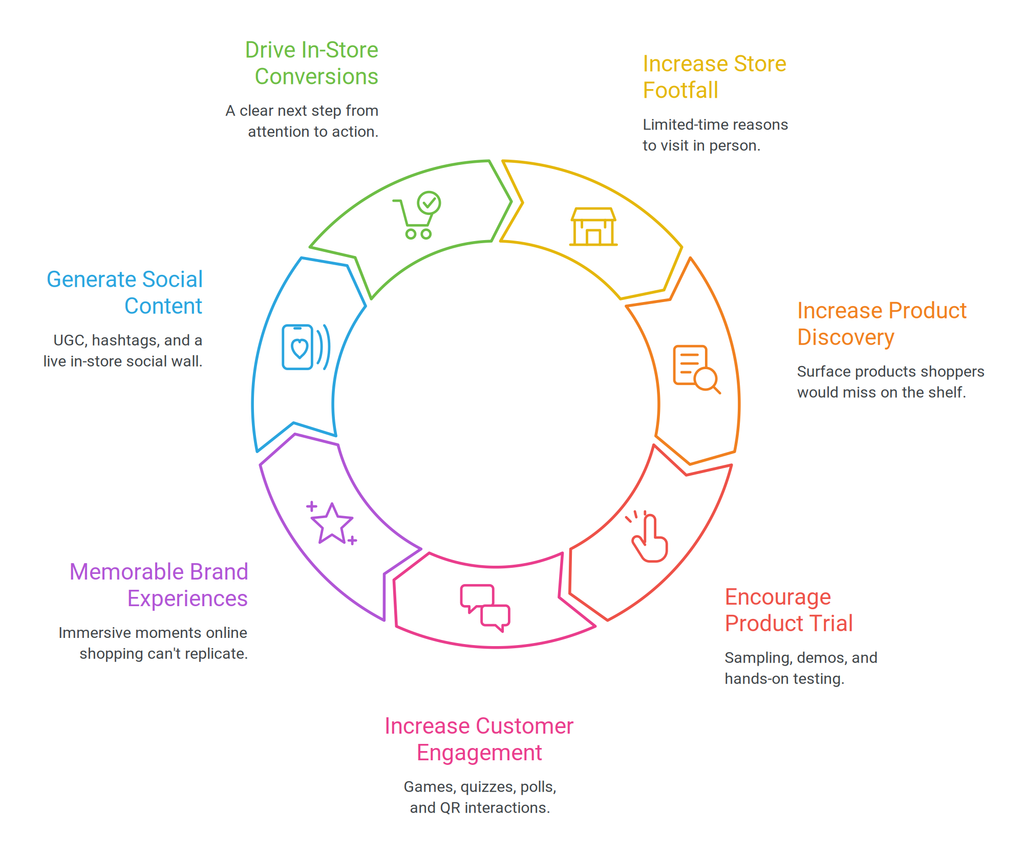
Getting shoppers into your store is only the beginning. A strong activation can influence what happens next: whether they discover something new, try a product, interact with your brand, share the experience, and ultimately take action.
That’s what makes an activation different from simply adding another promotional display to the store.
1. Increase Store Footfall
A limited-time experience can give people a reason to visit your store when they otherwise might not. An exclusive product launch, creator appearance, seasonal experience, or in-store event can create urgency and give shoppers something to look forward to. The goal isn’t just to announce that something is happening. It’s to make the experience feel worth showing up for.
2. Increase Product Discovery
It’s easy for a product to get lost on a crowded shelf. An in-store activation can help bring it to the shopper’s attention and give them a reason to check it out. A product demo, interactive display, quiz, or personalized recommendation can show shoppers something they may not notice from the shelf alone. This can be especially useful for new products or those that need a little more explanation before someone decides to try them.
3. Encourage Product Trial
Letting shoppers try it for themselves is the best way of giving someone an idea of what they should expect. Sampling, testing stations, demos, and hands-on experiences can show them how a product tastes, feels, looks, or works before they make a purchase. This can be especially effective for:
- Beauty
- Food and beverage
- Electronics
- Fashion
- Consumer goods
- Fitness products
Instead of asking customers to imagine the benefit, let them experience it firsthand.
4. Increase Customer Engagement
An activation changes the shopper’s role. Instead of simply viewing a promotion, they might play a game, answer a quiz, scan a QR code, test a product, vote in a poll, or create content. That interaction gives brands more opportunities to hold attention and gives shoppers a more active role in the experience.
5. Create Memorable Brand Experiences.
Physical retail has one advantage that online shopping can’t easily replicate: the ability to create an experience around the product. A personalized interaction, immersive display, live event, or shareable moment can make the store visit more memorable. And when shoppers remember the experience, they’re more likely to remember the brand behind it.
6. Generate Social Media Content
The experience doesn’t have to end when the shopper leaves the store. A branded photo experience, creator event, UGC campaign, or social media wall can encourage customers to create and share content while they’re there. That creates a simple online and offline loop:
Experience → Create → Share → Display → Inspire more participation
For example, customers could share a post using a campaign hashtag and see selected content appear on an in-store hashtag wall. Now the content created by one shopper can encourage the next shopper to participate.
7. Drive In-Store Conversions
Engagement is valuable, but an activation should also give shoppers a clear next step. Depending on the campaign, that could be:
- Buy the product
- Try another product
- Claim an offer
- Sign up for a loyalty program
- Book a consultation
- Enter a contest
- Scan a product guide
- Share content
The strongest activations don’t treat engagement and conversion as separate goals. They create a natural path from attention to participation to action.
Create interactive retail experiences that give shoppers more reasons to engage with your brand.
 No Credit Card Required
15 In-Store Brand Activation Ideas to Try
Not every activation needs to be complicated or expensive. The best in-store brand activation ideas are usually the ones that make it easy for shoppers to understand what to do and give them a clear reason to participate.
Here are 15 ideas to consider.
1. Interactive Product Demonstrations
Show customers how the product works instead of simply telling them about it.
You can use:
- Live demonstrations
- Product specialists
- Before-and-after demonstrations
- Hands-on testing
- Quick product tutorials
For example, a beauty brand could demonstrate a product on the spot, while an electronics retailer could let shoppers test a device before buying it.
This works particularly well for beauty, electronics, kitchen products, fitness, consumer goods, and technology.
The key is keeping the demonstration short enough to fit naturally into the shopping experience while still showing a meaningful product benefit.
2. Product Sampling Experience
Let customers taste, test, touch, smell, or otherwise experience the product.
Depending on the category, this could mean:
- Food sampling
- Beauty testing
- Fragrance testing
- Beverage tasting
- Product trials
Sampling reduces the uncertainty of buying something for the first time.
Tip: Keep the experience short and easy to participate in. Customers should not need to commit several minutes just to try something.
3. Gamified In-Store Challenges
Turn shopping into a game.
Some simple ideas include:
- Spin-the-wheel
- Product quizzes
- Scratch cards
- Treasure hunts
- Timed challenges
- Product challenges
- Mystery prizes
The reward doesn’t necessarily have to be expensive. A discount, free sample, exclusive merchandise, or early access can be enough to encourage participation.
The key is to make the game easy to understand and quick to complete.
You can also connect the challenge directly to the product. For example, shoppers could answer three product-related questions and receive a discount after completing the quiz.
4. Social Media Wall for In-Store Engagement
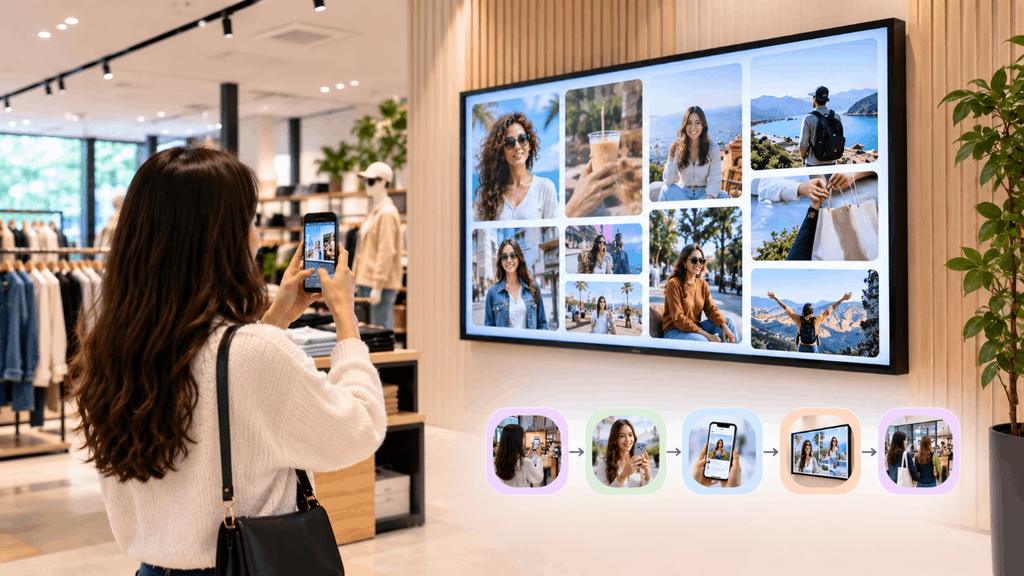
A social media wall can turn customer content into part of the physical shopping experience.
Brands can display:
- Instagram posts
- TikTok content
- Branded hashtag posts
- Customer photos
- User-generated content
- Live campaign content
on in-store screens, TVs, LED walls, or social digital signage.
For example, shoppers could create a photo or video, share it using the campaign hashtag, and then see selected content appear on the screen inside the store.
The experience becomes:
Participate → Create → Share → Get featured → Encourage others to participate
This creates an online-and-offline loop instead of keeping the activation confined to the store.
It also gives shoppers a visible reason to contribute. Their content isn’t simply disappearing into a social feed. It becomes part of the physical brand experience.
5. QR Code-to-Participate Activation
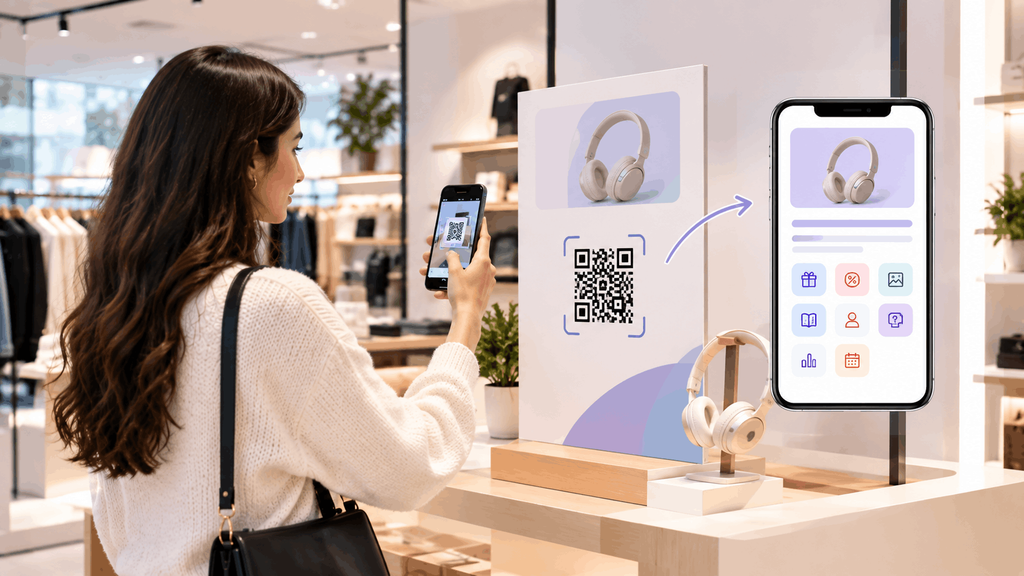
QR uploads can connect a physical activation to a digital experience without adding friction.
Use a QR code to let shoppers:
- Enter a contest
- Unlock a discount
- Upload a photo
- Access a product guide
- Join a loyalty program
- Participate in a quiz
- Vote in a poll
- Register for an event
For example, a customer could scan a QR code next to a new product to watch a short demonstration, enter a giveaway, or receive a personalized recommendation.
This works especially well when the physical activation needs a digital layer without requiring customers to download an app.
6. Limited-Time Pop-Up Experience
Create a temporary branded experience inside the store.
You could build a pop-up around:
- A new product launch
- A seasonal collection
- A holiday campaign
- A limited-edition product
- A brand anniversary
The temporary nature is part of the appeal.
A limited-time activation gives customers a reason to visit now rather than assuming they can come back whenever they want.
7. Meet the Expert or Brand Ambassador
Bring a relevant expert into the store and give shoppers an opportunity to interact with them.
Depending on the brand, this could be:
- A beauty expert
- Fitness coach
- Chef
- Designer
- Product specialist
- Influencer
- Brand ambassador
The expert can answer questions, demonstrate products, offer recommendations, or help customers decide to buy.
This is particularly useful for products where customers need reassurance before buying.
8. Exclusive In-Store Launch Event
Turn a product launch into an experience rather than simply putting the new product on the shelf.
You could offer:
- First access
- Product demonstrations
- Live presentations
- Giveaways
- Influencer appearances
- Exclusive discounts
- Social media coverage
An exclusive launch can also create urgency. Customers aren’t just visiting to see a product. They’re attending an event that isn’t available everywhere or forever.
9. Personalized Product Experience
Let customers personalize either the product or the shopping experience.
Ideas include:
- Custom packaging
- Product engraving
- Personalized recommendations
- Build-your-own products
- Customized merchandise
This works particularly well for fashion, beauty, lifestyle, gifting, and premium brands.
Personalization can also make the resulting product more meaningful, increasing the chance that customers will share their experience online.
10. Photo Booth or Branded Photo Experience
Create a visually appealing moment that customers naturally want to photograph.
The activation could encourage visitors to:
- Take photos
- Create branded content
- Share socially
- Use a campaign hashtag
- Appear on an in-store social wall
But don’t treat the photo booth as just entertainment.
The real opportunity is to turn it into a UGC generation mechanism.
The customer gets an experience, the brand gets content, and the in-store display can bring that content back into the physical environment.
That creates a simple content loop:
Take a photo → Share it → Get featured → Encourage more people to participate
11. Influencer or Creator In-Store Activation
Invite creators to bring their audience into the physical retail environment.
Creators can host:
- Product demonstrations
- Meet-and-greets
- Shopping sessions
- Tutorials
- Product launches
- Live content creation
The advantage is that the activation can work on two levels.
It includes the in-store experience for visitors and the social reach generated by the creator’s content.
12. Gift With Purchase
Offer a limited-time reward connected to a purchase.
Examples include:
- Free samples
- Limited-edition merchandise
- Gift boxes
- Branded accessories
- Exclusive packaging
The reward should feel relevant to the product or campaign.
A useful gift doesn’t just add perceived value. It can also make the purchase feel more exclusive.
13. In-Store Treasure Hunt
Turn the store into an interactive journey.
A simple mechanic could be:
Clue → Product discovery → QR scan → Challenge → Reward
Customers move through different areas of the store while completing challenges or finding clues.
This can encourage shoppers to explore parts of the store they might otherwise ignore.
You can also combine it with product education. Each clue could introduce a product feature, category, or campaign message.
14. Customer Voting or Live Polling
Give shoppers a chance to have a say via live polls.
For example, ask customers to:
- Choose the next product color
- Vote for a new flavor
- Pick the next collection
- Vote for a favorite design
- Choose a campaign winner
Display the results live on digital screens.
This turns a passive retail environment into a two-way experience. Customers aren’t just receiving brand messaging. They’re contributing to it.
15. UGC Contest With Live Display
Ask shoppers to create content around the brand, then turn it into part of the activation.
A simple campaign could follow:
Create → Hashtag → Moderate → Display → Reward
Selected posts can appear on an in-store social wall, giving participants a chance to see their content featured while encouraging other shoppers to join.
This also means the activation can continue generating content throughout the campaign rather than relying entirely on the initial setup.
Turn UGC, hashtags, and customer participation into a live in-store experience with Social Walls.
No Credit Card RequiredIn-Store Brand Activation Ideas Based on Your Goal
Not every activation needs to achieve the same thing. Start with the outcome you want and then choose the experience that supports it.
| Your Goal | Best Activation Ideas |
| Increase footfall | Pop-ups, exclusive events, creator appearances, and live social walls that build anticipation and showcase customer activity |
| Increase engagement | Games, challenges, live polls, reactions, and interactive social wall displays |
| Increase product trial | Product demonstrations, sampling stations, testing experiences, and customer content displayed on a social wall |
| Increase sales | Product demonstrations, exclusive offers, gift-with-purchase campaigns, and social proof displayed through a social wall |
| Generate UGC | Photo experiences, hashtag campaigns, SnapUp QR uploads, UGC contests, and live social wall displays |
| Build awareness | Branded installations, pop-ups, influencer events, and branded social media walls featuring customer content |
| Capture customer data | QR experiences, contests, SnapUp submissions, digital forms, and participation campaigns connected to in-store displays |
| Build loyalty | VIP events, personalized experiences, exclusive rewards, customer appreciation campaigns, and social walls showcasing loyal customers |
The best activation isn’t necessarily the most elaborate. It matches the behavior you want from the customer.
Real-World Retail Brand Activation Examples
The best in-store activations do more than put a product in front of shoppers. They give people something to do, share, or experience. Social Walls’ customer stories show how brands can use live UGC, digital displays, and participation mechanics to create that kind of interaction.
1. SHEIN
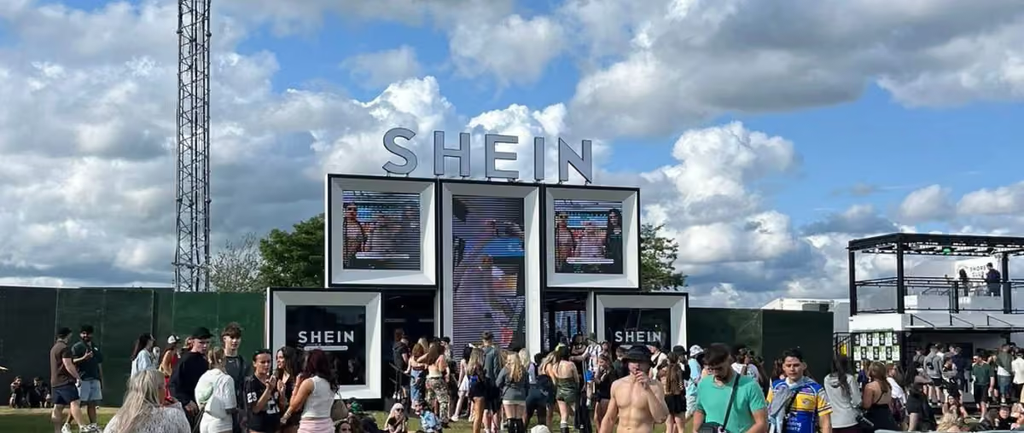
Activation: At Rockstar Energy Presents Creamfields 2025, SHEIN used branded hashtags and live Social Walls displays to bring attendee-generated content into the physical experience. The team curated, moderated, and displayed content across big screens at the venue.
What happened: More than 2,500 UGC posts were generated using SHEIN’s branded hashtags, while social mentions increased by 3.5× compared with previous events. Attendees also posted specifically to see their content featured on the screens.
Why it worked: The screen gave people an immediate reason to participate. Posting was no longer just about sharing on social media. It could also earn them visibility in the physical experience.
Takeaway: If you’re using screens in a store or retail activation, make the audience part of the content. A simple “Share to get featured” mechanic can turn a passive display into a participation trigger.
2. Karya Kreatif Indonesia: Make the Exhibition Part of the Experience
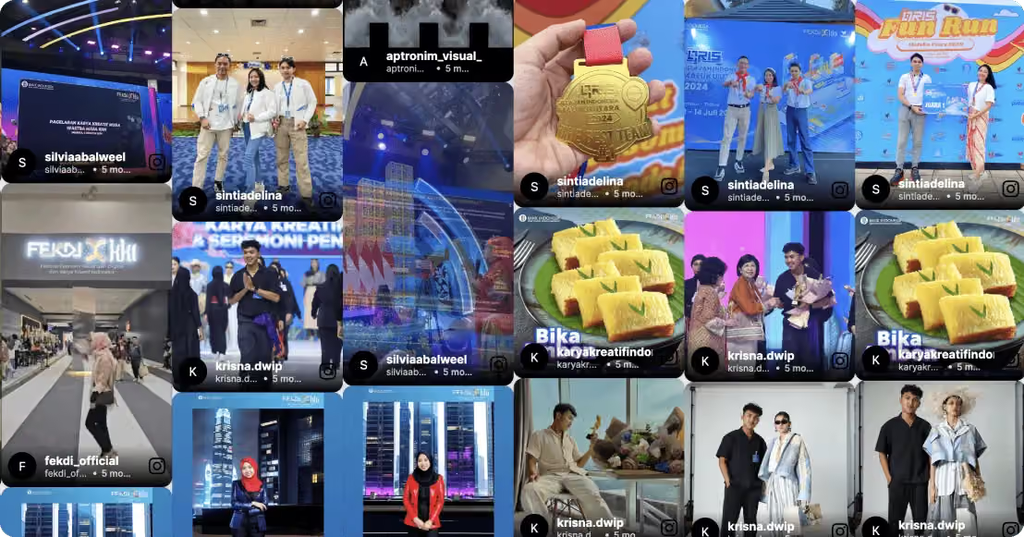
Activation: Karya Kreatif Indonesia used Social Walls during its event exhibition to bring user-generated content into the physical event environment. The case study positions the social wall as part of the exhibition experience, not just a promotional display.
What happened: The brand created a more interactive exhibition environment by collecting and displaying audience content in real time.
Why it worked: Exhibitions can easily become a sequence of booths, products, and static displays. Live audience content adds movement and gives visitors another reason to stop and engage.
Takeaway: For retail exhibitions, pop-ups, and brand showcases, use a live content wall to make the audience part of the display instead of relying only on branded visuals.
3. Jack Astor’s: Turn Customers Into the Content
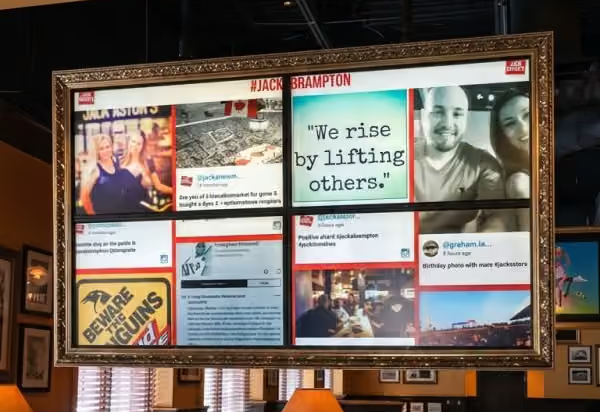
Activation: Jack Astor’s Bar & Grill ran a live hashtag campaign using #Jackastors, collecting customer-generated content and displaying it on screens inside its restaurants. The brand moderated the content and presented it using branded themes.
What happened: The brand reported a 2× increase in social media engagement, while the screens encouraged customers to use the hashtag more often after seeing themselves or people they knew featured. The case study also reports increased visitor activity.
Why it worked: The activation created a simple feedback loop: customers posted, the brand displayed their content, and seeing other customers featured encouraged more people to participate.
Takeaway: Retail brands can use the same loop in stores: invite customers to share → display selected posts → give participants visibility → encourage more content.
4. Oxfam: Connect the Activation to a Bigger Purpose
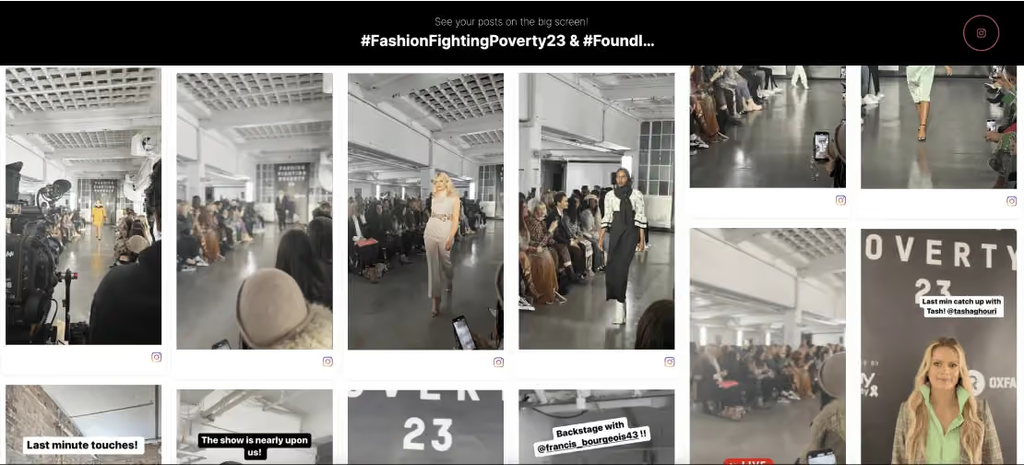
Activation: At London Fashion Week, Oxfam used a live hashtag social wall to support its Second-Hand Style initiative and raise awareness of its Turkey and Syria Earthquake Appeal. Oxfam displayed audience content live during the event.
What happened: Oxfam collected 1.6K posts, generated 12M impressions, and recorded 80% positive sentiment around the content. The activation helped connect the fashion experience with the organization’s charitable message.
Why it worked: The activation wasn’t engagement for engagement’s sake. The live content supported a clear message and gave the audience a way to participate in a cause.
Takeaway: A retail activation becomes more memorable when the interaction supports a bigger brand story, whether that’s sustainability, a product launch, a community initiative, or a cause.
What These Activations Have in Common
At first glance, these activations may seem quite different, but they all have one thing in common: they give shoppers something to do beyond simply browsing and buying. A good activation gets people involved, creates a memorable moment, and gives the brand an opportunity to build a stronger connection with them. The format can vary, but the focus stays on turning a regular store visit into an experience worth engaging with.
For an in-store activation, that could mean a customer sharing a product experience, appearing on a live screen, taking part in a challenge, scanning a QR code, or unlocking a reward. The technology is secondary to the interaction it creates.
Encourage shoppers to share their experiences and showcase selected content in real time.
No Credit Card RequiredHow to Measure In-Store Brand Activation Success
Before launching an activation, decide what you want it to achieve. The metrics you track should reflect that goal, not try to measure everything.
If the goal is getting shoppers to engage, track participation, interactions, dwell time, game completions, or QR scans. For product-focused activations, look at product trials, sales, conversion rate, coupon redemptions, or average order value.
For activations designed to create social engagement, measure UGC volume, hashtag mentions, shares, engagement, and content reach. If you’re collecting leads, track sign-ups, email captures, contest entries, or QR registrations.
For sales-focused campaigns, compare results against a relevant baseline where possible. This gives you a better view of whether the activation actually drove incremental sales rather than simply coinciding with sales that would have happened anyway.
You can also calculate basic ROI using:
ROI = (Revenue Generated − Activation Cost) ÷ Activation Cost × 100
The important thing is to measure the job the activation was designed to do. A product sampling campaign may succeed through trial and purchase, while a UGC activation may succeed by generating participation and extending the brand experience beyond the store.
Final Takeaway
The best in-store brand activation gives shoppers a reason to stop, engage, purchase, and return. Product demonstrations, games, personalized experiences, and exclusive offers can create memorable interactions, but adding a social wall can take that experience further. By displaying customer posts, branded hashtag content, and UGC on in-store screens, Social Walls turns customer participation into visible social proof that can encourage others to join in.
With Social Walls, brands can collect and curate social content, showcase customer experiences in real time, and create a continuous loop of experience → create → share → display → engage. Whether you are running a product launch, UGC campaign, seasonal promotion, or in-store event, a social wall helps transform everyday shoppers into active participants while keeping your brand experience fresh, interactive, and shareable.
Turn customer posts, UGC, and branded hashtags into an engaging in-store experience.
No Credit Card RequiredFAQs About In-Store Brand Activations
An in-store brand activation is a marketing experience designed to actively engage shoppers inside a retail environment and encourage a specific action, such as trying a product, making a purchase, creating content, entering a contest, or joining a loyalty program.
In-store brand activations can take many forms, depending on what the brand wants shoppers to do. A beauty brand might offer product demos or samples, while a retail store could run a treasure hunt, gamified challenge, or photo activation. Brands can also use social media walls, QR codes, live polls, UGC contests, pop-up events, creator experiences, and personalized interactions to make the store experience more engaging. The goal is to give shoppers something to experience, participate in, or share rather than simply asking them to make a purchase.
Activations can increase sales by helping shoppers discover products, experience them firsthand, reduce purchase hesitation, create urgency, and connect engagement to a clear purchase or offer.
Brands can make social media a major part of the in-store experience; where hashtag campaigns can be run with rewards for participation, live content can be displayed from Instagram, YouTube or Tiktok content on screens. Store managers can also set photo-friendly spots that encourage shoppers to share and offer social-only perks that give customers a reason to join in.
There’s no fixed cost for an in-store brand activation because the budget can vary widely depending on what you’re planning and where you’re running it. A simple QR-based campaign, product demo, or sampling activity may need a relatively small investment, while pop-ups, physical installations, creator events, and technology-driven experiences can cost considerably more.
The number of stores and expected foot traffic also matter. When planning the budget, factor in staffing, technology, production, promotion, rewards, and the duration of the activation. This gives you a more realistic picture of the investment instead of budgeting based on the activation idea alone.