




How To Plan An Event Successfully: A Step-by-Step Guide
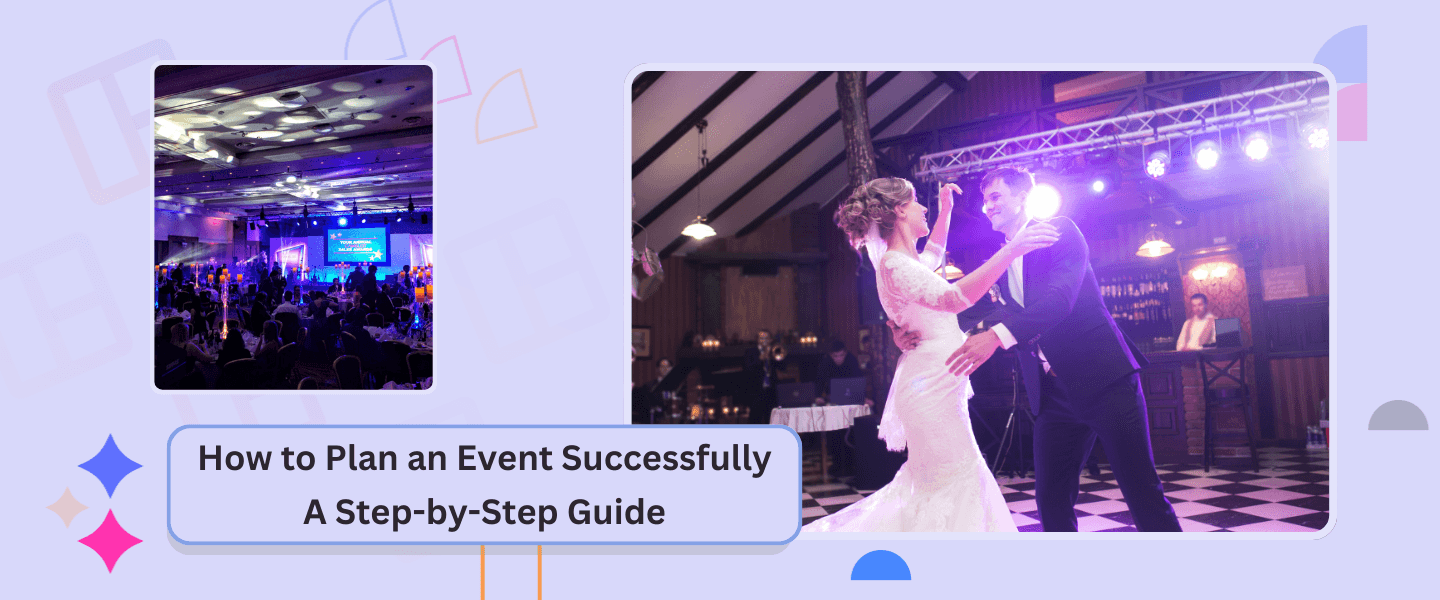
Wondering how to plan an event that doesn’t just go smoothly but leaves people talking? If so, you are on the right page.
Do you know that 80% of marketers believe hosting a live event can help their company succeed? But we all know that pulling off a flawless event takes much more than just a big budget or logistics. It’s more about the right vision, proper planning, and smooth coordination.
This comprehensive step-by-step event planning guide will help you understand how to plan an event successfully and execute everything seamlessly.
Let’s get started!
How to Plan an Event: Step-by-Step
Organizing a successful event consists of several thoughtful and strategic steps. Let’s move forward to the event planning checklist to see how to plan an event that causes waves everywhere.
Step 1: Identify Goals and Audience
You’ll have to start well with a solid foundation to ensure everything ends well. Thus, establish two things –
Why are you doing it? Do you aim to –
- Raise funds
- Boost brand awareness
- Generate leads
- Build community, etc.
Who are you trying to reach?
- Industry professionals
- Loyal customers
- First-time guests, etc.
Clarity on the above goals will help you significantly tailor your event’s size, tone, content, and venue.
Step 2: Develop a Comprehensive Event Plan
With our event goals and audience crystal clear, we must now focus on planning the event. To make it simpler, the event planning can be divided into three parts:
Making a realistic timeline: It is very important to have realistic timelines for all phases of your event, whether pre-event preparation or the actual event, so that chaos can be minimized in the final moments. Effective project time management is key here–set clear deadlines for each planning stage, and track progress to ensure everything stays on schedule.
Creating a budget: From venue, catering, and marketing to decor and buffer, calculate all the possible costs. This way, you’ll be able to prioritize spending, all while being transparent to your clients.
Gathering your team: Planning everything won’t matter if you don’t have a good team to execute everything correctly. Thus, assemble a good team and assign roles based on expertise. Giving clear responsibilities ensures smooth collaboration and accountability.
Also Read: Top 25+ Corporate Event Ideas: In-Person & Virtual 2026
Step 3: Choose the Right Venue and Vendors

Venue and vendors are two of the most important factors that can make or break an event. FYI, 64.6% of guests believe that the venue can greatly affect their event experience.
Thus, it is crucial to give your utmost attention while choosing the right venue and vendors for your event.
Select your venue after analyzing all the aspects, such as guest capacity, amenities, accessibility, etc. All these factors combined will greatly affect the atmosphere of your event.
Furthermore, hire vendors you can rely on!
Professional vendors, be they photographers, caterers, or decorators, make the process quite seamless with their experience.
All in all, the vendor and venue should be dependable, aligned with your vision, and committed to quality service! And if you’re aiming to go beyond the basics—to create event experiences that empower Web3 ecosystems or deliver immersive brand activations—working with a specialised partner can elevate every element. That’s where Ch3 Agency comes in. With a proven track record in designing innovative, high-impact events, they help brands turn ideas into unforgettable moments.
Step 4: Plan Engaging Content and Activities for the Event
No one wants to attend a boring event with no engaging content or activities (except Sheldon Cooper). That’s why planning event activation for your guests is an important step.
For instance, include content elements such as event gamification, industry polls, hands-on workshops, etc. These activities serve as excellent networking breaks to spark engagement. Also, make sure you invite industry experts or performers to speak at the event and captivate your audience.
Want to give your event planning a modern, social touch to make it more compelling? Integrate live social media walls at the event using content aggregation tools like Social Walls. Using real-time social walls, you can effectively turn your event’s passive viewers into active participants by showcasing attendee posts and reactions.
Step 5: Promote Your Event Effectively
Promoting your event effectively isn’t only about creating a buzz around the event in the market. It’s also about creating anticipation for the event. In store brand activation can also help create memorable brand experiences that generate interest and encourage audience participation.
Pave your way through marketing methods such as email marketing, social media posts, influencer collaborations, and targeted ads. You can also use tweet walls to showcase real-time event conversations and social posts, giving your audience a glimpse of the excitement and encouraging more people to participate. Also, remember —
“Sell the experience, not just the product.”
Make sure you talk about how people will feel at the event, and what they’ll learn or take away.
You can also build momentum for your upcoming event using past content such as previous event highlights, speakers’ spotlights, behind-the-scenes, and a countdown. This strategy is especially effective when promoting digital signage industry events, where attendee engagement and anticipation play a crucial role in event success.
Step 6: Execute the Event Seamlessly
Now that you are done with all the visualization, curation, and promotion, it comes down to the final day of execution.
Ensure arrival confirmation with all the vendors, proper tech checks, team preparation, etc. Also, ascertain that everyone is doing what they are supposed to do and that proper coordination is there. You should also be ready for hiccups. Consider having trained professionals available, such as a First Aid Mississauga team, in case of any emergencies during the event.
Simply put, it’s not about achieving perfection but having presence and being prepared.
Step 7: Follow-Up Post-Event

You set the goals, you prepare to achieve them, you execute the operations. What’s next? (Relaxing on the sofa, NO!). The follow-up! Following up on the post-event is crucial in order to measure your success and analyze where you lacked.
Gather feedback from your client on each and every aspect of the whole event. For example, how did they find your “social walls” idea or how smooth was the catering? Moreover, you can also ask the guests at the event to share their experiences.
Consequently, you’ll be able to work on your weak points and improve significantly!
Parting Words!
Organising an event is no easy task!
Every stage is essential for a successful event, from goal-setting to event strategy, vendor selection, engagement activity planning, and flawless execution.
Coordination is critical whether it’s a corporate function, a fundraiser, or a brand launch. Make sure the audience can interact with your event. Incorporate Social Walls to encourage real-time interaction during the event!
We certainly hope you enjoyed our guide on planning an event successfully.