



Event Marketing Plan Template – Complete Guide
Has it ever happened to you that you organized an event, only to have it be crickets chirping because there was no audience engagement or interaction? Don’t worry, because we have the solution you are looking for. We all agree this can be frustrating, but it is avoidable; all you need is a solid event marketing plan template.
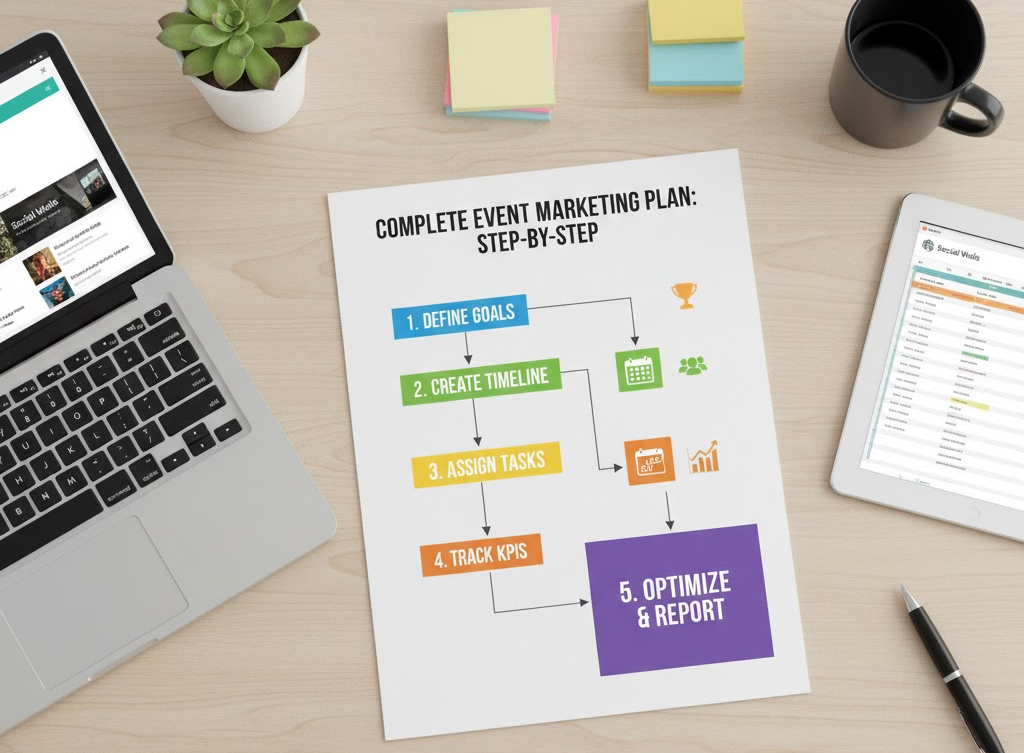
Event marketing template organizes chaos into a clear roadmap, ensuring every tweet, email, reel and ad hits the mark and you get the results that you are aiming for. This blog dives deep into what makes a great event marketing template, why it’s non-negotiable for event success, and how to use one.
So, read it till the end as this can make your event from “maybe” to “must-attend.”
What is an Event Marketing Template?
An event marketing plan template is a guide that keeps everything from goals to budget in one spot, so you’re not hunting through random notes when launch day hits. You note down who the event is for, what you want to happen, when each piece rolls out, and where the money goes. It works the same for a quick Zoom workshop or a weekend conference. It helps you make your event a hit.
Essential Elements of Event Marketing Template
The event marketing template consists of the following elements that can help in making your event more successful.
Goals
Setting a goal cis the foundation of your event marketing strategy template. To begin with, set a goal. Ensure that what you actually want the event to do. Your goal can be to sell 150 tickets, or 30 new clients, or just get folks talking about your brand for a week. Always write your goals clearly. That means writing “Hit 200 registrations by April 30 through email and LinkedIn ads” is better than writing “have a good turnout.” It keeps the whole team rowing in the same direction instead of chasing shiny objects mid-campaign.
Target audience
Defining your audience with detailed personas tailors every message, ad, and email to resonate personally plays a significant role in the event marketing plan template. Figure out exactly who’s showing up before you spend a dime. Are they 30-something marketers who live on Instagram, or C-suite folks glued to LinkedIn? You can sketch a quick persona name, job, biggest headache, favorite coffee order, and suddenly every post, email, and ad feels like it’s talking to a real person, not the faceless crowd.
Timeline
Creating a timeline stands as an important aspect for event marketing templates. It helps you streamline your planning and prevent last-minute chaos, such as missed deadlines. Lay the whole thing out like a calendar you can actually follow: teasers six weeks out, speaker lineup four weeks, early-bird push two weeks, final reminder 48 hours before doors open. You can color-code like green for done, yellow for in progress, red for “help!” so one glance tells me if we’re on track or about to miss the printer deadline.
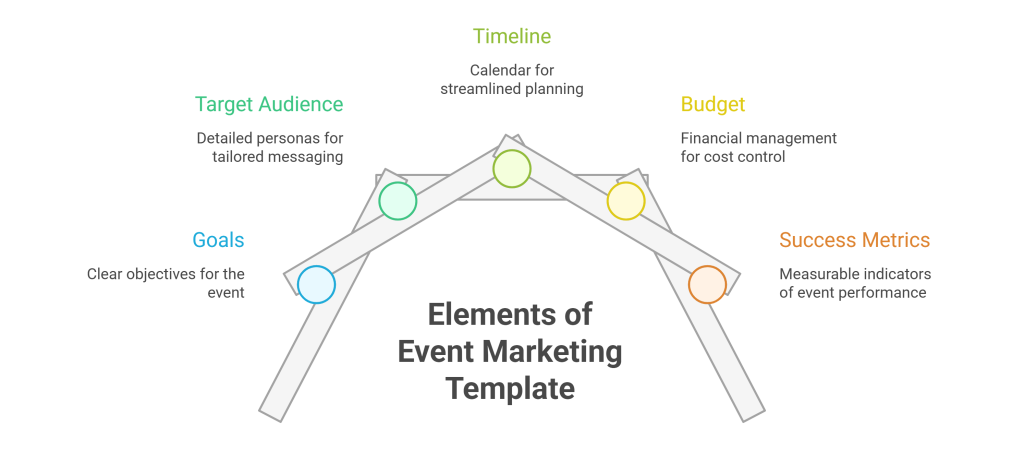
Budget
Creating a budget helps you maintain financial health and reallocate funds as needed. List every dollar: $2K on Facebook ads, $800 for Canva graphics, $500 speaker gift, $300 coffee for volunteers. Keep a running “actual vs. planned” column because nothing kills the vibe like discovering you’re $1K over the budget.
To stay under the budget, look for the tools that provide great features at a good price. There are various tools that you can find in the market that can fit any budget, but that might have needed features.
However, you can use Social Walls within your marketing plan for event template that you can get within budget with pricing plans starting at $199 and also consist of great features. The tool makes your event more engaging and interactive by enabling you to showcase social media feeds on walls with ease, and provides features such as leaderboard, quiz, poll, and more to keep audiences hooked.
Success metrics
You can’t ignore that event marketing template is for the success, and hence it is important to know if it’s working or not. Decide upfront how you’ll know it worked: ticket scans, email open rates, leads scanned, and smiles in the selfie wall. Track three numbers that matter (registrations, cost per attendee, follow-up meetings booked) and ignore the vanity stuff so the post-event recap isn’t just “lots of likes.” Social Walls is one such tool that provides metrics to help you assess your event wall’s performance.
Apply these steps using event marketing template to avoid missed deadlines & run smoother, more engaging events

 No Credit Card Required
Types of Event Marketing Templates
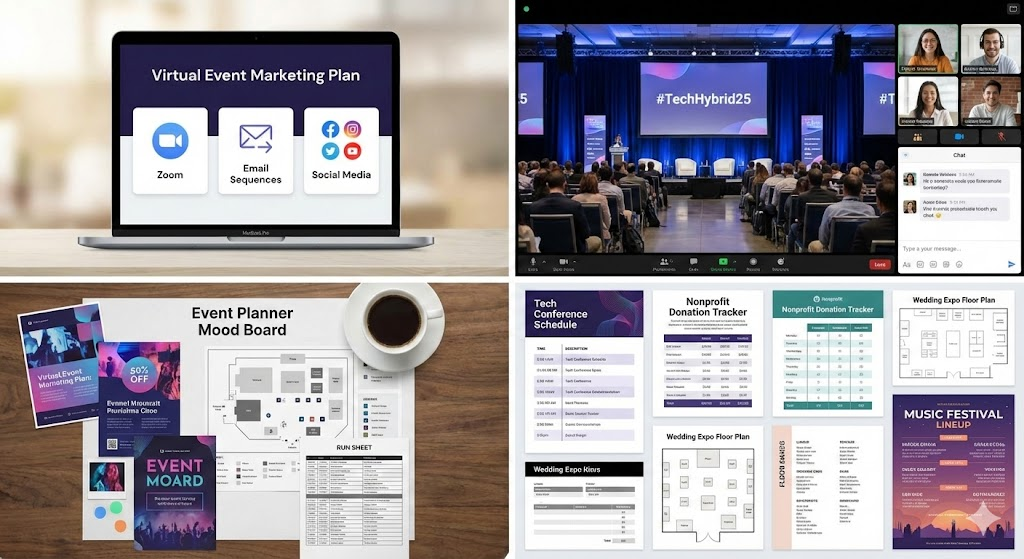
Events are no longer limited to one type. There are various types of events, and each has its own template.
Virtual Event Marketing Plan Template
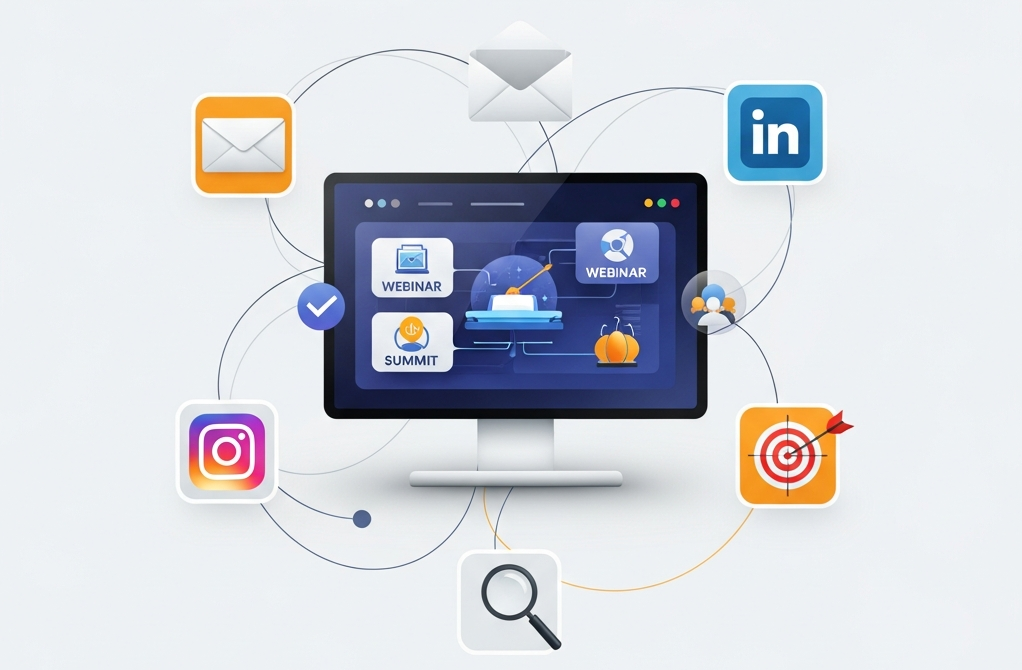
Virtual event setups lean hard on digital channels because there’s no physical space to fill. Think webinars, online summits, or product launches streamed on Zoom or Hopin, where the whole game is getting eyes on screens and keeping them there. This marketing template for an event starts with platform selection (Zoom for small groups, Hopin for interactive booths), then maps email sequences that drip value three weeks out: teaser invite, agenda drop, reminder 24 hours before the event. Social promotion focuses on LinkedIn for B2B or Instagram Live teasers for consumer crowds, paired with paid boosts targeting look alike audiences from past attendees.
Hybrid Event Marketing Plan Template
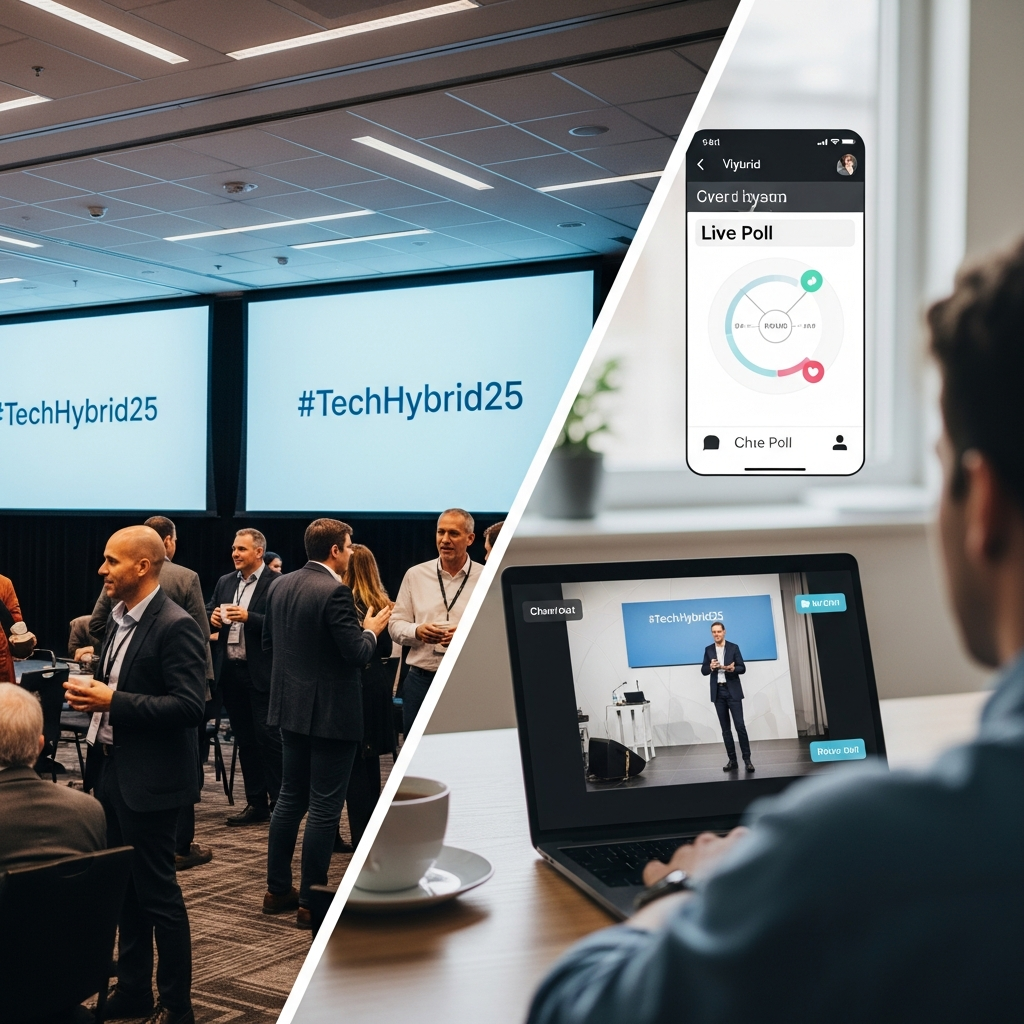
Hybrid means juggling two worlds at once, folks in the room sipping coffee and others watching from home, so the event marketing template splits every tactic into “in-person” and “virtual” columns to avoid leaving anyone out. Pre-event hype uses the same hashtag wall for both (#TechHybrid25 shows up on venue screens and online feeds), but emails segment attendees by type: locals get parking info and badge pickup times, remote attendees get stream links and chat etiquette. On-site signage doubles as photo ops for social shares, while virtual attendees join via a seamless app with live polling synced to the stage. Budget gets tricky, venue rental and AV eat a great split.
In-Person Event Marketing Plan Template
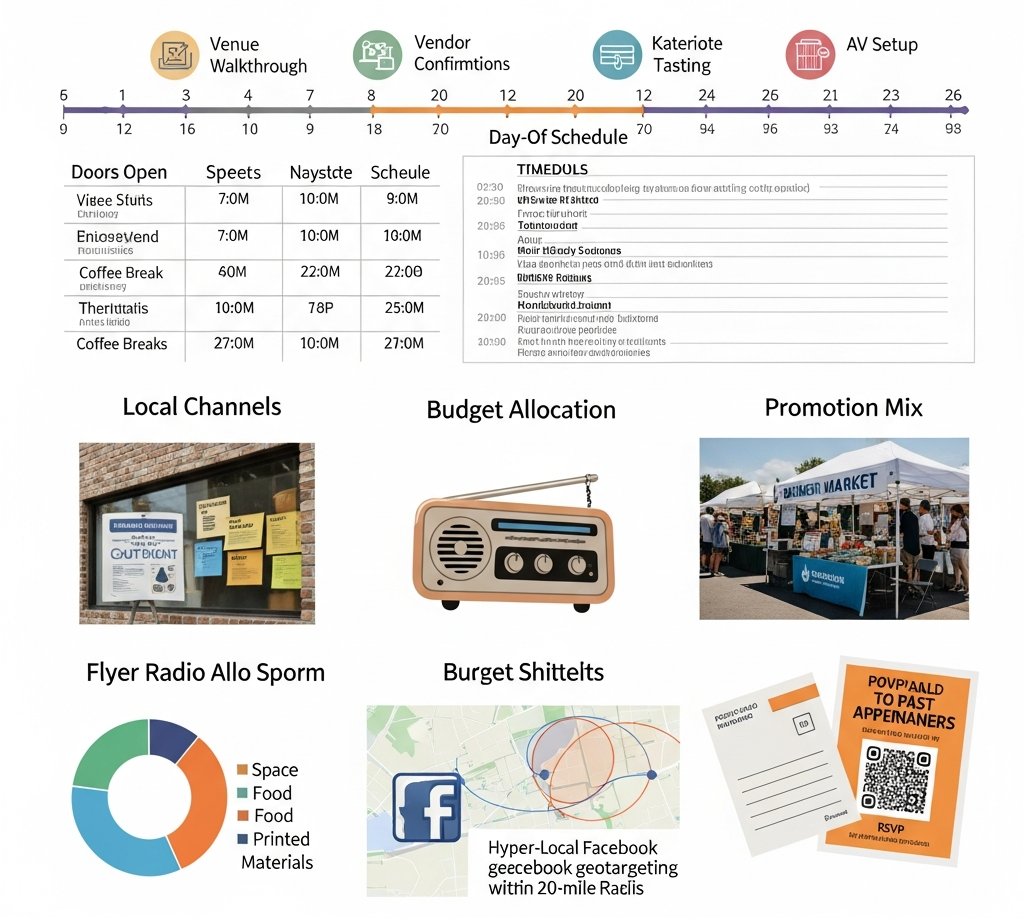
In-person events live or die on physical turnout. This in-person event marketing plan template hammers local channels from the jump flyers at coffee shops, radio spots, a booth at the farmer’s market, and more.
Timeline front-loads venue walkthroughs and vendor confirms (catering tasting at eight weeks, AV setup at four), with a day-of run sheet down to the minute: doors open 8:45, keynote 9:15, coffee break 10:30. Budget slices big for space (35%), food (25%), and printed materials (15%), leaving ads for hyper-local Facebook geotargeting within a 20-mile radius. Promotion mixes old-school (postcards to past attendees) with new (QR codes on posters linking to RSVP).
Industry-Specific Event Marketing Plan Template Variations
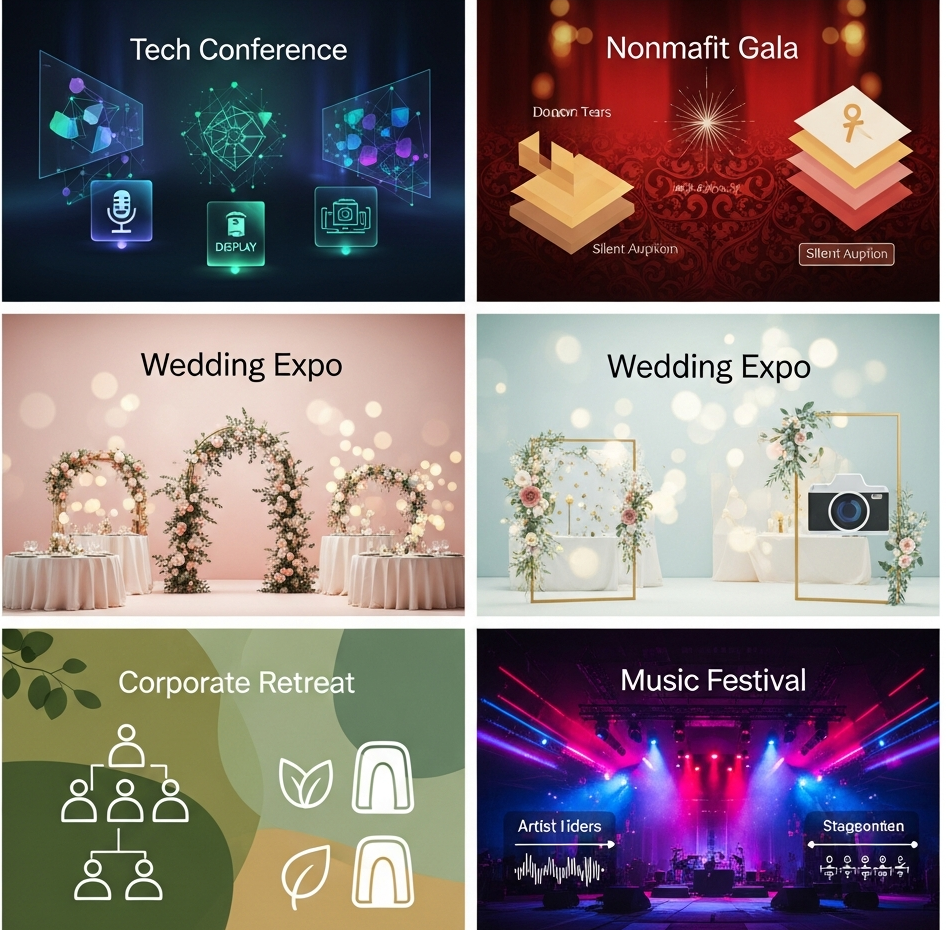
Different sectors need different flavors, so this industry-specific event marketing template is tweaked for the crowd tech conferences pack speaker one-pagers and demo slot sign-ups, nonprofit galas add donor tiers and silent auction trackers, wedding expos slot vendor booths and styled shoot schedules. A corporate retreat version includes team-building breakout grids and dietary request forms, while a music festival one layers artist rider confirmations and stage changeover times.
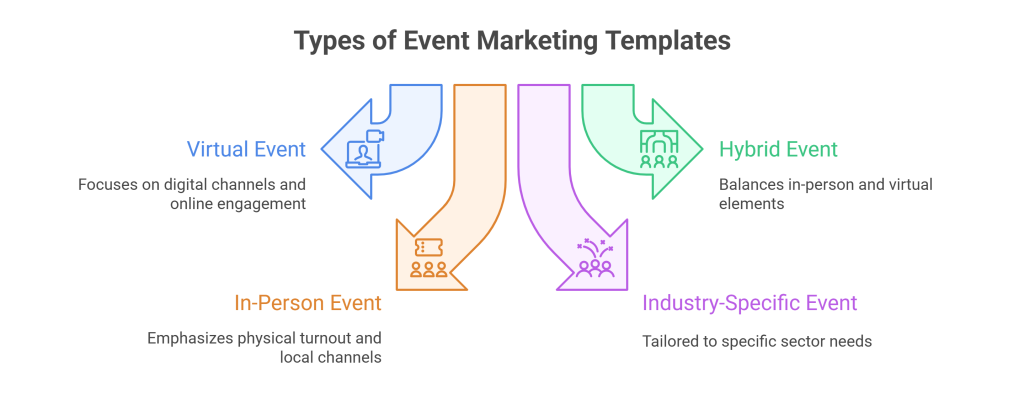
Whether your event is virtual, hybrid, or in-person, using the right template helps you plan smarter
No Credit Card RequiredWhy is an Event Marketing Plan Template Important ?
An event marketing template can be the difference between making your event a hit or a flop. Here are the reasons why event marketing plan templates are important.
Saves time & ensures consistency
Pull the sheet from the last event, change the title to whatever’s next, nudge a handful of dates, and the whole frame snaps into place, as this makes an event marketing timeline template. No rebuilding from scratch, no wondering where the teaser phase lived last time, because goals stay top, channels middle, follow-ups bottom every single run. Posts, emails, graphics all follow the same beat and palette, so the campaign never looks like two different brands arguing, and the team skips the endless “does this match?” loop to focus on fresh hooks instead of fixing old mismatches.
Reduces errors & missed deadlines
Every single task lands in its own row with a hard date and a name slapped next, this marketing template for event makes it clear that the test the link July 10, Sam owns it and if the cell sits empty it turns red loud enough to spot from across the room while the budget column adds on the fly and flashes if coffee or swag creeps past the line, so the “oh crap” moments shrink to zero and the whole push rolls out calm instead of a 2 a.m. fire drill.
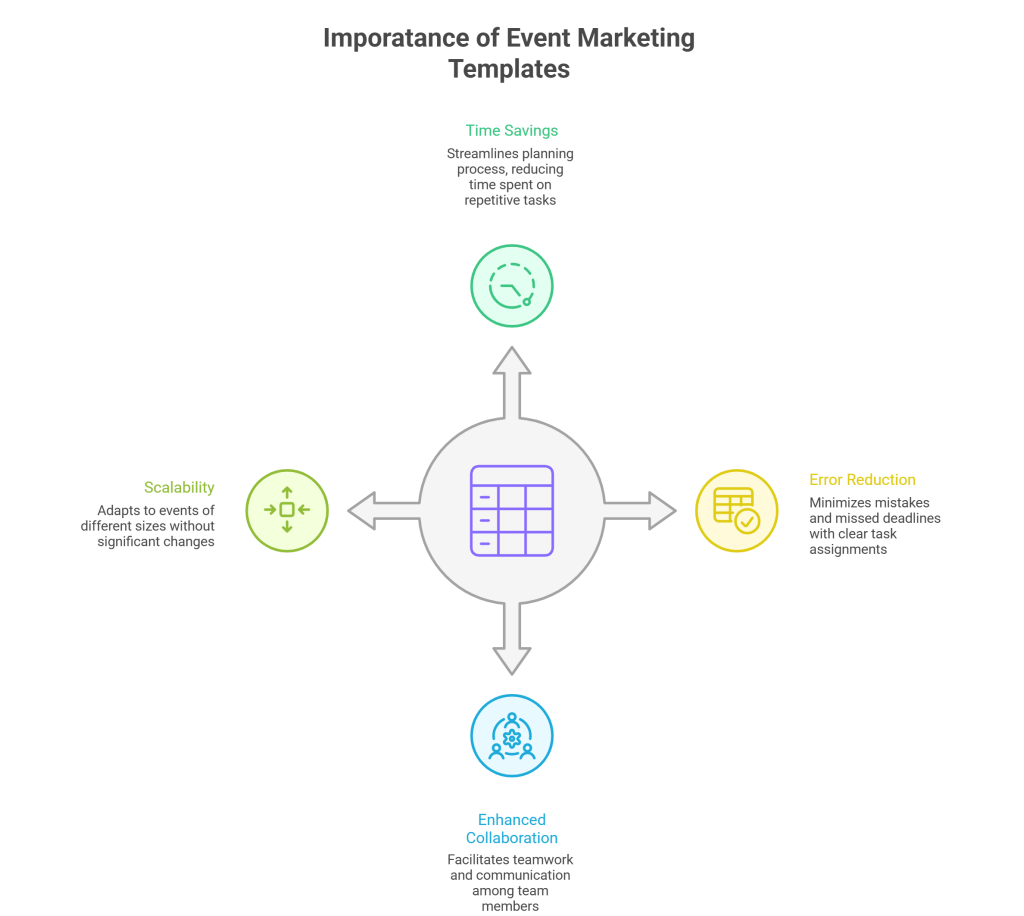
Makes collaboration easy
Drop the link in the group chat and the event marketing plan template turns into a living room designer drags the hero shot straight in, writer pastes the punchy line, intern clicks posted, comments pin right to the cell so nothing drowns in Slack, rookies queue drafts while bosses hit approve, and no matter if someone’s in Seattle or Sydney the file never sleeps and the plan never splits into ten versions.
Works for both small business events and large conferences
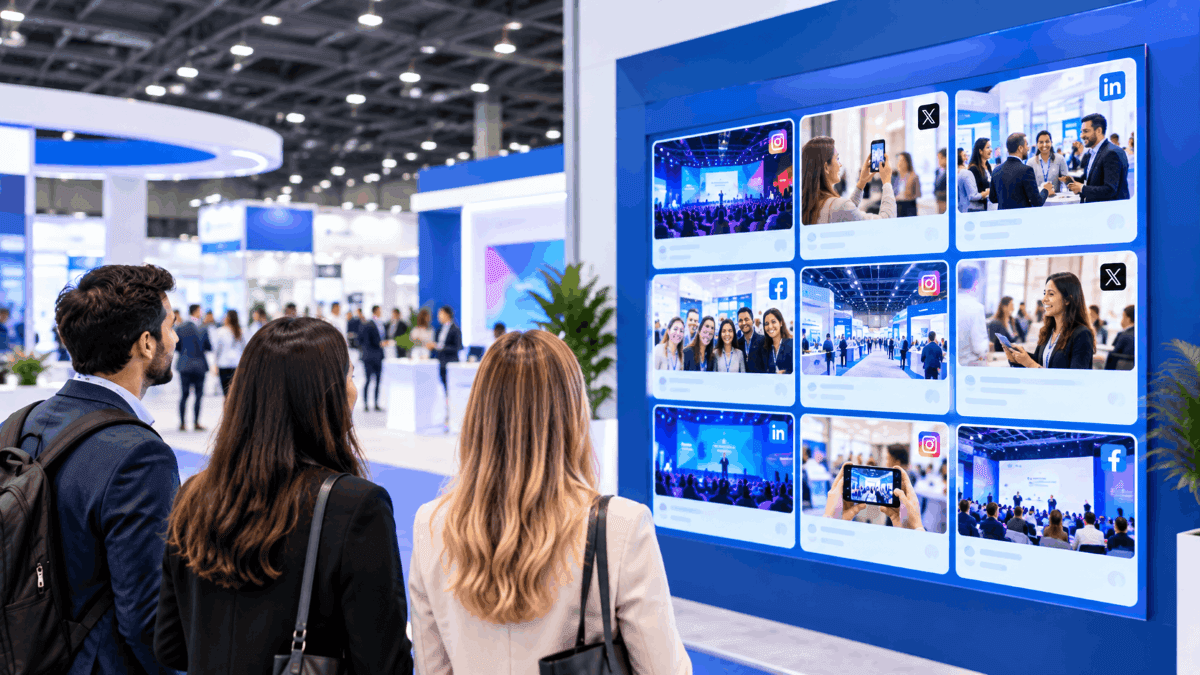
Same exact sheet handles a backyard product tasting for thirty locals by wiping the sponsor tabs and capping ads at a few hundred bucks or a downtown expo for three thousand badges by stretching vendor rows and stacking breakout grids without ever rewriting the core shrink the fat for small, pile on the meat for big, and the bones hold steady either way. A social wall for conferences can also help showcase attendee posts, event hashtags, and live interactions on digital screens to keep large events engaging. Using the pointers you can create a sample event marketing template and work on it to make your event a great success.
Turn these benefits into results that keeps timelines, budgets, and tasks in one place
No Credit Card RequiredConclusion
A solid event marketing template shifts stress to straight wins, goals hit the mark, budgets stay in line, and crowds show up buzzing instead of trickling in late. Grab the free sheet, plug in the dates, watch the pieces click, and the next event lands bigger, cleaner, cheaper. No more guessing games; just download, fill, launch, and count the high-fives.