Events
 Digital Signage
 Hybrid Events
 Instagram Wall
 Social Media Aggregator
 Twitter Wall
 Linkedin Wall
 TikTok Wall
 Facebook Wall
 Hashtag Campaign
 Studio
 Moderation
 SnapUp
 Customization
 Spotlight
 Reactions
 Analytics
 Photo Booth
 Education
 Retail
 Non-profit
 Fitness
 Agencies
 News & Entertainment
 Hospitality
 Sports
 Ecommerce
 Healthcare
 Finance
 Blog
Blog Integration
 Support
 Case Studies
 Our Clients
 Get Inspired



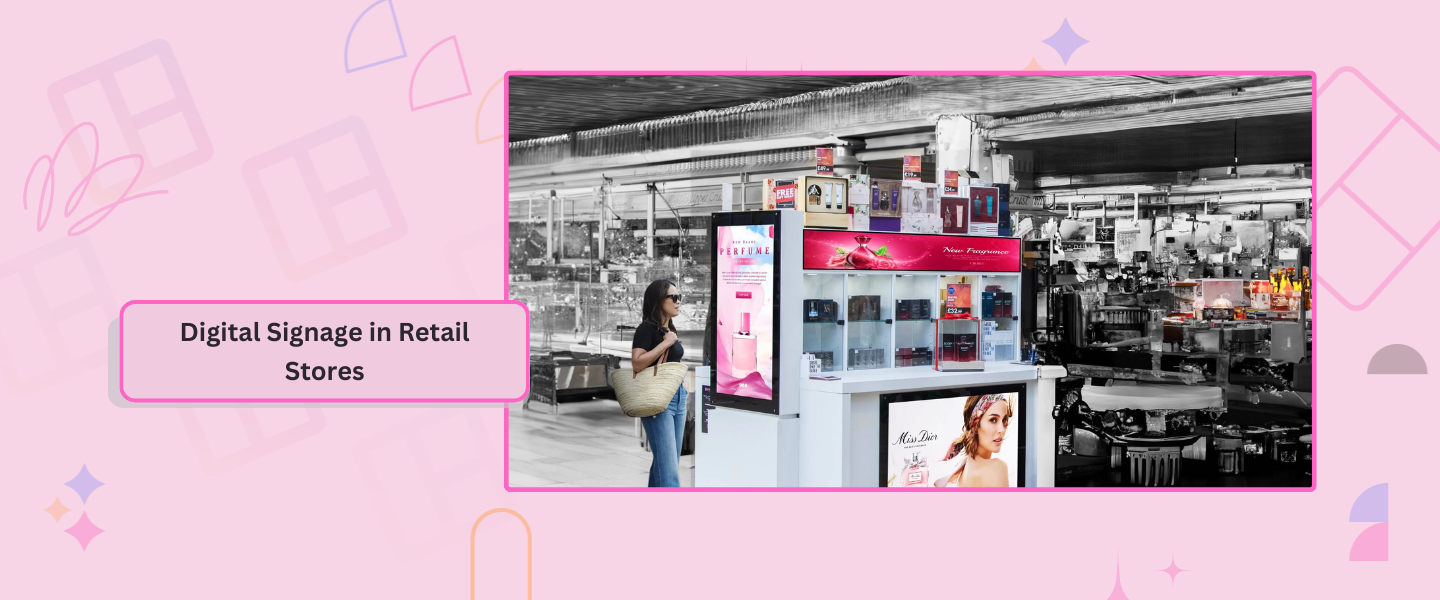
In 2026, the in-store experience is not just about shelves and their products. It’s about personalization, engagement, and innovation. Retailers are blending digital and physical to meet modern consumer demand, and retail digital signage is the heart of it.
This targeted digital signage will stop them and reassure them that they have found the right place, making it unnecessary to look elsewhere. In the current consumerism scenario, customers are looking for more than just a product—they want an unbothered shopping experience.
Retail brands are transforming their in-store communication through interactive kiosks, real-time product promotions, digital wayfinding, and social media signage. But how does it actually work? What kind of technology powers it? And how can you use it to boost engagement and sales?
If you are a retail store owner still deciding whether to install digital signage, we can help. This blog will answer all your queries regarding how retail digital signage works, how to make the best of it, the benefits it offers, and the best practices for utilizing it in 2026.
What is Retail Digital Signage?
Digital signage in retail refers to the use of electronic screens to display dynamic content such as product information, advertisements, promotions, and brand messaging to consumers. These digital displays replace traditional posters and banners. This allows the retailers to easily update the content and keep in-store messaging fresh and relevant.
Retailers can showcase a variety of content ranging from product images and pricing to time-sensitive offers and promotional videos. Unlike static signage, digital screens are visually engaging and can capture shoppers’ attention more effectively. This makes them a powerful tool for boosting sales and enhancing the overall shopping experience.
These displays can also be strategically placed in high-traffic areas, such as near entrances or checkout counters, to maximize visibility.
Real-World Examples of Retail Digital Signage
Case Study 1- A High-End Fashion Store
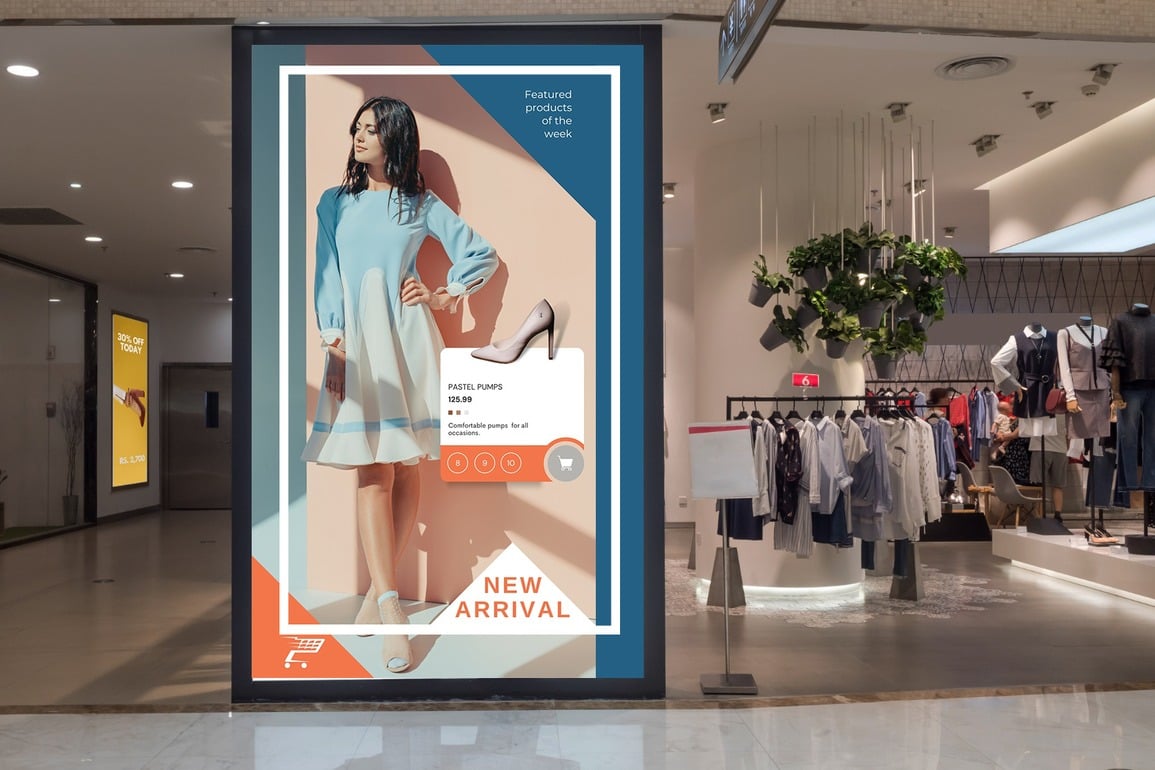
In a highly competitive industry, a high-end fashion store fashion retail brand can implement digital signage to enhance customer engagement.
Using strategic placements of this digital signage, the retailer can showcase exclusive collections, behind-the-scenes fashion videos, and interactive lookbooks.
This attracts the customers’ attention and inspires their style while creating a sense of urgency to buy. These digital screens are seamlessly integrated with the store’s aesthetics, making sure that the
Additionally, the signage allows customers to explore the inventory in real-time, which helps manage customer expectations. Such an initiative would help increase foot traffic and a notable rise in average transaction value, as shoppers would be more engaged and informed about product availability.
Zara’s flagship store in London is a real-life example of a high-end fashion store that uses digital signage. Its interactive screens provide a seamless customer experience.
Case Study 2- A Grocery Chain
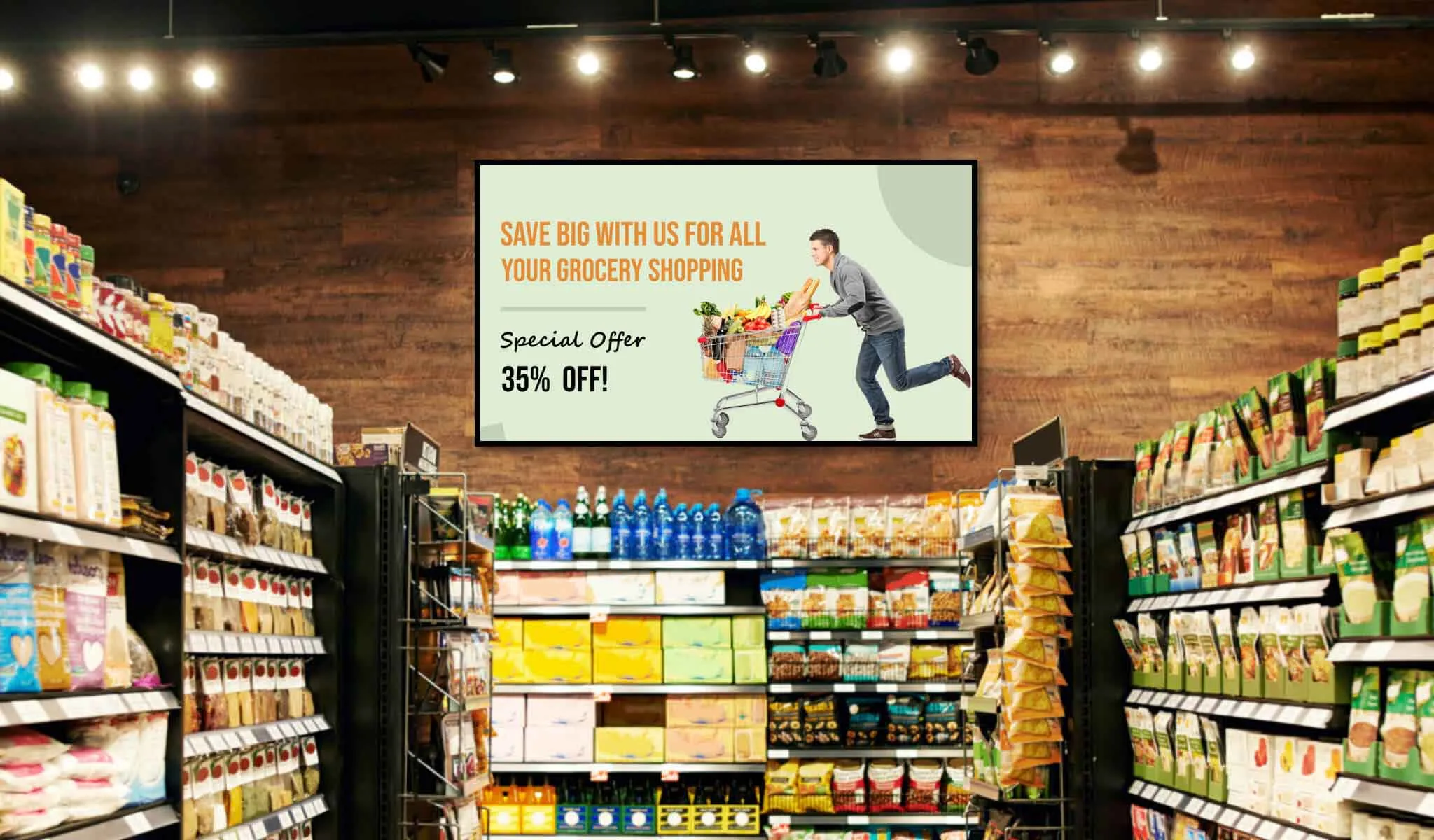
A grocery chain can adapt digital signage to modernize its in-store communication strategy. Instead of using traditional paper with signs and vibrant and high-quality digital displays, the grocery store can enhance the shopping experience for the end customers—the screen featuring dynamic content such as promotional offers, cooking tips, and nutrition information, making it easier for the users to find the right deals.
The digital signage in retail stores displays real-time updates on fluctuating prices and special discounts on seasonal items, driving urgency among shoppers. Its intuitive layout also guides customers to specific aisles, improving navigability.
Feedback indicates increased customer satisfaction, as shoppers appreciate the engaging and informative content. This move boosts sales and reinforces the grocery chain’s commitment to sustainability and innovation.
Case Study 3- A Large Department Store

A large department store can embrace digital signage in retail stores to revitalize its marketing strategy and engage with customers across multiple departments. Installing various digital screens throughout the store creates a visually stimulating environment that displays advertisements, curated content, and seasonal promotions.
Each department can feature tailored messaging, allowing the store to connect specifically with its diverse customer base.
Interactive touchscreens can also be introduced to help shoppers browse product information, locate items within the store, and access exclusive online deals. This would enhance the in-store experience and integrate the physical shopping experience with the digital realm.
Conclusion
Retail digital signage has evolved into a more vibrant presence than just a static display. Over the past couple of years, it has helped retailers to showcase dynamic content in their displays. Digital signage in retail stores bridges the gap between promotional content and relatable content. We have mentioned all the ways you can utilize digital signage in-store by using social media walls free to amp up the effectiveness.