
 Events
  Digital Signage
  Hybrid Events
  Instagram Wall
 Twitter Wall
  TikTok Wall
 Hashtag Campaign
 Social Media Aggregator
 Linkedin Wall
 Facebook Wall
 Studio
 SnapUp
 Spotlight
 Analytics
 Moderation
 Customization
 Reactions
 Photo Booth
 Education
 Fitness
 Hospitality
 Healthcare
 Retail
 Agencies
 Sports
 Finance
 Non-profit
 News & Entertainment
 Ecommerce
 Blog
Blog Support
 Our Clients
 Integration
 Case Studies
 Get Inspired


Social Proof in Marketing – Definitions, Examples & Strategies for 2026
Author: Wagisha Adishree
10 minute read
Table of Content:
Gaining trust is more complex than ever. People see thousands of ads every day, somewhere between 4,000 and 10,000—but they only notice about 100 of them. Most advertisements get ignored in this vast sea of ads. So, how do you get people actually to pay attention and use your brand?
The answer is social proof marketing. Instead of just telling people your product is great, show them that a real customer is buying and loving it. When people see others have a great experience associated with a particular product, they feel more confident about buying it.
This blog explores the power of social proof marketing and transforming from ‘meh’ to ‘must-have’ magic. We will also review some of the best social proof examples that can revamp your marketing strategy.
What is Social Proof in Marketing?
Social Proof is fundamentally a psychological phenomenon; when people are uncertain, they look to others’ behaviour as a guide. Social proof marketing involves leveraging the actions or opinions of others to influence potential buyers. As Robert Cialdini found, “we view a behavior as more correct…. to the degree that we see others performing it”
This means customers trust products more when they see peers using or endorsing them.
Typical forms of social proof include:
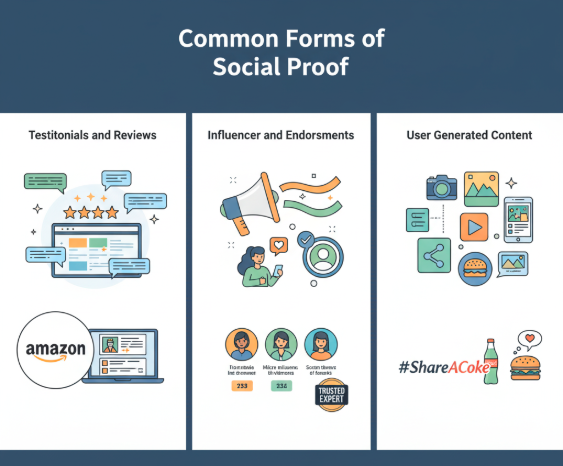
These are all the core social proof marketing elements that can dramatically change the end customer’s perception.
- Testimonials and Reviews: Reviews and ratings from customers. Customer testimonials are a great way to give shoppers more confidence. For instance, customer reviews on Amazon product pages not only provide detailed information but also rate the product with stars, helping potential buyers familiarize themselves with the product and gain review insights from other users.
- Using Influencers and Endorsements: Notable endorsements from celebrities and industry leaders offer significant social proof for marketing purposes. A single positive statement from one of these prominent social leaders can rapidly enhance the brand’s reputation. Each micro-influencer, who may not have millions of followers, can still provide a stream of engaged clients and add a community feel to the brand. These brands can also enhance their social proof messaging by ensuring that these endorsements directly speak to their customers.
- User-generated content: Real customers’ content for a brand. Coca-Cola’s #ShareACoke campaign and McDonald’s recent campaigns, which featured customers happily enjoying new menu items, are great examples of customer-generated content and free advertising. When a brand shares content from customers and real-world examples, it shows authenticity.
Each of these forms of social proof marketing helps tap into the tendency of crowd behaviour. If many people like to share or buy it, it must be of high quality.
Make Trust Your Strongest Marketing Asset
When customers see others believe in you, they follow

 No Credit Card Required
Why is Social Proof Important for Marketing?
The importance of social proof cannot be overstated. Take a look at the key benefits of social proof marketing, including:
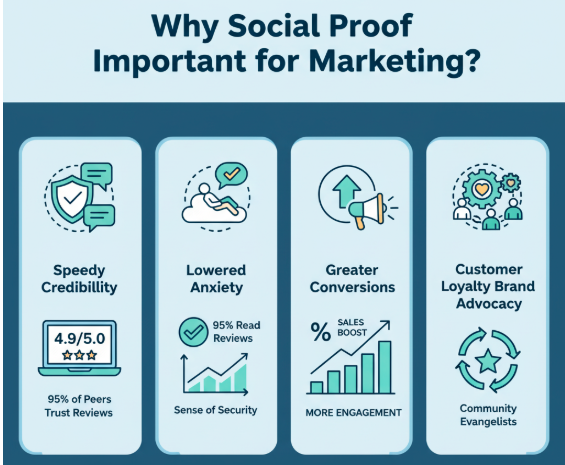
- Speedy credibility- Genuine customer reviews and endorsements serve as non-biased evidence. New visitors tend to rely more on feedback from their peers than on the company’s statements.
- Seems More Convincing – Witnessing others’ positive experiences provides a sense of security to hesitant buyers. For instance, 95% of people read reviews before making a purchase. This explains why the presence of honest reviews is essential.
- Greater conversions – When you use social proof marketing, it triggers the bandwagon effect. This means that the popularity of the products makes them seem more attractive to potential buyers. Businesses that utilize social proof effectively can achieve higher conversion rates, increased audience engagement, and greater trust.
- Customer loyalty and brand advocacy – Sharing genuine customer experiences is one way to foster a sense of community among consumers. Those consumers whose decisions are confirmed become not only loyal customers but also brand evangelists. And thus, a positive reputation and loyalty become established, slowly but surely.
Here are some of the statistics related to social proof in marketing:
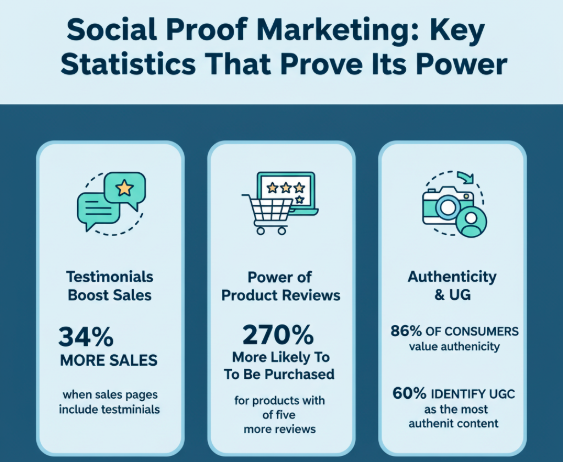
- Many marketers wonder: Does social proof work? The data shows that testimonials and UGC can increase conversions by up to 34%.
- Products with five or more reviews are 270% more likely to be bought than those with no reviews.
- According to a survey by Nosto, 86% of consumers stated that authenticity is a crucial factor in deciding which brands to support, and 60% identified user-generated content (UGC) as the most authentic form of content.
Social Proof Marketing Strategy With Social Walls
When you utilize the social proof marketing strategy with Social Media Walls, it leverages real-time customer activity and social media content to establish trust and credibility. This also encourages the herd mentality and influences purchase decisions on a larger scale. Have you ever considered that Social Walls (an event engagement tool) can be a great source of social proof for your business? How? Let us help you figure it out.
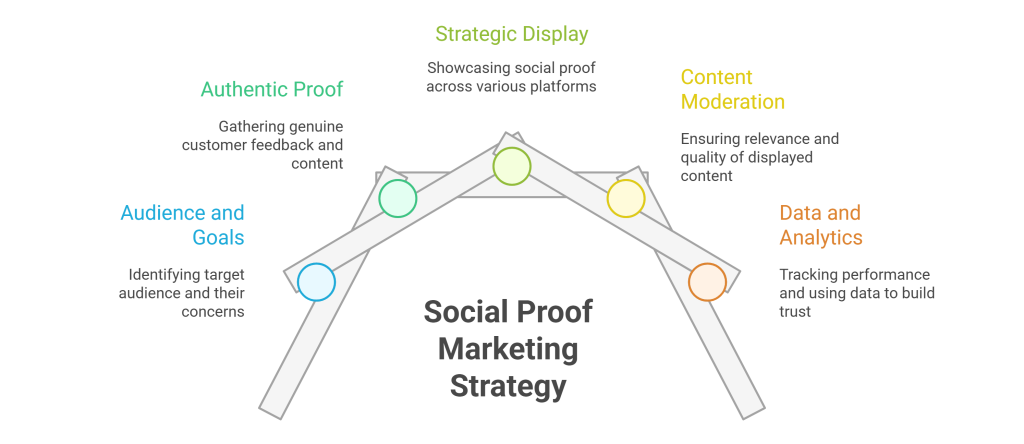
1. Know Your Audience and Goals
Identify your audience and the type of doubt they are experiencing. For instance, new tech buyers might be concerned about facing technical issues; therefore, proof of expert validation or detailed user reviews could provide the best reassurance. Social Walls provide data to optimize your social proof marketing approach, using insights to determine how your audience or consumers behave.
2. Collect Authentic Proof
- Ask for Reviews: Send follow-up emails or use on-site prompts that encourage buyers to rate products or services. Even a QR code (SnapUp feature by Social Walls) in-store can allow customers to leave a review quickly.
- Encourage UGC: Organize contests or create hashtags that inspire customers to share photos or videos of themselves using your brand. With Social Walls’ hashtag aggregator feature, you can smoothly collect all the content generated and posted under a designated hashtag.
- Partner with Influencers/Experts: Identify influencers who have a connection with your target audience and collaborate with them to test and endorse your product.
3. Curate and Display Strategically
- Website & Landing Pages: Social Walls are not just limited to event displays, but you can also utilize them on your websites and landing pages. Add testimonials, star ratings, and trust badges not only to the landing page but also to the pricing pages. Add the names, photos, or logos to give them authority.
- Marketing Materials: Incorporate social proof into ads, emails, and social media posts. Incorporate a quote from a satisfied customer in an ad or give a brief video testimonial in emails. You can also use these social proof advertising campaigns to boost engagement.
- Physical and Event Signage: At exhibitions or stores, operate social walls (live social feeds) or printed testimonials. Social walls are a great way to get UGC for event engagement and validation.
4. Moderate and Refresh Content
Utilize the moderation feature on Social Walls to showcase relevant content on your marketing touchpoints. Select content that is free from profanity or any other types of posts. Use new testimonials regularly in a rotating manner.
5. Leverage Data and Analytics
Utilize analytics tools to track which approaches yield the best results. Provide evidence backed by data, presenting statistics such as “500,000 sold” or “4.8/5 average rating” to help build trust.
Turn Social Proof Into Conversions Today
Show authentic reviews, UGC, and live social walls everywhere customers
No Credit Card RequiredPowerful Social Proof Marketing Examples
Here are some examples of powerful social proof:
Airbnb – Trust via Reviews
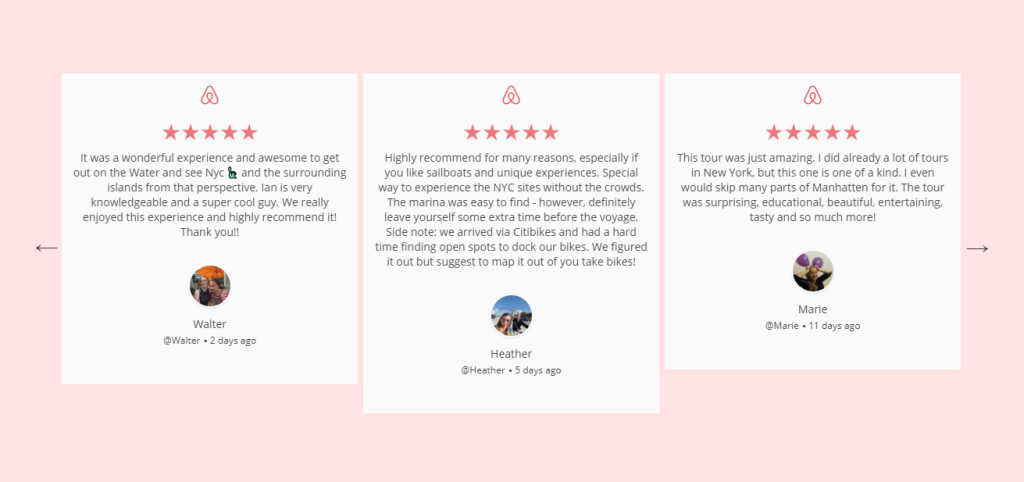
When Airbnb was launched, the idea of staying at someone else’s home was initially intimidating for users. What Airbnb did was start showing the ratings of hosts, as well as the reviews of guests, on every listing. This peer feedback gave users trust, and thus, the platform’s growth was accelerated.
Hyatt – Branded UGC
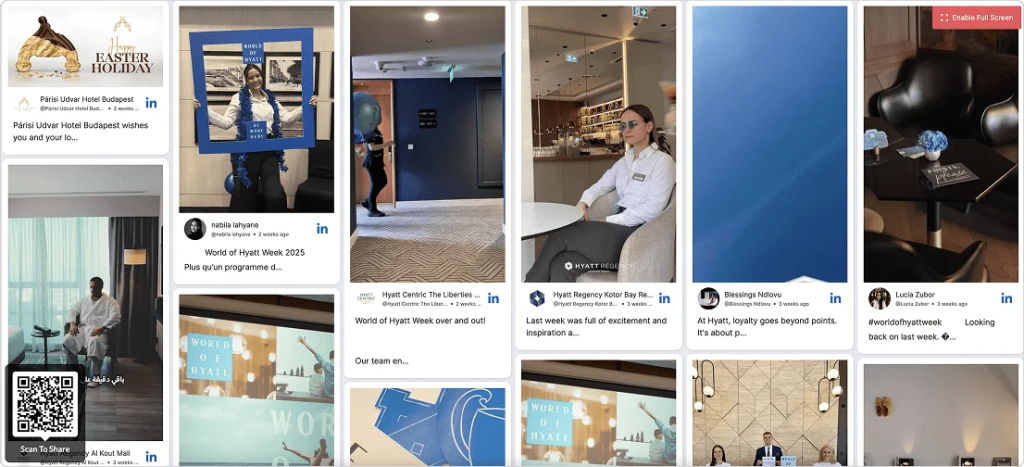
Hub Hyatt established a social media hub (#InHyattWorld) that consolidates more than 89,000 guest photographs from Instagram. Travelers can now view the hotel’s genuine experiences and proceed with their bookings thanks to the authentic guest images.
Eleven Sports Media – Fan-Powered Event Displays
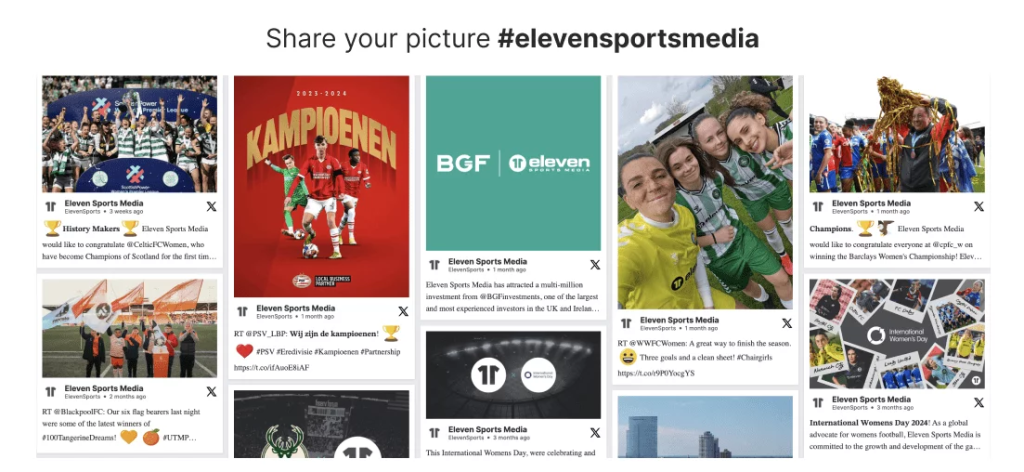
Eleven Sports Media accomplished the live social walls at sports events, where fan content was displayed. Using Social Walls, the social posts of fans and clubs were collected and then displayed on the stadium screens. The effect: watch time was tripled, and fan-generated content increased by 50%.
McDonald’s – Viral UGC Campaign McDonald’s
This is one of the brands that often fans create content for. For example, McDonald’s Korea set up an area where customers could film their reaction to the new menu and post it on social media. The brand then used those real customer videos as promotional content.
Coca-Cola – #ShareACoke Photos

The Coca-Cola campaign consisted of people looking for bottles with their names on and then posting selfies. The company then used user photos in ads and in-store displays, thereby turning customers who were already familiar with the brand into ambassadors.
Measuring the Impact of Social Proof Marketing
Tracking the results enables you to show that social proof is worth the time and effort. Concentrate on the measurements that are directly related to social proof and business goals:
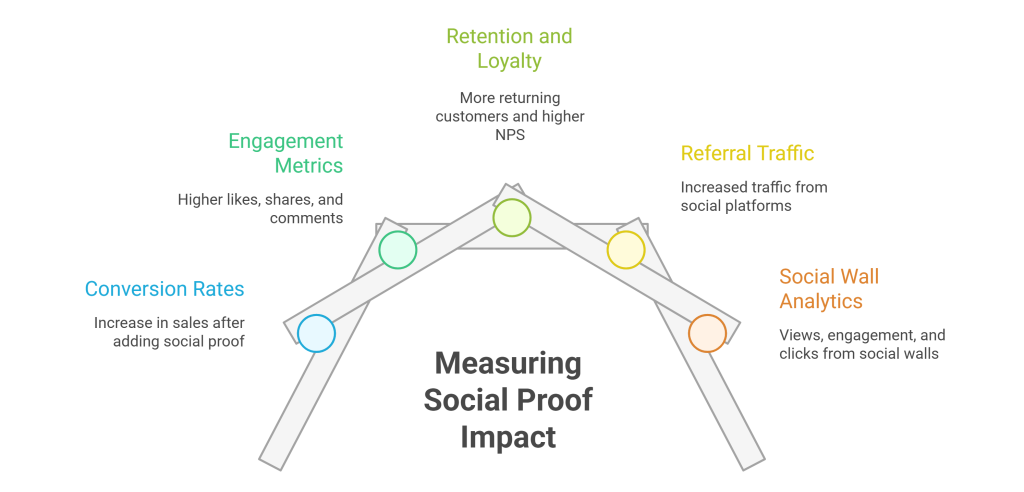
- Conversion Rates: Compare the conversion rates before and after adding social proof. A rise in conversions after the addition of testimonials or badges is a strong indicator of success.
- Engagement Metrics: Track the likes, shares, and comments on testimonial posts or UGC campaigns. The higher the engagement, the more the message will resonate with the audience.
- Retention and Loyalty: The rate of customers returning or the Net Promoter Score (NPS) can be used to determine if the trust given by customers has led to increased business.
- Referral Traffic and Social Metrics: Measure the traffic and conversions coming from social platforms or campaigns.
- Social Wall Analytics: You can measure the number of times the content has been viewed, the amount of engagement, and the number of clicks from the live or embedded Social Walls.
Social Walls Measure Social Proof Effectiveness
Social Walls makes it easy to measure the impact of your social proof marketing campaigns. This tool helps you aggregate content from different social media users. Additionally, you should also showcase your customers’ trust stories, reviews, and various forms of content in a centralized location, such as digital displays, event displays, websites, and more.
This is a real-time establishment of credibility and trust, as well as valuable analytics, which is often overlooked. Track engagement metrics, including clicks, impressions, and shares, to determine which social proof content resonates most with your audience.
Activate High-Impact Social Walls Today
Bring live customer content to events, websites, and digital displays
No Credit Card RequiredConclusion
Social Proof marketing is not just forcing your target audience to see customer testimonials and user-generated content. It is rather a strategy that helps you use the right place and at the right time theory in marketing. We have mentioned all the ways you can use social proof marketing in your strategy. You can also use Social Walls to amp up your social proof marketing strategy.
Frequently Asked Questions
-
Why is social proof necessary for marketers ?
Social proof is one of the quickest ways to establish a trust link between the customer and the marketer, and it also helps reduce buying anxiety. Social proof, by providing evidence that others have had favorable experiences, helps customers feel a stronger sense of trust and confidence, ultimately leading to higher levels of customer engagement and sales.
-
What is social proof in marketing?
Social proof in marketing means the things that others do, say, or approve, and which, by their influence, attract new customers. In fact, it shows that others have already bought or recommended your product. Customer reviews, testimonials, and endorsements are the sources from which support is derived.
-
Why are social proof techniques essential for marketers ?
Social proof is one of the quickest ways to establish a trust link between the customer and the marketer, and it also helps reduce buying anxiety. Social proof, by providing evidence that others have had favorable experiences, helps customers feel a stronger sense of trust and confidence, and, thus, ultimately leads to higher levels of customer engagement and sales.
-
What are the common forms of social proof marketing?
Customer reviews, testimonials, influencer endorsements, user-generated content, and social media engagement metrics. Expert opinions and media mentions are additional examples, all indicating to potential buyers that others have not only trusted the brand but also enjoyed it.
-
How can social proof be utilized in marketing campaigns?
Select the evidence that most strongly connects with your audience and weave it into the campaign in a location that is both visible and easily accessible. Have testimonials placed closest to your CTA button, incorporate influencer quotes in ads, or promote the use of hashtags to generate more UGC. The two most important things about which you should always be careful are the honesty of the source and the topic’s relevance to the reader.
-
Does social proof really increase sales?
Definitely, the evidence suggests that companies implementing a social proof strategy are those that enjoy increased conversion rates, engagement, and stronger trust relationships with their customers. Even just one small step, such as adding customer reviews and trust badges, can have a noticeable impact on upward sales movement.

Wagisha Adishree is a content writer specializing in SEO writing with a focus on marketing insights. She enjoys reading newsletters that...