
 Events
  Digital Signage
  Hybrid Events
  Instagram Wall
 Twitter Wall
  TikTok Wall
 Hashtag Campaign
 Social Media Aggregator
 Linkedin Wall
 Facebook Wall
 Studio
 SnapUp
 Spotlight
 Analytics
 Moderation
 Customization
 Reactions
 Photo Booth
 Education
 Fitness
 Hospitality
 Healthcare
 Retail
 Agencies
 Sports
 Finance
 Non-profit
 News & Entertainment
 Ecommerce
 Blog
Blog Support
 Our Clients
 Integration
 Case Studies
 Get Inspired


Event Marketing – Complete Guide to Strategy, Promotion & ROI
Author: Upendra Goswami
12 minute read
Table of Content:
The event season is just around the corner, and the marketing industry is evolving rapidly, driven by advancements in AI and SaaS. Regardless of the category, marketing strategies need to be reimagined, particularly in the realm of event marketing. With the emergence of innovative marketing techniques, event marketers are now able to engage their audiences more meaningfully than ever before.
They are using smart AI-driven promotion strategies, focusing on personalization, and are elevating their attendee experiences. With such dependence on AI, it’s easy to feel like you are falling behind if you are still using traditional event marketing tactics. If you are feeling overwhelmed, then read this article that offers you a complete guide on event marketing.
What is Event Marketing and Why Does it Matter
Event marketing is a strategic approach used by event marketers to promote their event, either for more audience, attendees, sponsors or awareness. They use different approaches and prepare a plan to engage their attendees and attract new users and sponsors to the event. If done right, event marketing can help in
- Enhancing brand awareness
- Create interactive customer experiences
- Build massive levels of engagement
- Generate leads
- Bring in sponsors
Majorly, event marketing helps build meaningful connections and create memorable experiences for the attendees. They prioritize engagement and offering value to the users with various activities, entertainment, and education. All this planning helps in building trust, enhancing your networking, and driving emotional connection towards your brand.
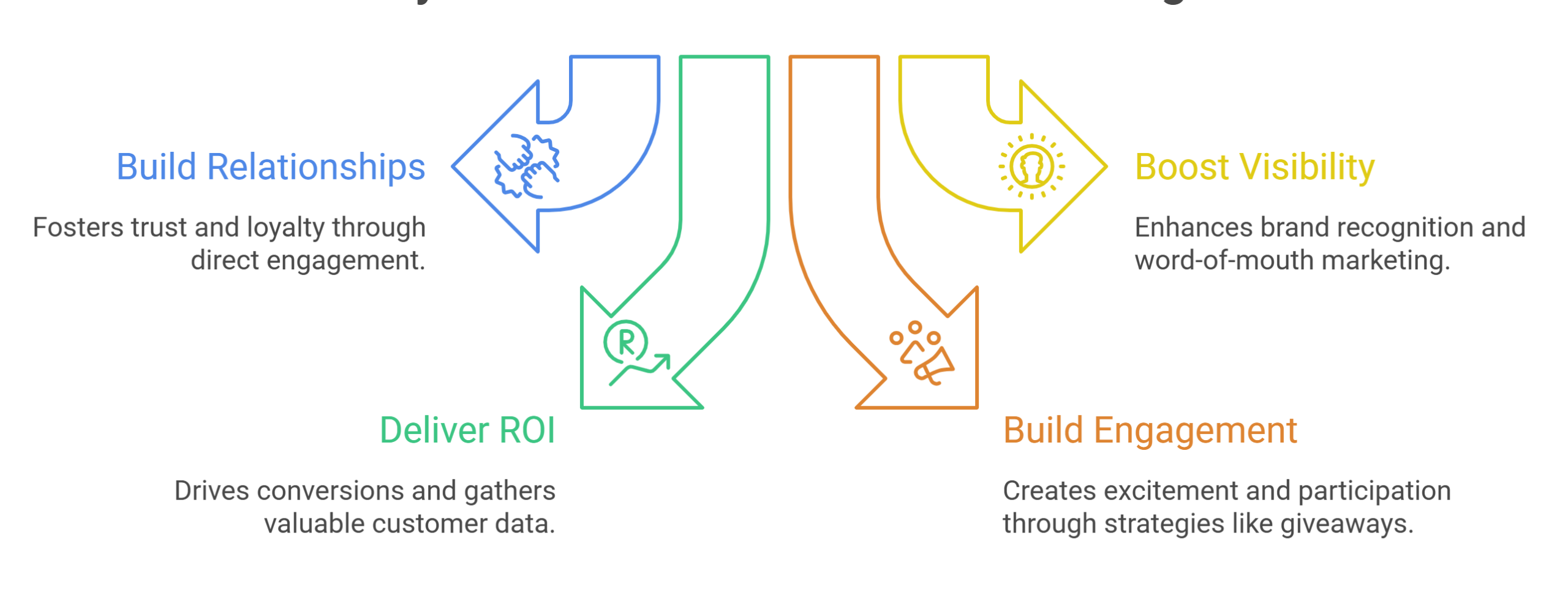
Here’s why event marketing matters for your brand:
Build Strong Relationships
Event marketing helps build direct relationships with your target audience and event attendees when done right. Brands get the opportunity to engage with them live and enhance their networking. These real-time conversations help boost trust and foster strong, loyal relationships.
Boosts Brand Visibility
With this level of personal interaction, users remember your brand for the long term, which improves your brand visibility. When you create engaging brand experiences for your attendees, they feel connected and thus become your loyal customers. This also increases your word-of-mouth marketing, thus raising your brand awareness.
Deliver Measurable ROI
When you have a purpose-driven event marketing plan, you showcase different products and services to your target audience. These audiences, when they attend your event, become loyal customers. To further improve ROI, many B2B brands also use flexible payment solutions like Ratio, which allow attendees or sponsors to commit faster without upfront budget pressure.
Build Brand Engagement
Event marketing, if done correctly, can build massive levels of engagement. You can host pre-event strategies, such as giveaways and contests, to increase attendee engagement. Meanwhile, you can also offer early-bird offers and VIP tickets that not only drive engagement but also build next-level excitement for the event.
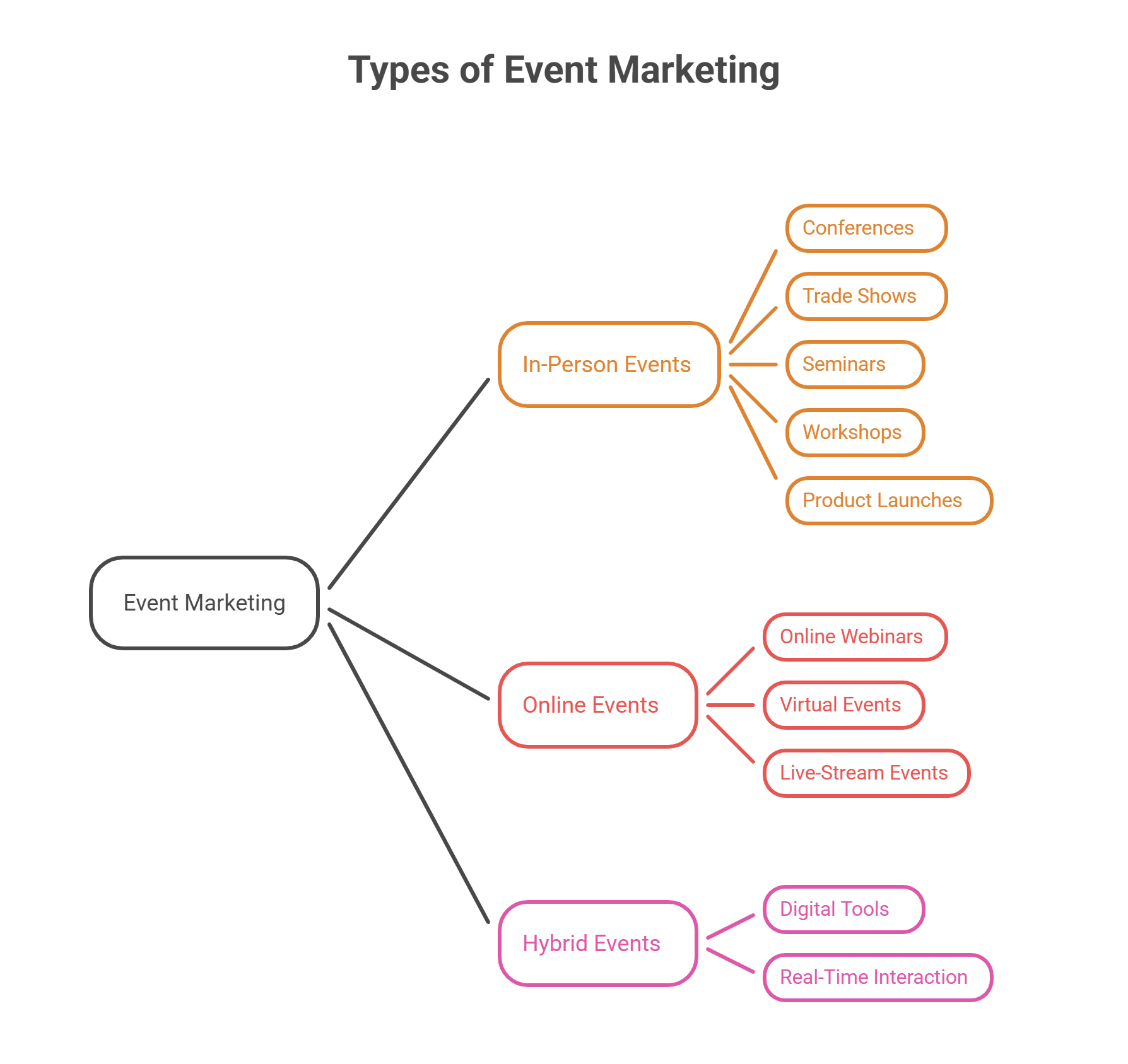
Types of Event Marketing
These are some of the types and forms of event marketing to look forward to:
In-Person Events
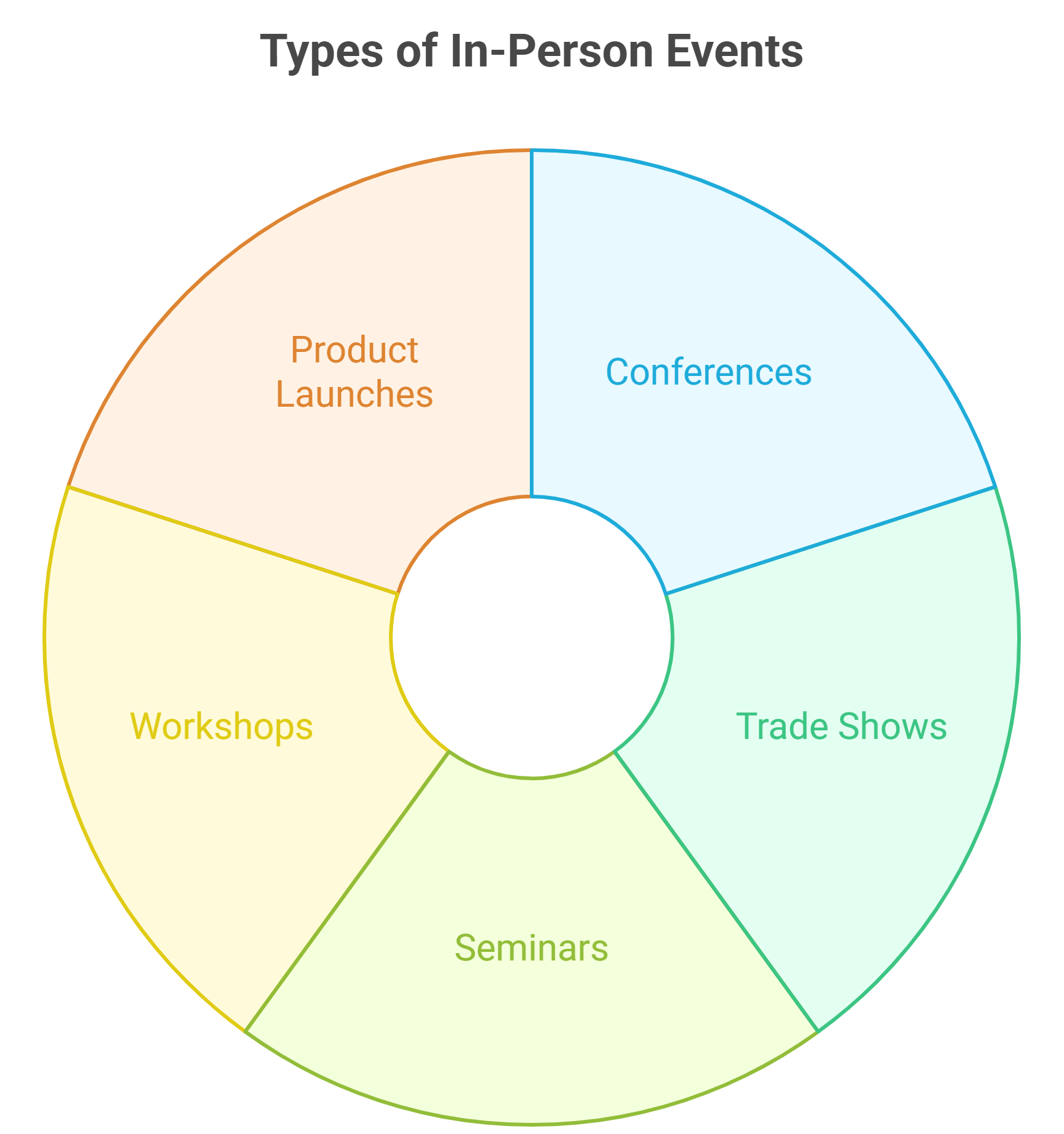
In-person events are live events taking place at physical locations where attendees have one-on-one interaction with each other. Its types include:
- Conferences: Conference events have their schedules filled with guest speakers, educational workshops, and valuable networking opportunities. They are largely B2B or B2C and revolve around business offerings and learning opportunities.
- Trade Shows: In trade shows, a business specifically promotes its products and services to potential customers and clients. These include brand-specific themes and booths to build engagement.
- Seminars: Seminar events are heavily focused on educating attendees. They have a small number of attendees and have in-depth discussions.
- Workshops: This event is also based on educating attendees and giving them hands-on training. An expert is invited, and they give training to the attendees, giving them an excellent learning experience.
- Product launches: These events are hosted to showcase new product launches to the customers and prospects. It aims to acquaint attendees with the new features that are coming with the launch and how they can benefit from them.
Online Events
Online events happen virtually and are of the following types:
- Online Webinars: These webinars do not require any physical location and offer educational lectures and discussions via online platforms.
- Virtual Events: This type of event allows users to participate from all over the world. It helps in global reach, and a diverse group of people can attend the event.
- Live-Steam Events: This event happens in real time, and attendees can have one-on-one interactions with each other through online platforms.
Hybrid Events
Hybrid events combine both in-person and online events to maximize the reach. The event setup is in such a way that it caters to both types of attendees using digital tools and real-time interaction.
How to Create a Winning Event Marketing Strategy
A winning event marketing strategy involves better planning, conducting market research, and smart use of AI. Let us have a look at certain points to create a winning marketing strategy:
1. Get Your Goals Clear
To make your event successful, the first and foremost thing is to have a clear set of goals for your event. Ensure that your event is linked with your business and marketing objectives, as every action you take is directed towards what your company aims to achieve. Some of the examples include sales pipeline, production adoption, brand retention, etc. After that, you will also be able to clarify the format of your event, such as a webinar, conference, or in-person event etc.
2. Conduct Market Research
Once you have clear goals, conduct market research to understand your target market, regions, and ideal attendees. This will also help you understand and extract past event data and surveys for better targeting. Identify what your audience actually desires in events, like what topics, speakers, and formats. This will help you personalize your messaging and plan an experience that resonates most with your target audience.
3. Build Event Offers and Assets
To attract and convert audiences, create an engaging event landing page with a strong copy, value-driven messaging, and CTA. Additionally, you can create event offers and assets such as promo videos, early bird offers, ad creatives, and more. All these offers build trust and transparency, and ensure that more and more customers will attend your event.
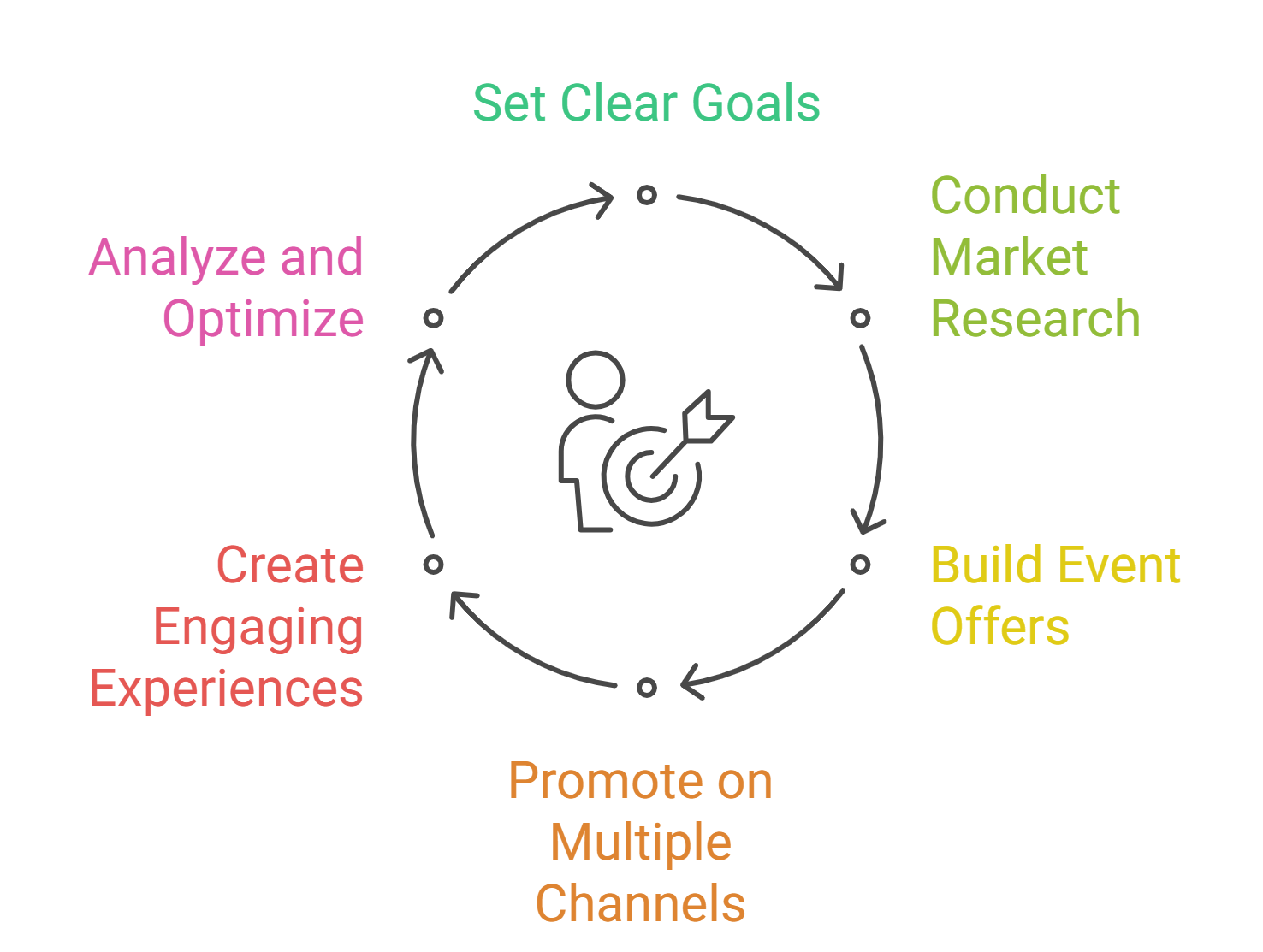
4. Use Multi-Channel Promotion
Social media is one of the most powerful audience engagement tools to reach a wider audience. Make sure that you promote your event on every social media channel to create buzz. However, focus more on where you have a larger event-specific audience. For example, if your event is B2B and is more active on LinkedIn, and if you have a more engaging and fun event, then platforms like Instagram, Facebook, and TikTok work well. You can run creative event marketing campaigns on these social media channels to build massive levels of engagement.
5. Create Engaging Experiences
Use event marketing tools such as Social Walls by Taggbox to create an engaging experience for the attendees. These tools have great features and elements to capture your attendees’ attention. Some of the relevant features include content moderation, layouts and elements, digital photo booth, etc. This way, you can build memorable experiences and engagement that drives trust and conversions.
6. Analyze and Optimize
From day one, make sure to measure and analyze the performance of your event. Track important metrics such as impressions, engagement, CTR, registrations, and more. Also, make sure you take a post-event follow-up to get proper feedback and improve your next event.
Event Marketing Promotion Strategies
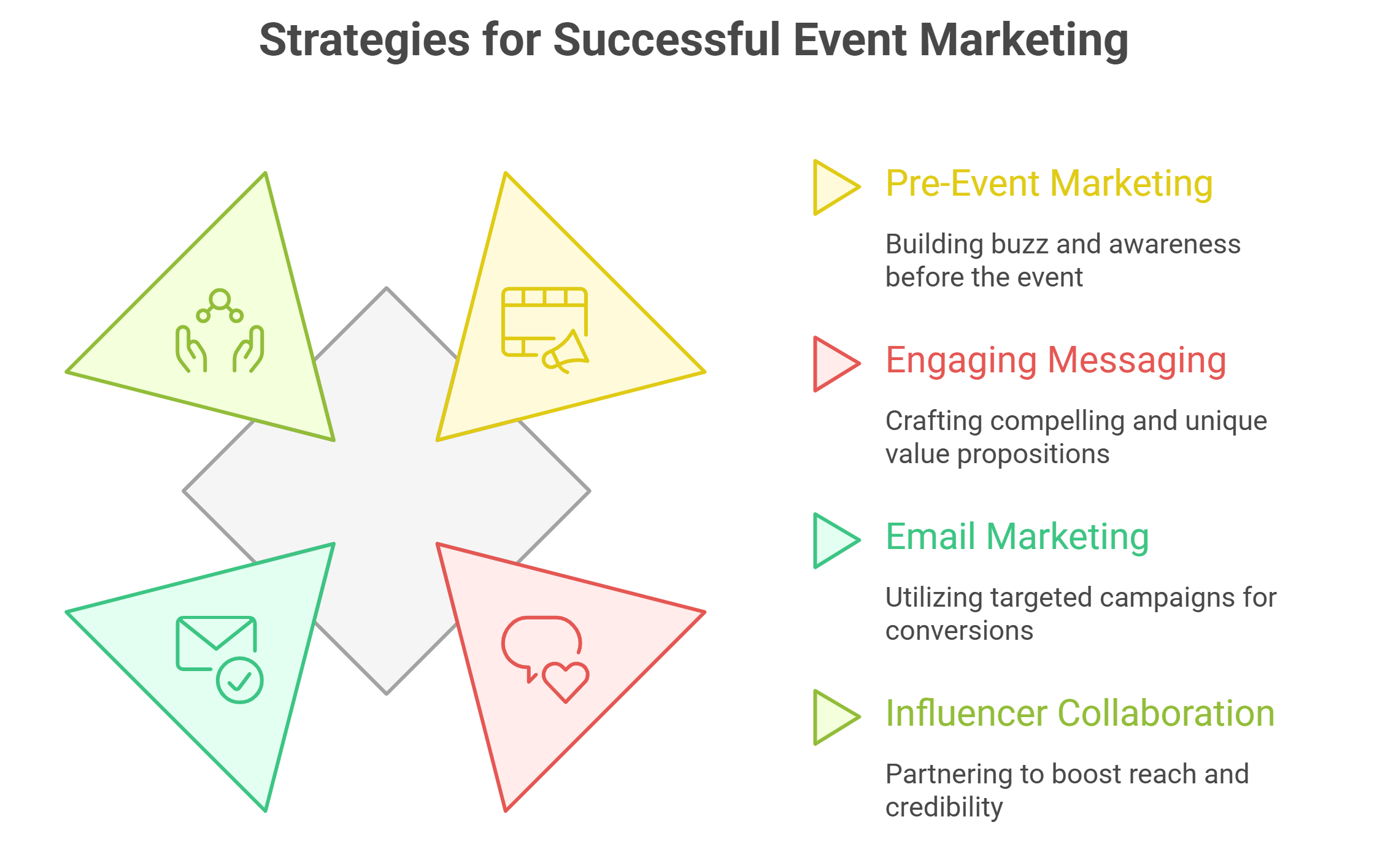
These are some of the proven marketing promotion strategies that you must apply for a successful event:
1. Your Pre-Event Marketing is Important
Planning pre-marketing event campaigns helps set the tone for the event and create buzz for the event. Host giveaways and content to build event awareness and increase word-of-mouth marketing. This approach helps a higher audience participation, increases ticket sales, and boosts brand visibility.
2. Keep Your Messaging Engaging
Crafting a compelling message and value proposition for your event means clearly articulating the unique benefits and experience it offers. It should clearly answer why your attendees choose to attend your event. Ensure that you create a simple yet engaging message for your target audience so that they are likely to convert and engage emotionally with your event.
3. Effectively Use Email Marketing
Email marketing is still one of the highest converting channels; you just need to have a list of past attendees and data. Email marketing produces 174% more conversions than social media. Some of the examples of event marketing include sending targeted email campaigns such as early bird offers, event updates, and last chance alerts. This creates urgency among the potential audience, and they are likely to convert. Additionally, don’t forget to A/B test the email campaign variations to improve your performance.
4. Collab with Influencers and Sponsors
Identify potential partners and sponsors that have similar brand intent and who can significantly boost your event marketing efforts. Working with partners who are genuinely interested in your business creates networking opportunities and adds value to both sides. Carry out collaborative social media campaigns and other cross-promotional activities to increase awareness and traffic to your event.
How to Maximize Event Marketing Impact
To maximize your event day marketing impact, try to build live engagement via event engagement software like Social Media Walls. Here we are focusing on Social Walls as this is one of the best event marketing software that leverages AI to help you collect, manage, and display social media and other content on your digital screens.
After all, a screen is what creates an impact and engagement during your event, right? It has a lot of amazing features and benefits that go beyond just creating immersive event experiences.
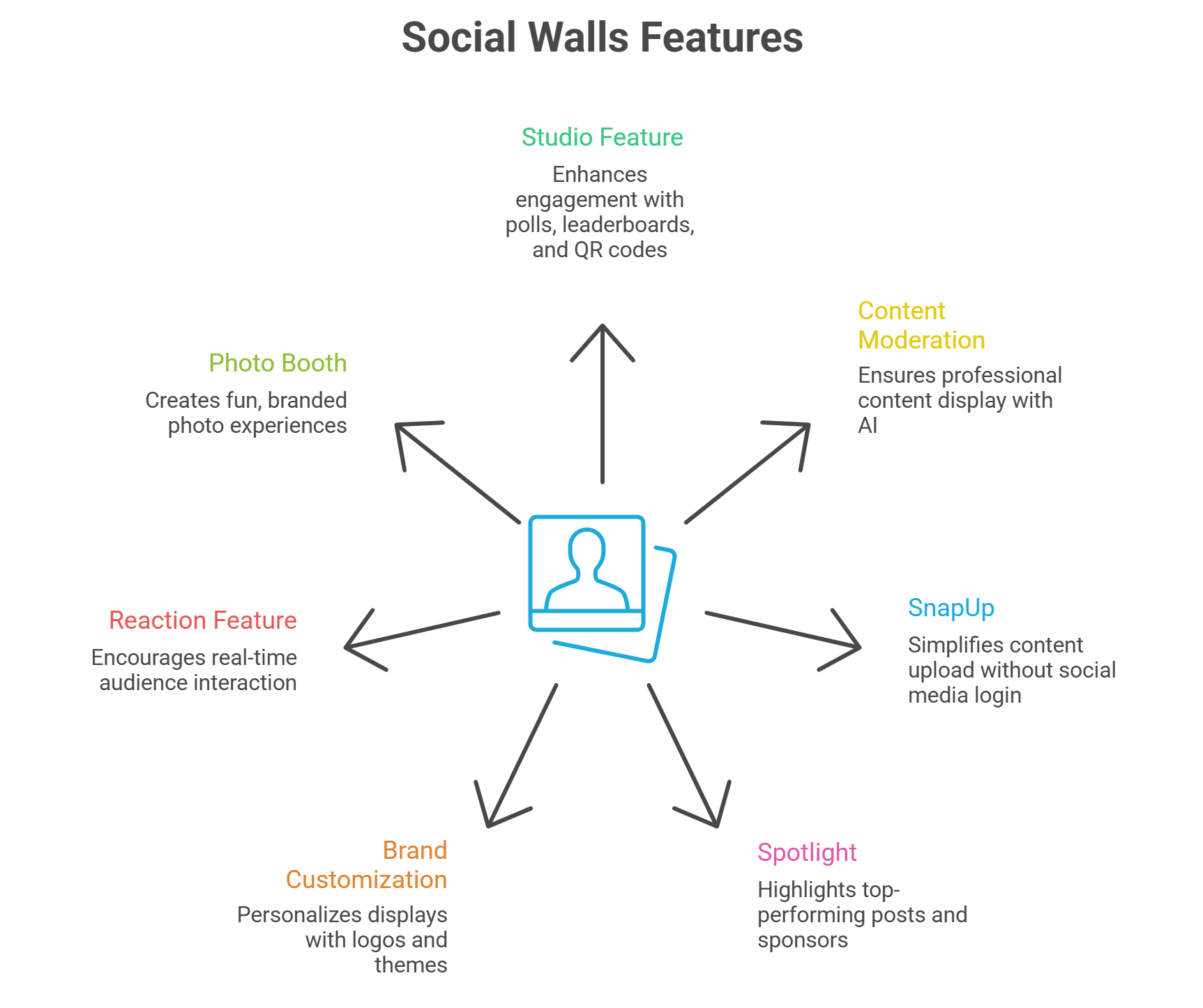
Check below what Social Walls can do for your event:
Studio Feature
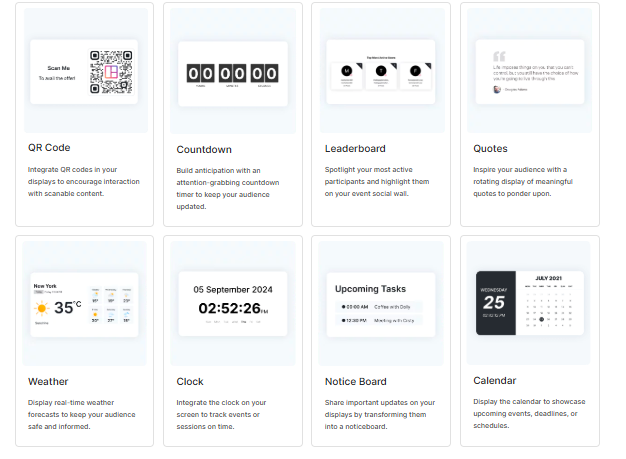
The studio feature by Social Walls includes all the engaging elements, such as polls, leaderboards, QR codes, quotes, notice boards, and more, to make your event 3x more engaging. Integrating all these features into your event displays will help you gamify your event and build real-time interaction. You don’t need any coding; the studio feature by Social Walls has seamless integration and no display limitation.
Content Moderation
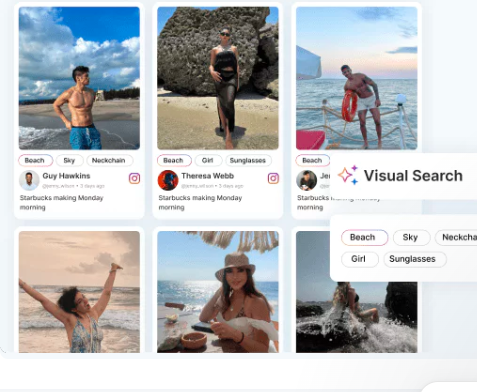
With seamless content curation, Social Walls has AI-powered content moderation that helps you remove all the irrelevant content from your feed. You have full control over your content so that your event display always looks professional. You can effortlessly generate an AI-powered tag based on the visuals, allowing you to spot and manage the aggregated content without manual efforts.
SnapUp(QR Code to Screen, No Social Required!)
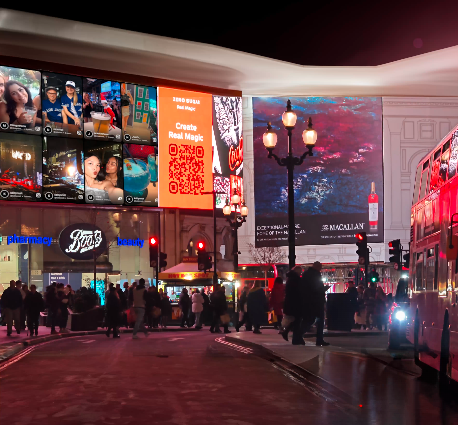
Do your attendees need to upload photos on social media first, and then can aggregate them on the display wall? Well, no more with the SnapUp feature. Using this feature, attendees can scan and upload the content directly to the wall, without any social media login. This way, you can effortlessly showcase any content on your digital display and collect more content.
Spotlight the Best Post
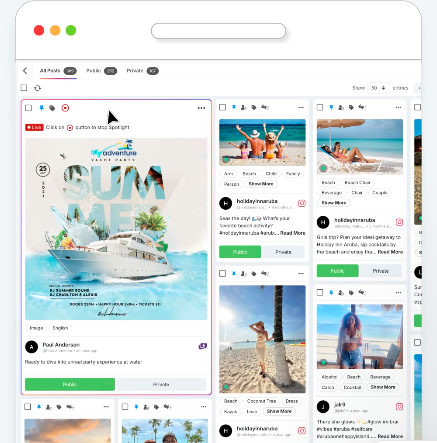
The Spotlight feature by Social Walls gives dedicated visibility to your top-performing posts. Select your top-performing posts or the one that you want to highlight, and you can display a larger picture of it at the center. You can even highlight your sponsors, guests, and other celebrity moments during the event.
Brand Customization
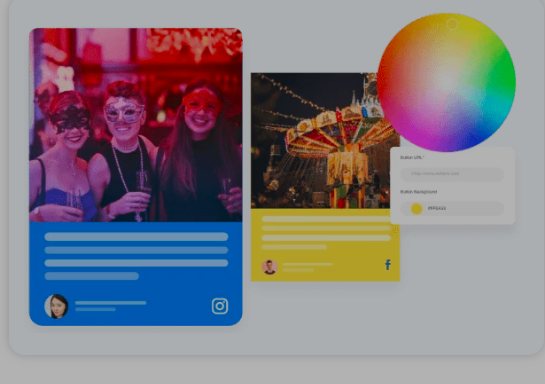
Social Walls allow you to personalize your digital displays with creative themes and layouts to match your event. It gives you complete creative control over customization and lets you add your brand logos, custom fonts, backgrounds, and more. This further enhances your brand image and builds credibility.
Reaction Feature
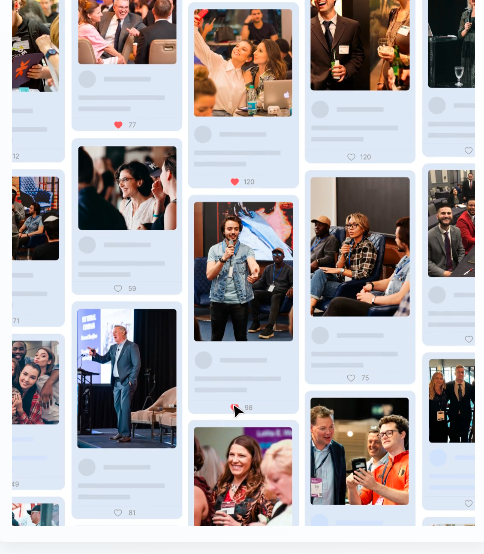
The Reaction feature lets audiences express their reactions and like their favorite posts across the entire social media feed in real time. When the attendees see their posts are liked by others, this even encourages more participation and engagement.
Photo Booth
The digital photo booth allows attendees to scan and add stickers, backgrounds, and other creative elements to their photos. This approach allows brand event marketers to proudly showcase their brand elements within the digital booth and generate massive levels of engagement. Attendees will enjoy this fun and interactive event experience, ensuring they remember your event for a long time.
Event Marketing Analytics and Follow-Up
A successful event doesn’t end when attendees leave the venue or log off the stream. The real value of event marketing is unlocked when you measure performance, analyze insights, and follow up strategically. This is where analytics and automation play a critical role in turning engagement into long-term business impact.
Measuring Event Marketing Success
To understand whether your event delivered real value, you need a comprehensive analytics framework that goes beyond vanity metrics.
Start by tracking core performance indicators, such as:
- Event registrations vs. actual attendance
- Engagement levels (polls, reactions, content uploads, hashtag usage)
- Session participation and dwell time
- Social reach, impressions, and mentions
- Leads captured and conversion rates
- Sponsor visibility and interaction metrics
Using these data points, you can calculate event ROI by comparing total event costs against outcomes like qualified leads generated, pipeline influenced, sponsorship revenue, and post-event sales conversions.
This is where Social Walls analytics add a major advantage. Social Walls provides real-time insights into:
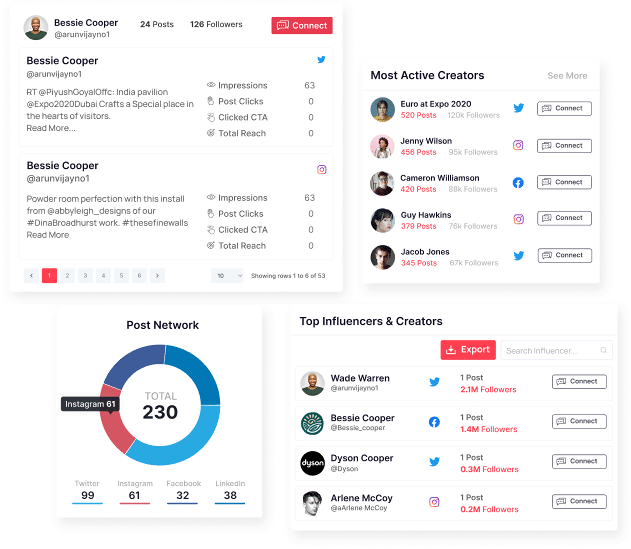
- Top-performing posts and content
- Audience participation levels across displays
- Reaction counts and interaction trends
- Content volume contributed via SnapUp and social platforms
These insights help you understand what resonated most with your audience, which moments drove maximum engagement, and which content formats should be replicated or improved in future events. By analyzing this data, you can continuously optimize layouts, CTAs, content strategies, and even sponsor placements for upcoming events.
Conclusion
It is clear from this blog that you don’t need a large amount of budget to enhance your event marketing. Just the right planning, strategy, and event display software can work wonders for your event. This way, you can amplify your event engagement and build real-time connections.
Social Walls help you effortlessly curate content, highlight key moments, track important metrics, and give you customization control. So try Social Walls today and create memorable moments that leave lasting impressions on your attendees.
Frequently Asked Questions
-
What is event marketing, and how does it work ?
Event marketing is a strategy where brands promote products or services through live, virtual, or hybrid events. It works by engaging audiences directly, creating interactive experiences, and building meaningful connections that drive awareness, leads, and conversions.
-
How much should I budget for event marketing?
Consider allocating 10-15% of your event budget to marketing a recurring event and 15-20% of your budget to marketing a new one.
-
What are the most effective event marketing channels?
The most effective event marketing channels include social media platforms, email marketing, event websites and landing pages, influencer and partner promotions, paid ads, content marketing, and on-ground activations, all working together to maximize reach, engagement, and registrations.
-
How do you measure event marketing ROI?
Event marketing ROI is measured using (Revenue Generated – Event Costs) / Event Costs × 100, while also factoring in lead value, CAC, conversions, and customer lifetime value. Social Walls analytics further strengthen ROI tracking by measuring real-time engagement, top-performing content, reactions, and attendee participation.

Upendra leads the marketing team at Social Walls, bringing over 9 years of expertise in event marketing and SaaS growth strategies....