 Events
  Digital Signage
  Hybrid Events
  Instagram Wall
 Twitter Wall
  TikTok Wall
 Hashtag Campaign
 Social Media Aggregator
 Linkedin Wall
 Facebook Wall
 Studio
 SnapUp
 Spotlight
 Analytics
 Moderation
 Customization
 Reactions
 Photo Booth
 Education
 Fitness
 Hospitality
 Healthcare
 Retail
 Agencies
 Sports
 Finance
 Non-profit
 News & Entertainment
 Ecommerce
 Blog
Blog Support
 Our Clients
 Integration
 Case Studies
 Get Inspired


Top Audience Engagement Examples That Actually Drive Interaction
Author: Dakshit Mathur
11 minute read
Table of Content:
Brands with high engagement see 5.78x higher growth (HubSpot, 2025). That number alone should make you pause and think about new audience engagement examples. Because in 2026, attention isn’t scarce, connection is.
Audience engagement is about getting your audience to do something, comment, vote, share, react, or create. And when that happens, retention goes up, and loyalty becomes real.
Let’s break down audience engagement examples that actually work, across social media, events, and offline moments too. Read more!
What is Audience Engagement?
Audience engagement can be defined as the extent to which your audience actively interacts with your content, brand, or experience. It goes beyond mere views and impressions to actual participation.
If someone clicks, comments, shares, scans a QR code, submits content, or answers a poll, that’s engagement.
Metrics worth tracking:
- Engagement rate (likes, comments, shares)
- Poll or quiz participation rate
- Time spent on content or sessions
- User-generated content submissions
- Click-throughs and conversions
Audience Engagement Examples That Actually Work
Here are 15 smart audience engagement examples that you must try this year –
Digital Marketing – Online Strategies That Spark Interaction
1. Interactive Quizzes and Polls
People love quizzes. Not because they’re educational. Because they’re about them, quizzes and polls flip the script from “consume this” to “participate here.” They’re fast, low-effort, and weirdly addictive. Also, people love seeing how others answered. Curiosity wins.
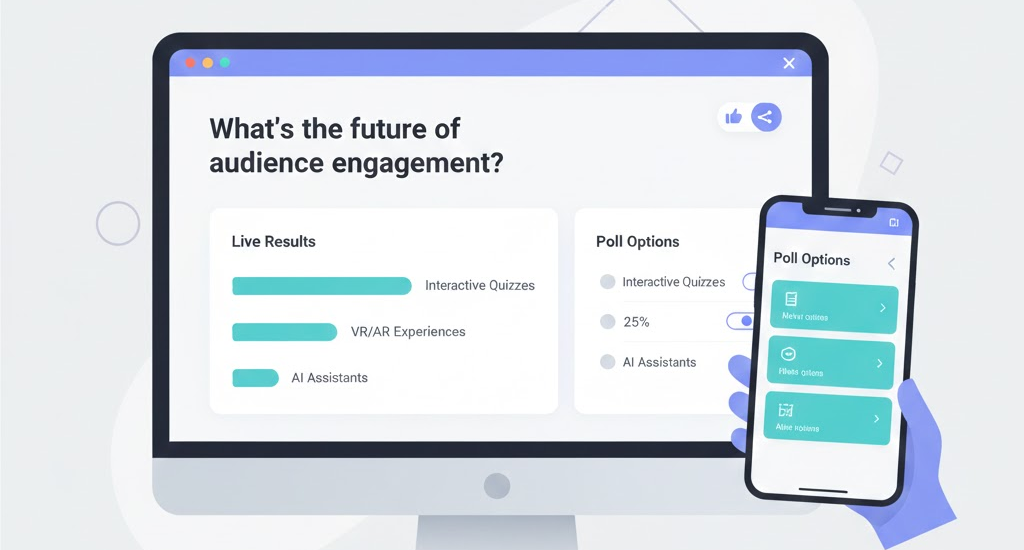
Audience Engagement Example: BuzzFeed-style quizzes like “What’s Your Event Tech IQ?”
How to use it:
- Create quizzes using Typeform or Outgrow
- Share them via email and social media
- Display live poll results on a social media wall during events
Why it works: When people see others participating live, hesitation disappears. They jump in, every single time.
2. User-Generated Content (UGC) Campaigns
UGC works because it doesn’t feel like marketing. It feels like real people doing real things. When brands invite audiences to share photos, opinions, or experiences, and then actually showcase them, engagement skyrockets. People don’t want to be marketed to. They want to be featured.
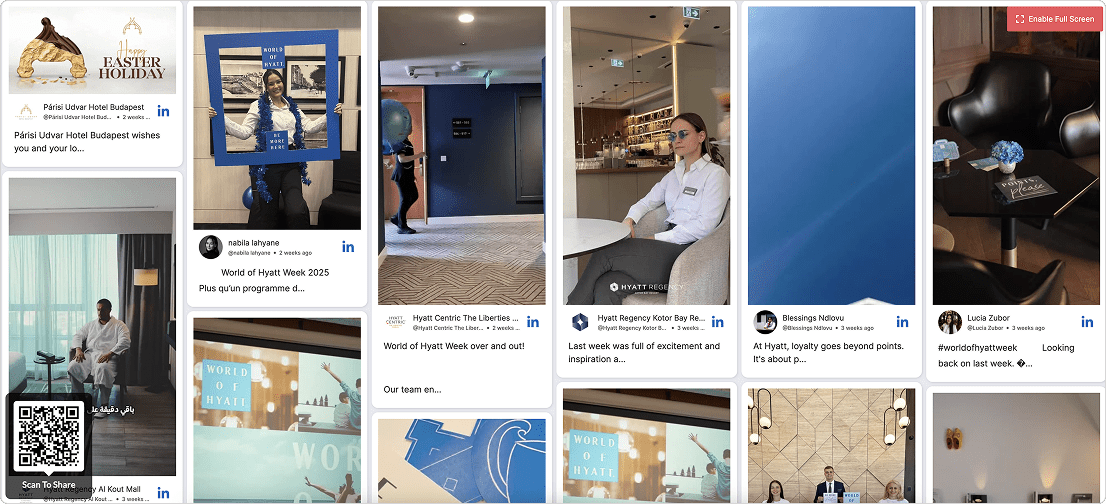
Audience Engagement Example: Hyatt encouraged guests to share real travel moments and highlighted them across digital touchpoints and live displays. This approach boosted social buzz and made guests feel part of the brand story.
How to use it:
- Launch a simple hashtag campaign
- Curate posts and display them live using Social Walls
- Add CTAs like “Post to get featured” or “See yourself on screen.”
Why it works: UGC builds trust faster than ads ever will. Because people trust people.
Hyatt Used Social Walls to Boost Buzz
Now it’s your turn. Display live UGC and make your audience feel seen, valued, and connected

 No Credit Card Required
3. Live Q&A Sessions
Live Q&As turn silent audiences into vocal ones. When people know they can ask questions in real time, engagement spikes instantly. It also makes brands feel accessible, not distant logos hiding behind content calendars.
Audience Engagement Example: HubSpot’s recurring webinars with live Q&A sessions reportedly drive up to 30% higher lead generation because people feel involved, not lectured.
How to use it:
- Host AMAs on Instagram Live or Twitter Spaces
- Answer audience questions live
- Highlight top questions and comments on your social wall
Why it works: Your audience literally tells you what content they want next.
Social Media: Viral Tactics for Platforms
4. Carousel Posts with Storytelling
Carousels work because they slow people down. Swipe culture forces attention. When paired with storytelling, before/after, step-by-step, or reveal formats, engagement naturally increases.
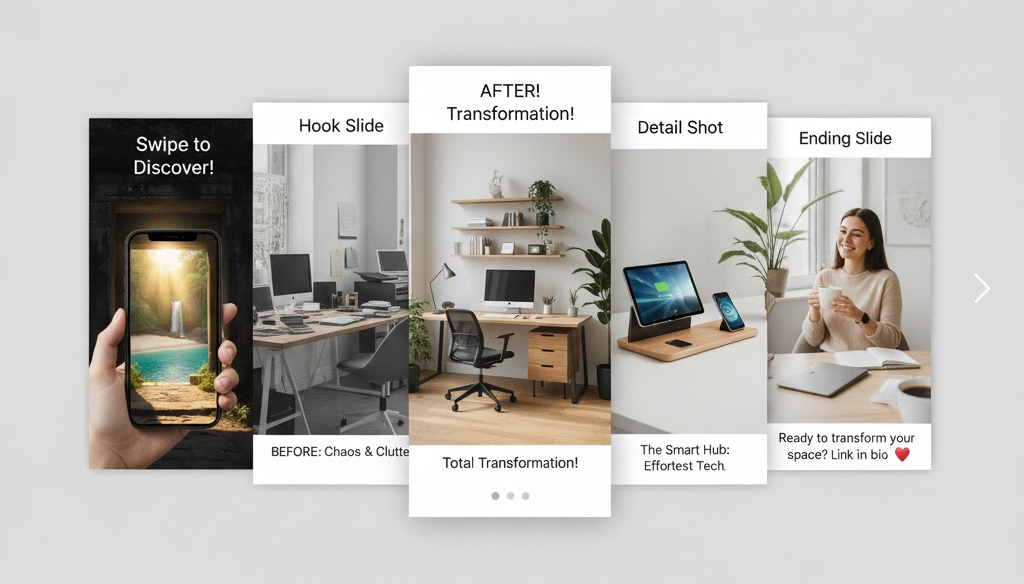
Audience Engagement Example: Airbnb’s “Hidden Gems” carousel series mixes visuals with micro-stories, earning millions of saves and shares.
How to use it:
- Build a clear narrative across slides
- Use curiosity hooks on slide one
- End with a comment-trigger question
Why it works: Carousels aren’t flashy. They’re effective. Big difference.
5. Gamified Challenges (TikTok Duets)
Gamification taps into the participation instinct. Duets, challenges, and brand sounds invite users to join instead of just watching. Fun lowers friction and the audience really loves participating in such fun ways.
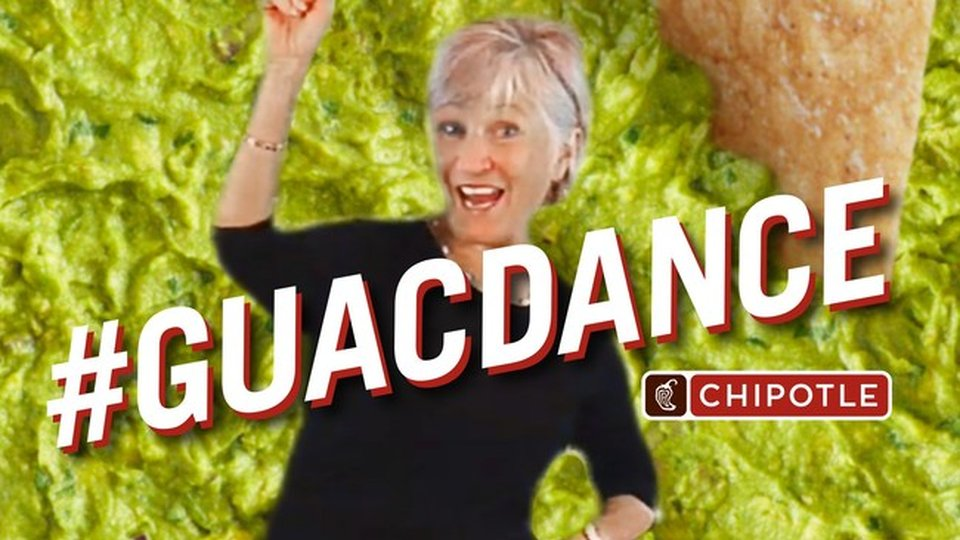
Audience Engagement Example: Chipotle’s #GuacDance challenge exploded to billions of views, driven purely by participation and humor.
How to use it:
- Create a branded sound or challenge
- Encourage duets and remixes
- Feature top submissions on your page and social wall
Why it works: If it feels fun, people will do the marketing for you.
6. Social Media Walls at Events
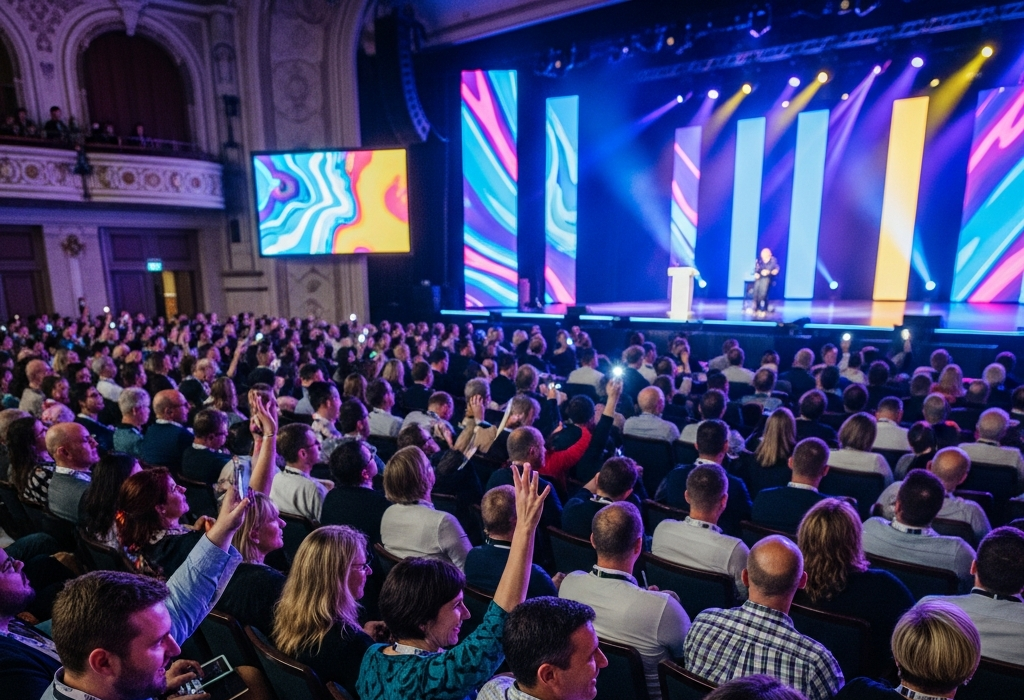
Seeing your own post on a big screen hits different. Social walls pull in posts, hashtags, and mentions and display them live, turning attendees into contributors.
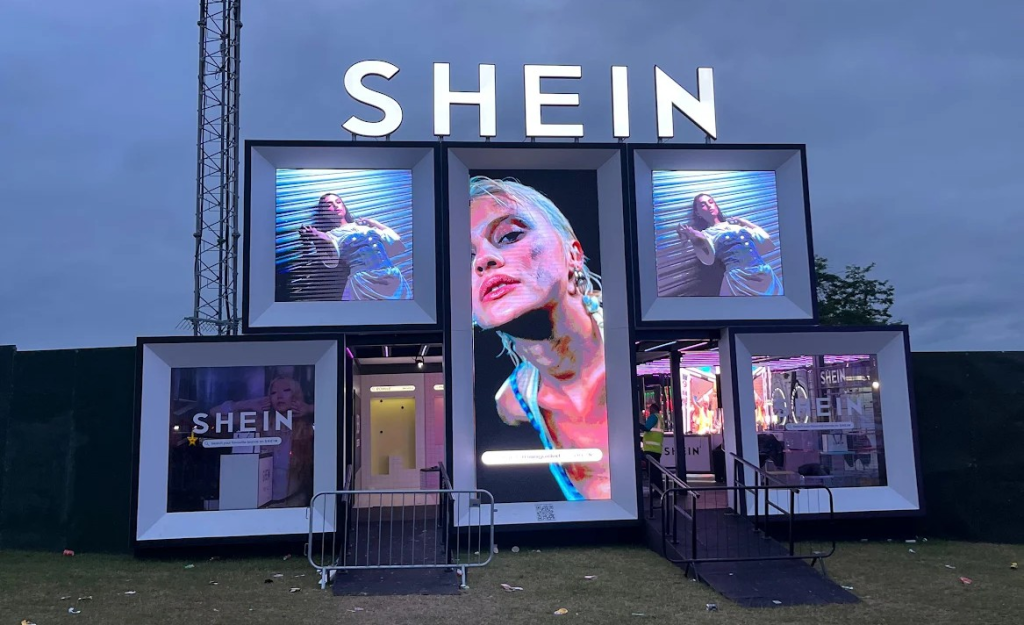
Audience Engagement Example: At a SHEIN event, a live social wall helped drive 3.5× higher engagement and over 2,500 UGC posts, simply by showing audience content in real time.
How to use it:
- Aggregate posts using event hashtags
- Moderate content for safety
- Display across livestreams or venue screens
Why it works: Social walls don’t just show content. They spark more of it.
SHEIN Used Live Social Walls to Spark 3.5× Engagement
You can replicate this. Showcase attendee posts live and turn spectators into participants
No Credit Card RequiredEvent Tech: In-Person and Hybrid Engagement Boosters
7. Live Polling and Word Clouds
Live polling breaks the awkward silence. It gets hands (and phones) moving. Tools like Social Walls and Mentimeter turn audiences into contributors, not spectators. As powerful audience engagement tools, they let users vote in real time, share opinions instantly, and interact faster—keeping energy high and participation continuous.
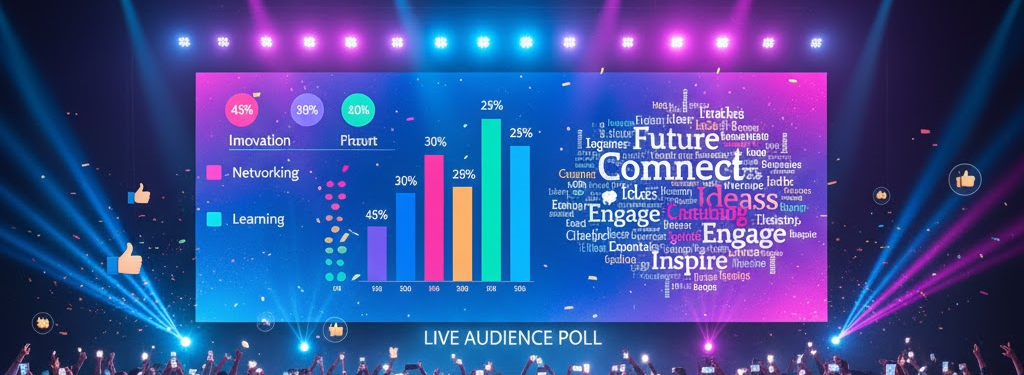
Audience Engagement Example: At TEDx events, live polls and word clouds have been shown to triple Q&A participation.
How to use it:
- Add polls during sessions
- Show results instantly on screens
- Use insights to guide discussions live
Why it works: Instant feedback = instant engagement.
Must Read: Audience Engagement Ideas That Drive Real Results
8. AR Filters and Photo Booths
AR filters turn attendees into brand ambassadors. People love sharing photos, especially when they look cool doing it. Let your audience create real content for you.
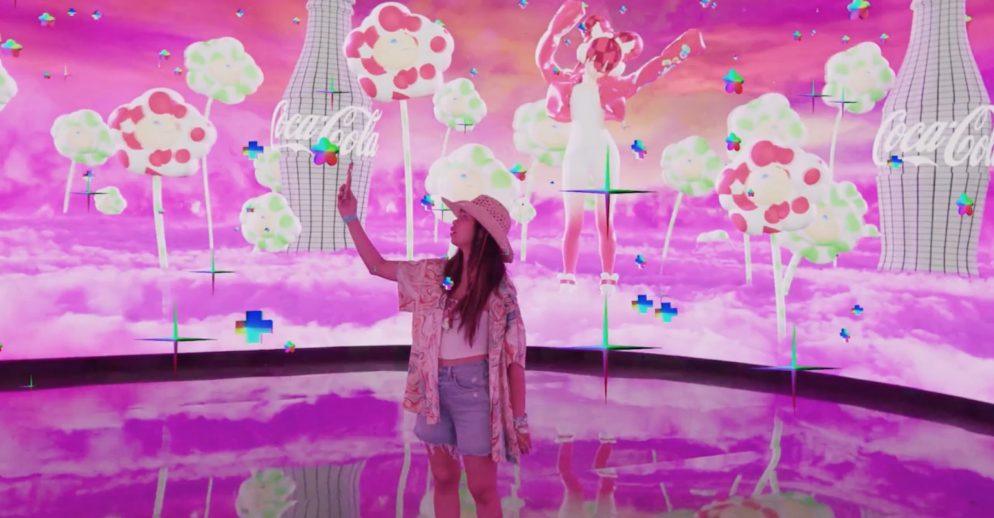
Audience Engagement Example: Coachella’s branded AR experiences led to 1M+ shares, turning attendees into organic promoters.
How to use it:
- Create custom Snapchat or Instagram filters
- Promote them via QR codes
- Display shared photos on your social wall
Why it works: If it’s shareable, engagement follows.
9. Gamified Apps with Leaderboards
Leaderboards tap into basic human instinct: I want to win. When points, ranks, or badges are involved, even quiet attendees start participating. Gamified apps turn simple actions like check-ins or polls into mini-competitions. Seeing your name climb the leaderboard pushes people to engage again and again, not just once.
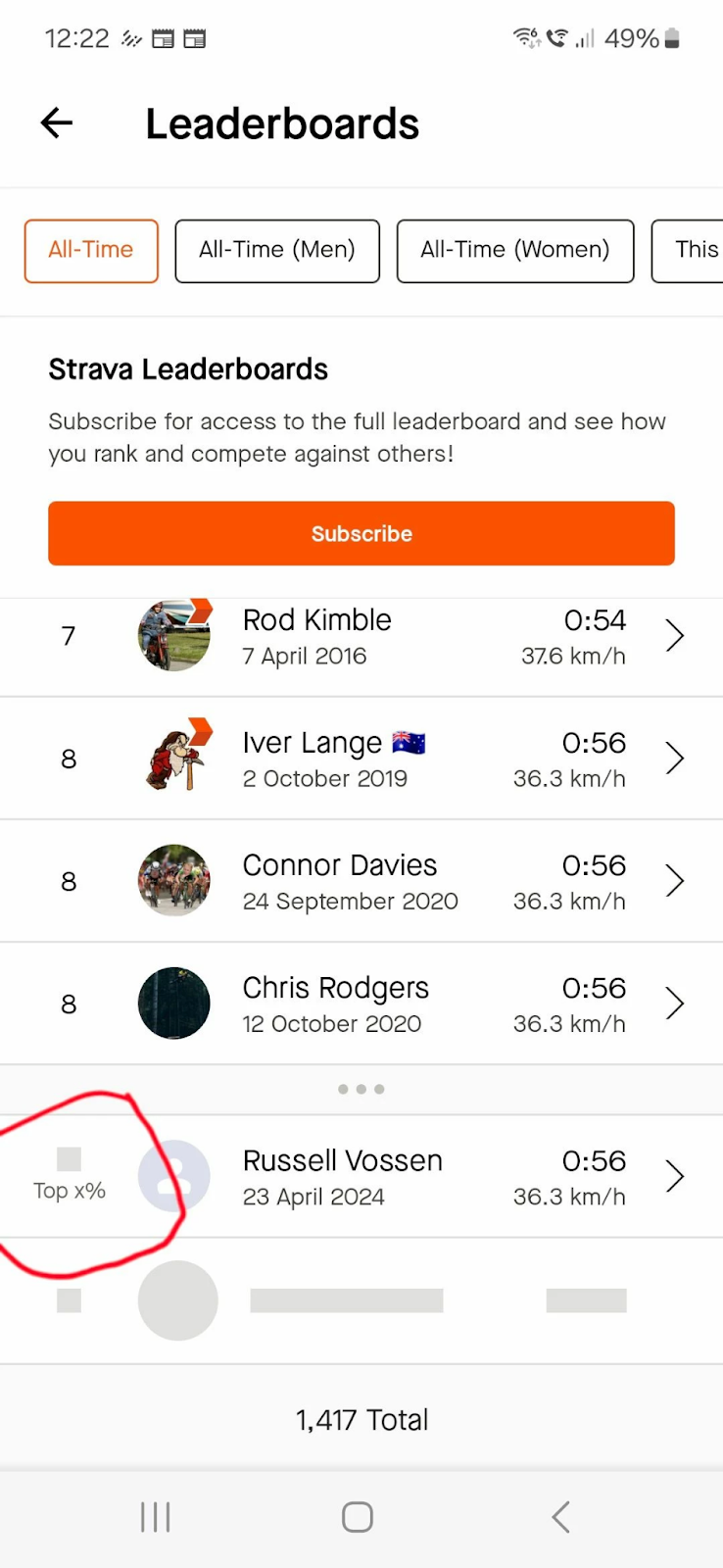
Audience Engagement Example: Strava uses leaderboards to drive engagement among athletes. Users can compare their performance on specific segments against others, join challenges, and compete in friendly ways. This friendly competition encourages consistent activity and motivates users to improve, keeping the community active and highly engaged.
How to use it:
- Reward check-ins, posts, poll answers
- Display leaderboards on digital signage
- Sync updates with social walls for visibility
Why it works: Competition + visibility = participation.
Content Marketing: Long-Form Hooks
10. Interactive Infographics
Static infographics get glanced at. Interactive ones get explored. When users can click, hover, or reveal data, they spend more time engaging instead of scrolling past.
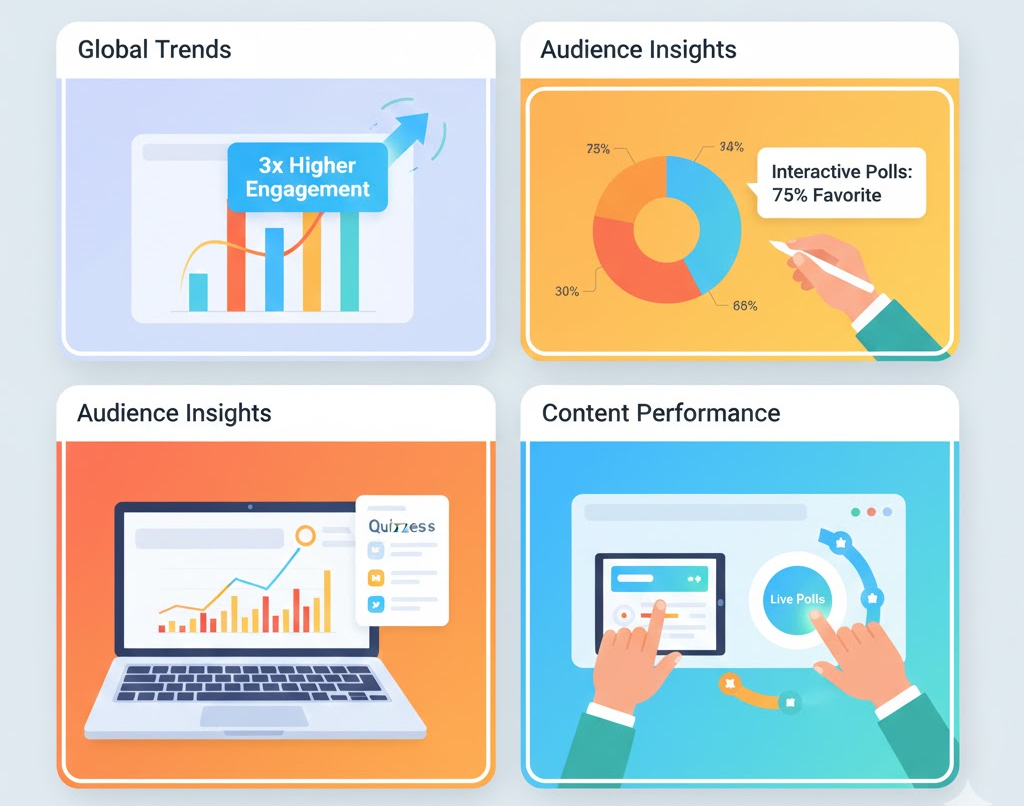
Audience Engagement Example: Venngage’s interactive designs see 3× higher click-through rates.
How to use it:
- Add clickable sections and animations
- Share across blogs and social
- Repurpose highlights on your wall
Why it works: More interaction means longer attention.
11. Personalized Email Series
Generic emails get ignored but personalized ones get opened. Recommendation-based emails feel thoughtful, not salesy. Audiences prefer non salesly emails that aren’t generic but customized for them.
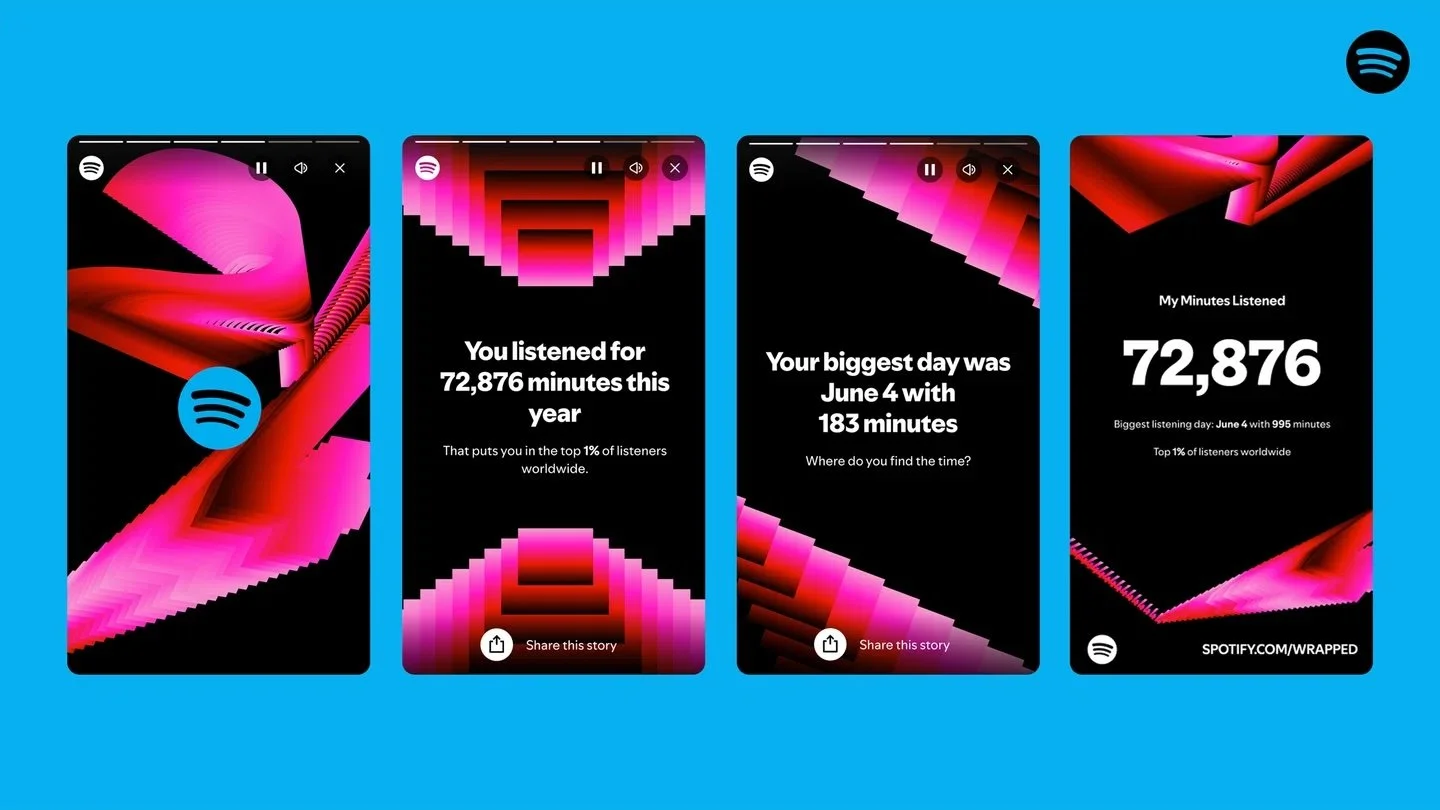
Audience Engagement Example: Spotify Wrapped drives a 40% spike in open rates every year.
How to use it:
- Segment audiences by behavior
- Personalize subject lines and content
- Include social proof or UGC snippets
Why it works: People engage when content feels made for them.
Want to Use This at Your Next Event?
From conferences to hybrid summits, brands are using this tools to boost interaction
No Credit Card RequiredEmerging AI-Powered Examples
12. Chatbot-Driven Conversations
Smart chatbots can hold conversations, not just answer FAQs. When done right, they feel helpful, not annoying. Moreover, the audience also prefers talking with a smart chatbot instead of just searching for answers in the FAQs section.
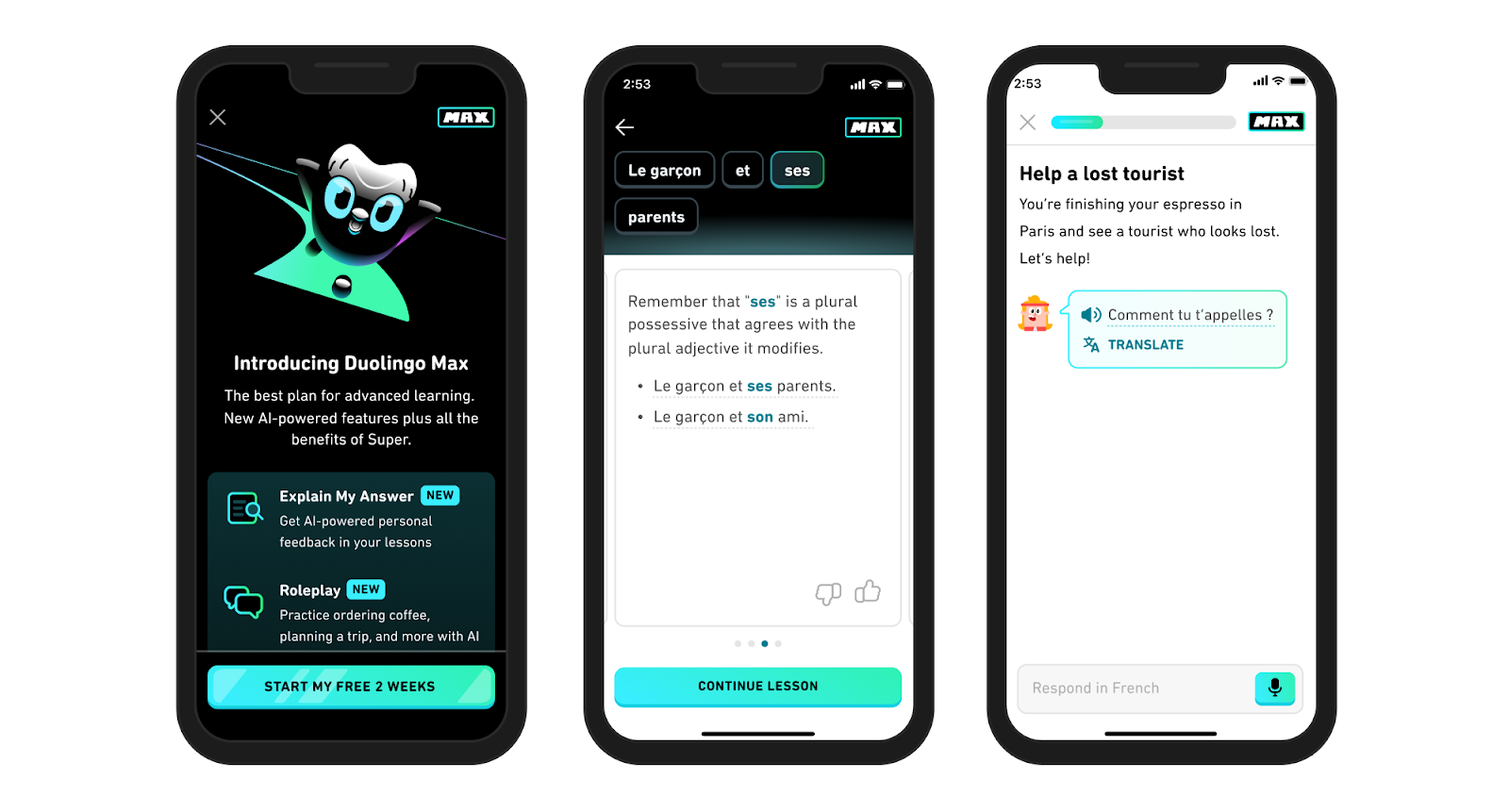
Audience Engagement Example: Duolingo’s chatbot increased daily active users by around 50% by keeping learners engaged longer.
How to use it:
- Deploy bots where communities already exist
- Keep tone friendly, not robotic
- Use insights to personalize follow-ups
Why it works: Bots should support humans, not replace them.
13. Predictive Personalization
Predictive feeds show content users are likely to engage with next, based on behavior. Don’t we all like Netflix to recommend movies and shows based on what we are currently watching?
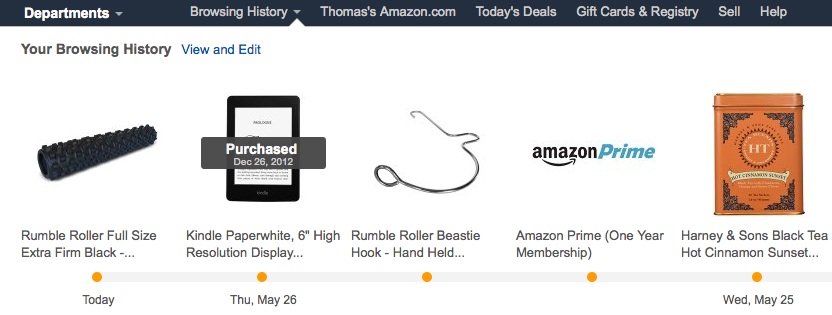
Audience Engagement Example: Amazon credits 35% of its sales to personalized recommendations.
How to use it:
- Analyze engagement patterns
- Curate feeds dynamically
- Feature top content on social walls
Offline and Hybrid Tactics
14. Experiential Pop-Ups
Experiential pop-ups are marketing events that focus on giving people a memorable experience through the use of interactive and physical spaces. Just like a mini-event, installation, or a branded setup, they allow people to participate by touching, trying, or experiencing rather than just looking at it virtually.
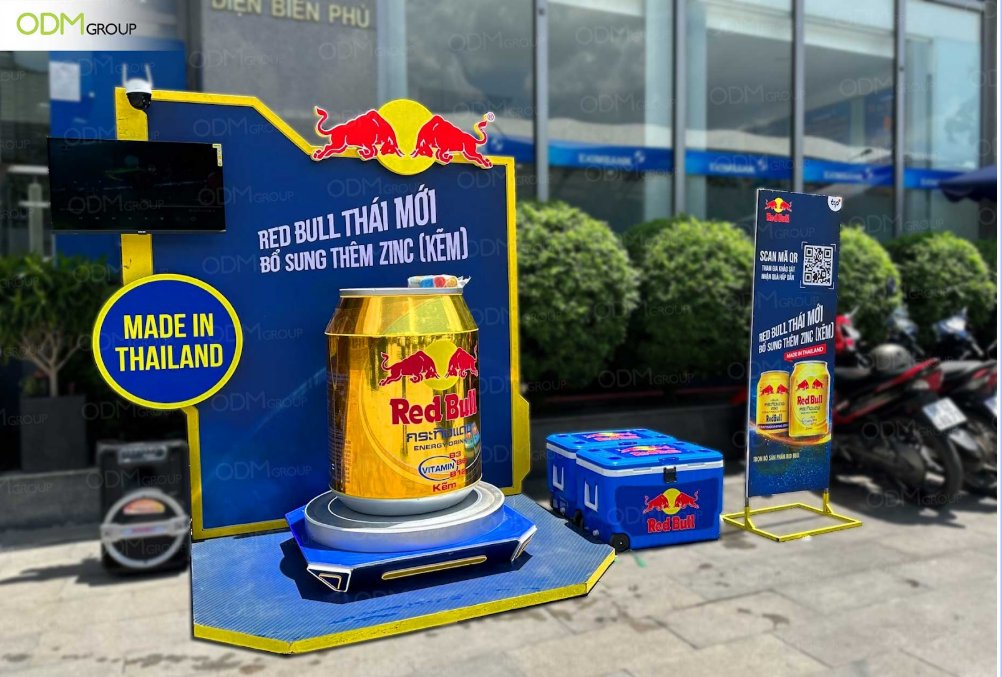
Example: Red Bull’s stunts blend live adrenaline with massive online buzz.
How to use it:
- Add QR-driven interactions
- Encourage social sharing
- Display live social feed on walls
15. Feedback Loops via NFC Badges
NFC (Near Field Communication) badges are electronic badges or wristbands that are capable of wirelessly transmitting data between them and mobile devices. Attendees need not fill out forms or wait for surveys; they can simply present their badge to a device and instantly give feedback, vote, or register their opinion.
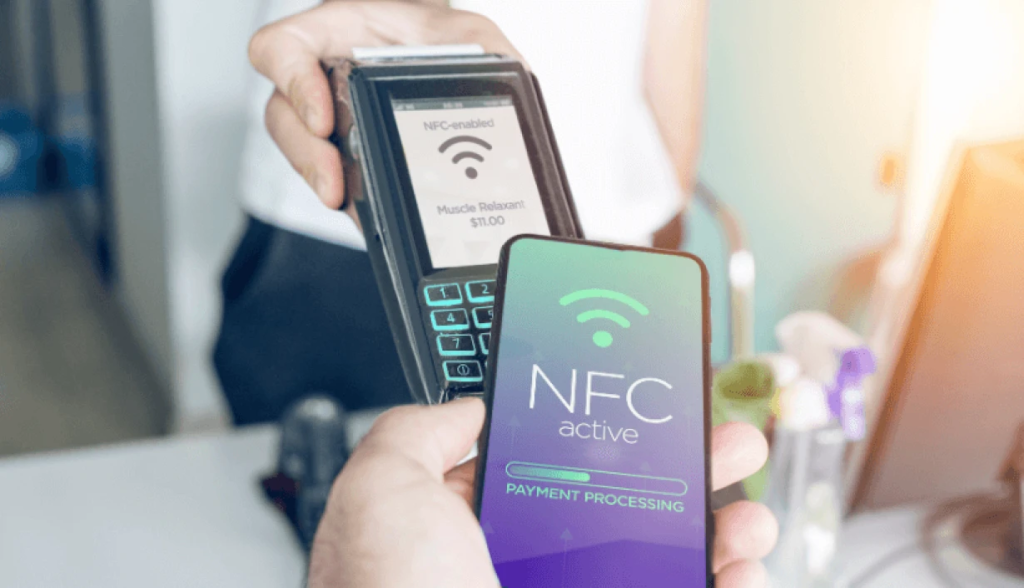
Audience Engagement Example: Tech conferences use NFC feedback to adjust sessions in real time and spotlight top speakers.
How to use it:
- Enable instant polls via badge scans
- Display feedback live on social walls
- Reward participation
Why it works: Fast feedback keeps audiences involved.
Common Mistakes to Avoid
Even the best engagement tactics can flop if you fall into these traps:
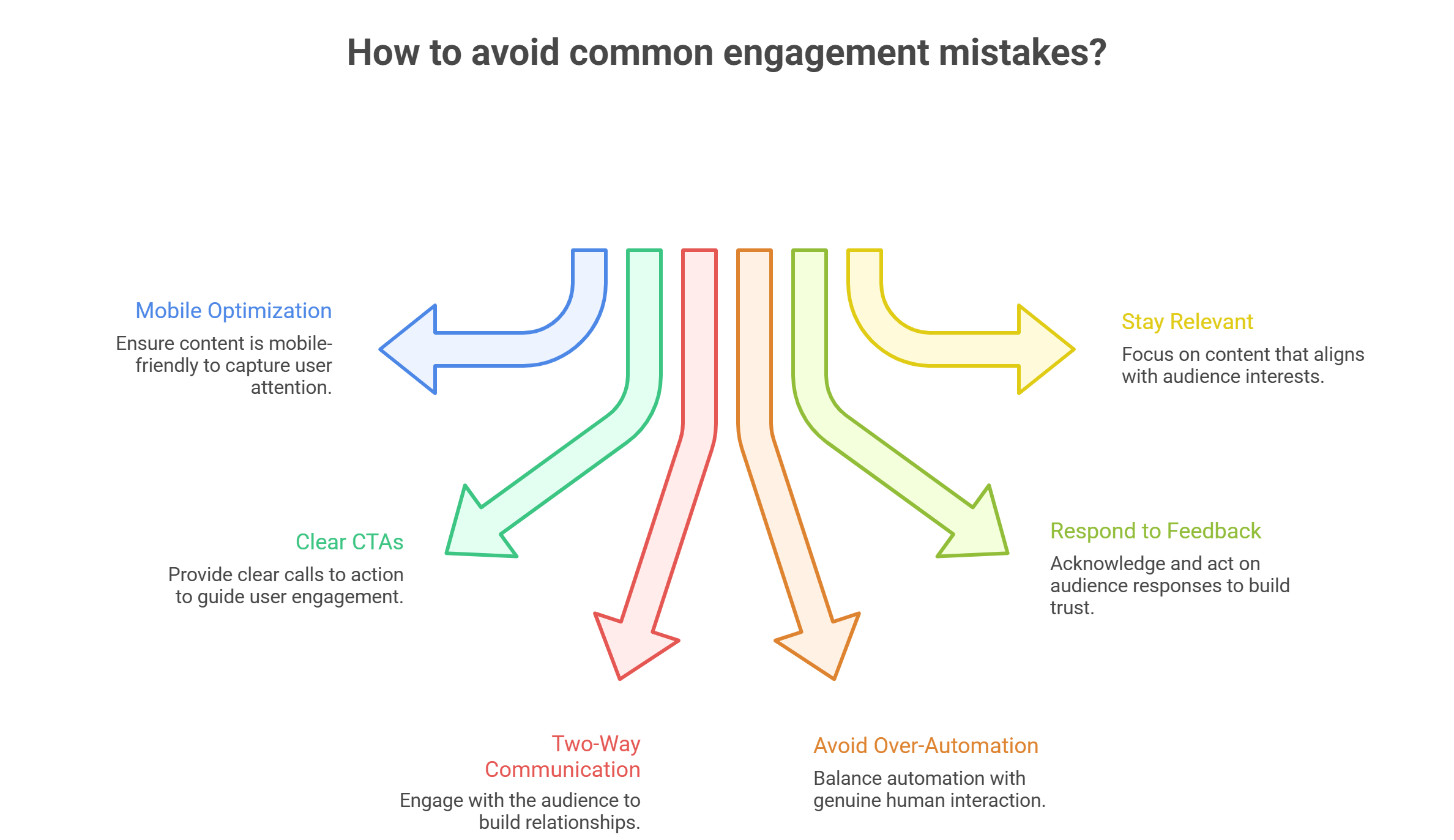
- Ignoring mobile optimization: Most users scroll on phones. If your content isn’t mobile-friendly, it won’t get attention, no matter how clever it is.
How to avoid it: Always preview posts on mobile first. Use short text, big visuals, readable fonts, and tap-friendly buttons.
- Posting without clear CTAs: If people don’t know what to do next, engagement drops. Always tell them to swipe, click, vote, or comment.
How to avoid it: Add one simple action per post—swipe, comment, vote, share. Don’t overwhelm. Be obvious.
- One-way communication: Engagement isn’t a monologue. If you post and vanish, audiences won’t stick around. Respond, react, and start conversations.
How to avoid it: Reply to comments, react to mentions, and ask follow-up questions. Show there’s a human behind the brand.
- Over-automation: Scheduling tools are great, but fully automated interactions feel robotic. Balance efficiency with genuine human touches.
How to avoid it: Automate posting, not conversations. Manually reply, personalize comments, and jump in when needed.
- Ignoring audience responses: Feedback is gold. Ignoring comments or poll results kills trust and slows growth.
How to avoid it: Track responses weekly. Acknowledge opinions, act on insights, and close the loop publicly when possible.
- Chasing trends without relevance: Viral trends are tempting, but irrelevant content confuses your audience. Stay on-brand while experimenting.
How to avoid it: Ask one question before posting: Does this make sense for my audience? If not, skip it, no matter how viral it is.
Pro tip: Start small, test, improve. Let real data guide creativity, not assumptions.
Try Social Walls and turn your audience into your biggest asset
No Credit Card RequiredConclusion
Audience engagement is not about creating a lot of noise; it is about forming a connection. The brands that will come out on top in 2026 are those that do not raise their voices but rather improve their hearing. Online or offline, the audience’s engagement is always increased when they feel they are seen, heard, and involved.
Tools like social walls turn participation into a shared experience, amplifying reach while building community. If you want your audience to stop scrolling and start engaging, make them part of the story.
Frequently Asked Questions
-
What are the best examples of audience engagement?
Interactive content, live Q&As, social walls, UGC campaigns, and gamified challenges actively involve audiences, encouraging participation, sharing, and real-time interaction instead of passive consumption.
-
Why is audience engagement important?
Audience engagement builds trust, improves retention, strengthens loyalty, and increases conversions by making people feel heard, valued, and emotionally connected to the brand experience.
-
What content gets the most engagement?
Personalized, interactive, and community-driven content performs best because it feels relevant, encourages participation, and allows audiences to contribute rather than just consume.
-
How do you measure audience engagement?
Engagement is measured by tracking interaction rates, participation levels, time spent on content, feedback, shares, comments, and repeat actions across platforms.
-
How can brands increase audience engagement?
Brands can increase engagement by listening to their audience, experimenting with formats, responding actively, and involving users in real-time experiences that encourage two-way interaction.

With a total experience of 7 years in content writing, Dakshit Mathur is well-versed with various types of content, including blogs,...