
 Events
  Digital Signage
  Hybrid Events
  Instagram Wall
 Twitter Wall
  TikTok Wall
 Hashtag Campaign
 Social Media Aggregator
 Linkedin Wall
 Facebook Wall
 Studio
 SnapUp
 Spotlight
 Analytics
 Moderation
 Customization
 Reactions
 Photo Booth
 Education
 Fitness
 Hospitality
 Healthcare
 Retail
 Agencies
 Sports
 Finance
 Non-profit
 News & Entertainment
 Ecommerce
 Blog
Blog Support
 Our Clients
 Integration
 Case Studies
 Get Inspired


What is Social Monitoring and Why It Matters for Your Brand
Author: Upendra Goswami
6 minute read
Table of Content:
Whenever Netflix drops a new season, everyone floods Instagram with feedback, some good, some, let’s say, too honest. A brand’s ability to spot and respond to those direct shoutouts? That’s “social monitoring.”
It’s more like being at a crowded party, hearing your name, and replying on the spot. But there’s more to the story if you wanna keep audiences hooked (and avoid disasters that break the internet).
What is Social Monitoring?
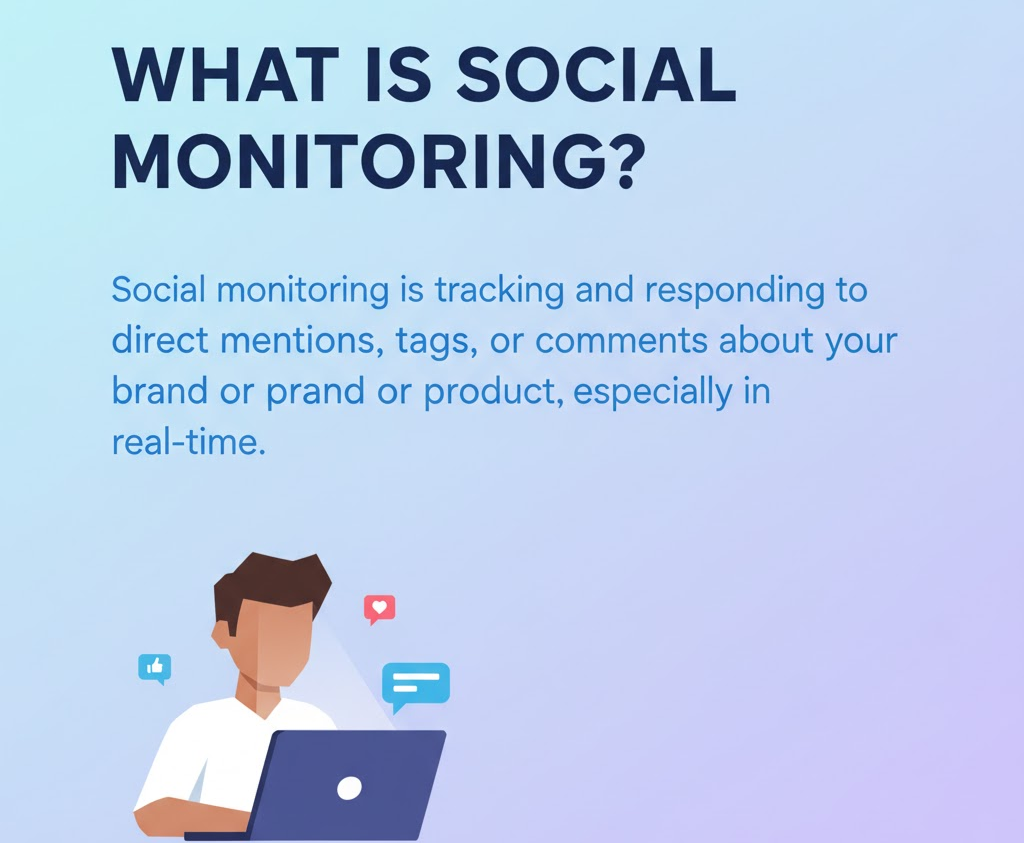
Think of it as checking your phone for notifications, then jumping in to answer a user’s question about your latest feature. Tools like Social Walls, and Hootsuite make this job easier for brands that don’t want to miss anything. It’s a reactive move, designed to put fires out before they burn too long.
Examples of Reactive Engagement
- A complaint on Twitter/X?
You spot it instantly, respond fast, and de-escalate before screenshots start circulating. - A user tags your brand in an Instagram Story?
Monitoring helps you jump in with a reply, repost, or offer—while the story is still live. - Product confusion in comments?
You clarify on the spot instead of letting misinformation spread.
Social Walls analytics feature, the one I work with often, pulls every mention into a one-stop dashboard so nothing slips away, not even the messy threads. You can also use such tools to track mentions, DMs, and keywords, as they give real-time alerts that help you act, not just watch.
Don’t Miss What People Are Saying About You
Track every mention, tag, and comment in real time with Social Walls

 No Credit Card Required
What is Social Listening?
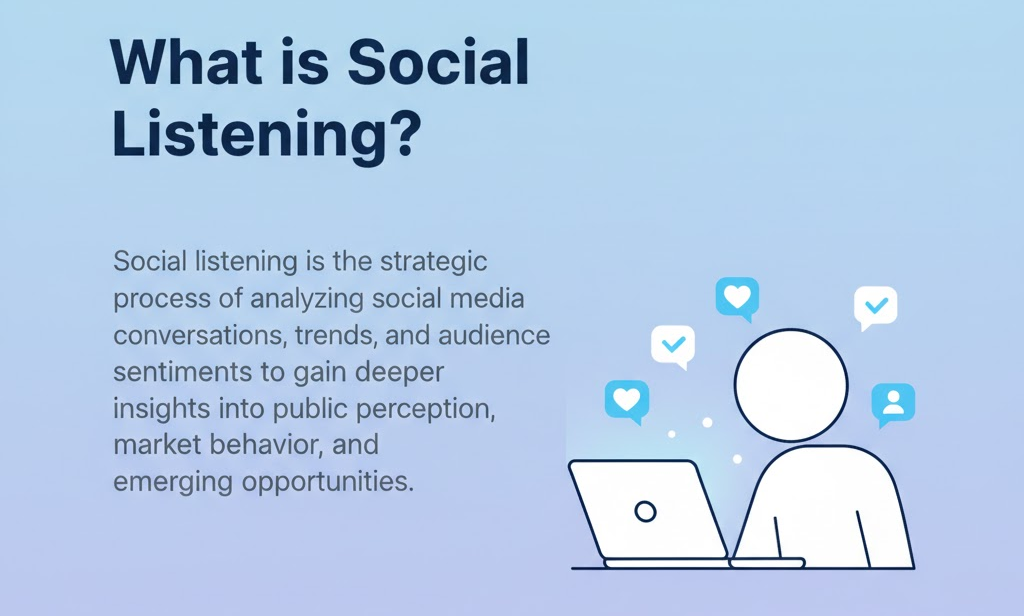
Social listening is about going deeper, not just reacting but actually “listening” to the crowd, even when they’re not saying your name directly. It involves analyzing broader conversations, trends, and sentiment. This approach helps brands make proactive decisions, shaping next quarter’s marketing strategy or deciding what product feature gets built first.
How Social Listening Works (with Sentiment Analysis & Data)
- Aggregates all the chatter, even about competitors, trends, or pain points people mention in passing.
- Uses smart sentiment analysis to sort positive, negative, and neutral buzz.
- Data is collected, processed, and turned into insights that actually drive campaigns, not just daily replies.
Analytics show not just what people say, but also what they feel, helping brands get ahead before a trend turns into a tidal wave.
Social Monitoring vs Social Listening
Here’s the part everyone messes up on LinkedIn: those two words? They’re not twins.
| Social Monitoring | Social Listening | |
| Main Focus | Individual mentions, tags | Full industry conversations |
| Purpose | Fast, personal engagement | Deep analysis & big insights |
| Time-frame | Immediate, right-now stuff | Long-term trend tracking |
| Outcome | Issue fixing, reputation | Smarter products & campaigns |
| Used Tools | Social Walls, Sprout Social | Talkwalker, Brandwatch, Meltwater |
| Approach | Reactive | Proactive |
More Differences
- Social monitoring fixes what’s called “micro” issues: someone has a problem, you reply pronto, done.
- Social listening is about “macro” trends: spotting that everyone’s talking about sustainability, so your next ad might need some eco stats.
Want a recent example? McDonald’s responded directly to $18 Big Mac complaints with monitoring, then realized through listening that there was a whole movement about fast food prices bubbling up, which led them to create $5 deals instead. That’s textbook stuff.
How to Use Social Monitoring and Listening Together
Like Batman and Robin, Better Together
Think of social monitoring as the firefighter, when a crisis hits, you answer questions fast, resolve problems, and sometimes save the day (and a sale). A customer is upset about the slow delivery. You see their tweet, reply, and fix things before the damage spreads.
Social listening is the wise friend who sees the storm coming, not just the raindrops. When broader market talk turns negative about delivery speed, listening helps you spot the trend so you tweak logistics for next season.
Best Practices: Integrate, Don’t Isolate
- Use monitoring for support and reputation: respond to direct mentions, complaints, or praise immediately.
- Use listening to improve products, craft hashtag campaigns, and stay ahead of the curve in your market.
- Blend dashboards and automate alerts so your team keeps up and your strategy never lags.
- Regularly schedule review meetings to turn insights into action, instead of just reading reports.
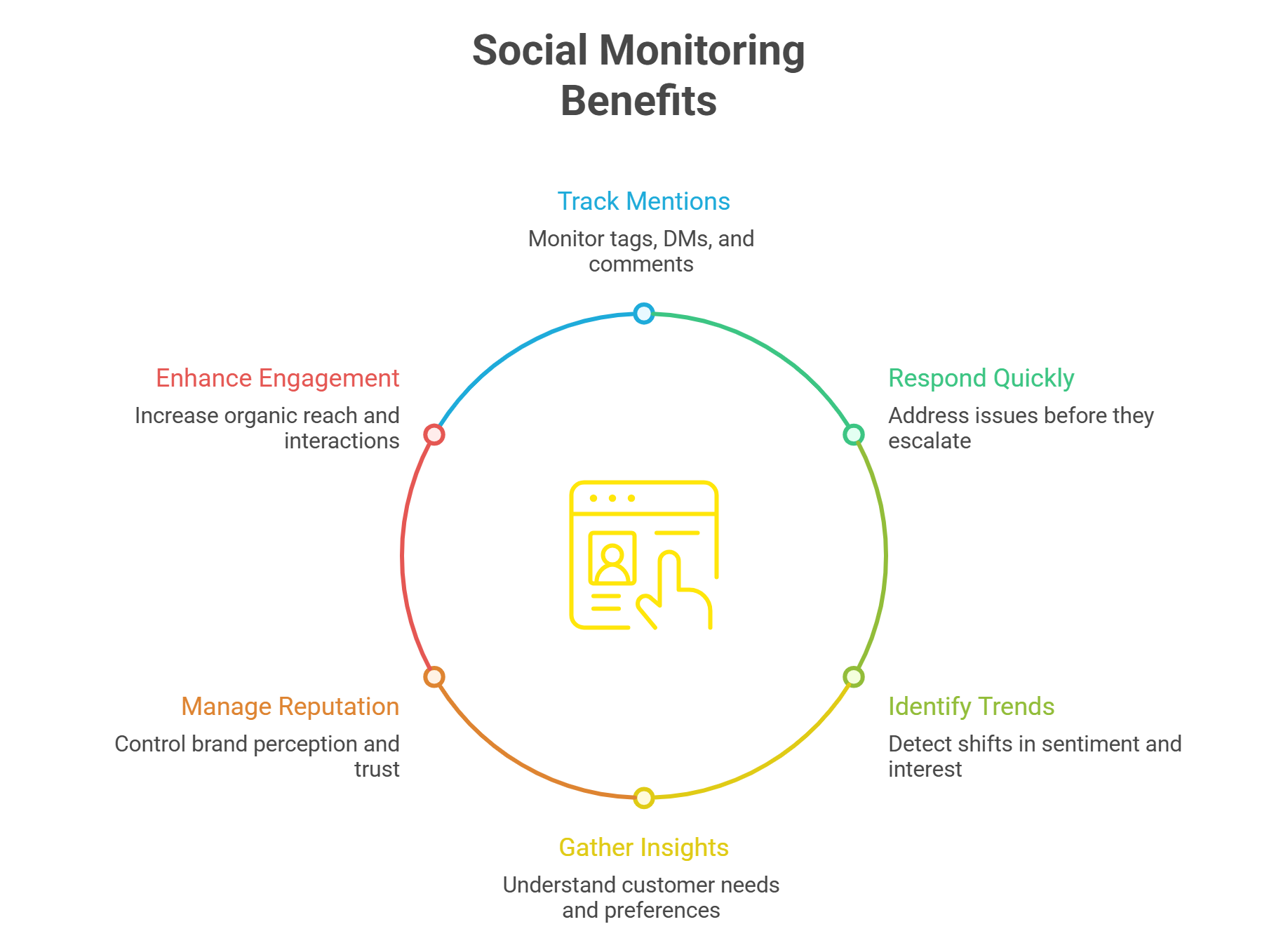
Benefits of Social Monitoring
Here’s why your brand will thank you later –
Customer Support That Actually Works
You react to issues before they balloon, boosting responsiveness and turning unhappy users into loyal fans. Social media monitoring helps you track every tag, DM, and comment; your response time goes up, and so does that warm, fuzzy feeling about your brand.
Sense the Trend And Ride It
Listening tools catch shifts in sentiment early, so you know if your latest product is trending or tanking. That means faster pivots and more relevant campaigns, instead of playing catch-up.
Authentic Market Knowledge
With social listening, you start to see what people really want. Get a jump on rivals by spotting trends or unmet needs that no one else on your radar picks up.
Crisis Management
The strongest brands don’t wait for a crisis to trend. Social media monitoring acts as an early warning system, flagging negative sentiment, repeated complaints, or sudden mention spikes. This allows teams to step in early, respond calmly, and prevent small issues from turning into internet disasters.
Better Product Development
Any feedback loop is gold when monitoring picks up recurring complaints (that wobbly phone stand, again!), listening detects the root cause, and guides upgrades people actually want.
Real-Time Brand Reputation Control
Every public reply shapes perception. Social monitoring ensures your brand is present in conversations where it matters most, showing accountability, transparency, and responsiveness in front of a live audience.
Higher Engagement Without Extra Ad Spend
Quick replies, reposts, and acknowledgments increase organic reach. Social monitoring helps brands capitalize on user-generated content, mentions, and praise—turning everyday interactions into engagement boosters.
Bottom Line
Social monitoring isn’t just about replying fast—it’s about staying visible, relevant, and in control of how your brand shows up in public conversations. Brands that monitor well don’t just react; they win attention, trust, and loyalty in real time.
Social Monitoring Tools You’ll Want in Your Marketing Arsenal
| Monitors Mentions & Tags | Deep Listening/Analysis | Notable Feature | |
| Social Walls | Yes | Yes (with analytics) | Visualizes mentions in live social walls |
| Sprout Social | Yes | Yes | Unified inbox and trend monitoring |
| Talkwalker | Limited | Yes | Advanced AI-powered trend and sentiment |
| Meltwater | No | Yes | Market intelligence across platforms |
| Brandwatch | No | Yes | Powerful competitor analytics |
Social Walls with Analytics combine both worlds, tracking every direct shoutout and surfacing the mood of the crowd in real-time, which is how modern brands build audience engagement that lasts.
Ready to Stay Ahead of the Conversation?
Try Social Walls and build stronger brand engagement
No Credit Card RequiredConclusion
Social monitoring and social listening are two tools that every brand needs to stay relevant. Monitoring helps you handle daily customer needs, while listening lets you play the long game, planning campaigns, improving products, and building the kind of brand loyalty that stands out.
Want to see both in action? Try Social Walls, and watch your brand reputation grow in real time.
Frequently Asked Questions
-
What is the difference between social listening and social monitoring?
Social monitoring tracks direct mentions and responds quickly, while social listening analyzes broad conversations for strategic market insights.
-
Why are both social listening and monitoring important?
Monitoring provides fast customer support and reputation safety; listening fuels smarter decisions, future-proofing your brand.
-
How does social monitoring help in marketing?
By catching feedback, issues, and praise right away, brands stay agile, responsive, and trusted, something no algorithm can fake.
-
Is social listening more reactive than social monitoring?
Nope! Social listening is proactive, digging through data to spot trends before they hit the news. Monitoring is the fast responder, acting after mentions pop up.

Upendra leads the marketing team at Social Walls, bringing over 9 years of expertise in event marketing and SaaS growth strategies....