 Events
  Digital Signage
  Hybrid Events
  Instagram Wall
 Twitter Wall
  TikTok Wall
 Hashtag Campaign
 Social Media Aggregator
 Linkedin Wall
 Facebook Wall
 Studio
 SnapUp
 Spotlight
 Analytics
 Moderation
 Customization
 Reactions
 Photo Booth
 Education
 Fitness
 Hospitality
 Healthcare
 Retail
 Agencies
 Sports
 Finance
 Non-profit
 News & Entertainment
 Ecommerce
 Blog
Blog Support
 Our Clients
 Integration
 Case Studies
 Get Inspired


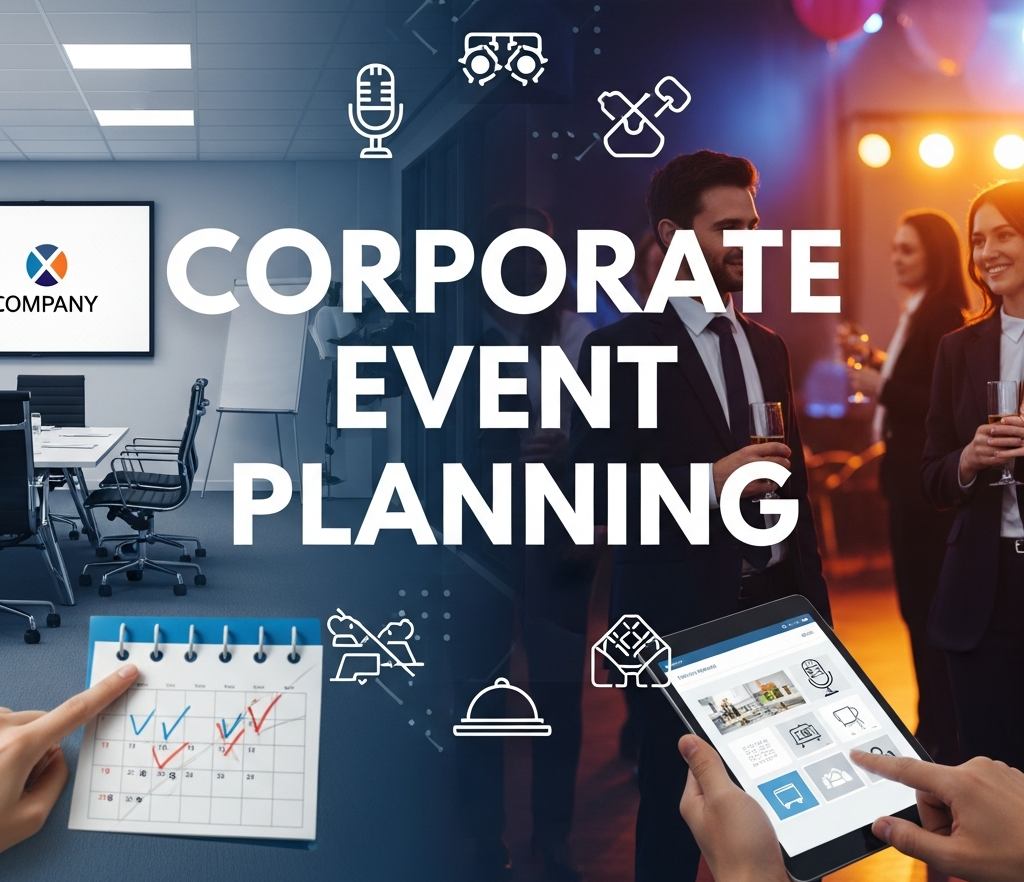
Corporate Event Planning: A Complete Guide for Successful Events
Author: Rohan Singh
9 minute read
Table of Content:
Corporate event planning is the difference between throwing a random party and pulling off something people won’t shut up about for months. A tight conference makes the brand look untouchable, a proper off-site gets the whole team fired up again, and stops good people from jumping ship. One smooth client dinner can land contracts that hundreds of cold emails never touch. Done right, these events create real stories (the kind that get retold over coffee). They build loyalty inside the company and trust outside.
This guide gives the exact playbook used on dozens of company events that actually moved the needle, no fluff, no guesswork.
What is Corporate Event Planning?
Corporate event planning is the end-to-end process of creating business-driven experiences that actually deliver results. It covers everything from the first “why are we doing this” meeting to the final thank-you email. At its core sits event planning for corporate events: turning a blank calendar date into a conference, retreat, product launch, team-building day, or client dinner that moves the needle.
The whole game starts with clear goals. No vague “networking” nonsense. Real objectives look like: launch the new software and get 200 demo sign-ups, run an off-site that drops the sales team’s burnout score, or host a dinner that turns three prospects into signed contracts. Every choice (venue, format, speakers, swag) flows from that goal.
It’s not party planning with a company logo slapped on. It’s a strategy of wearing a lanyard. Done right, these events shape how employees feel about the company, how clients see the brand, and how fast revenue actually grows.
Types of Corporate Events
Corporate events are now not restricted to one name, we have different types of it.
1. Conferences & Trade Shows
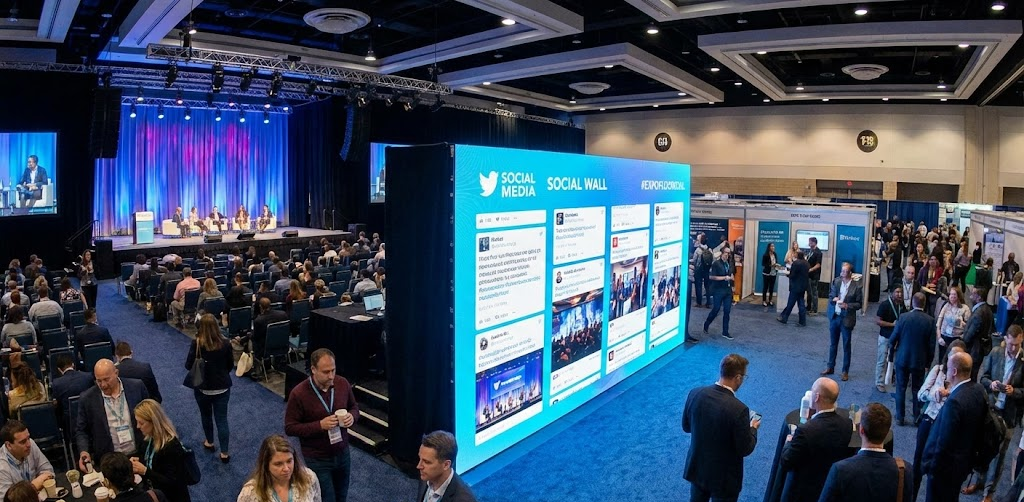
The big leagues. Keynotes, panel debates, expo floors, coffee-fueled hallway deals. These are where the company shows it belongs at the top. Attendees want fresh ideas and real contacts. Planners pack the schedule but leave gaps for magic to happen. A live social wall on giant screens pulls every branded post the second it goes up, turning quiet delegates into loud cheerleaders by lunch.
2. Team-Building Retreats
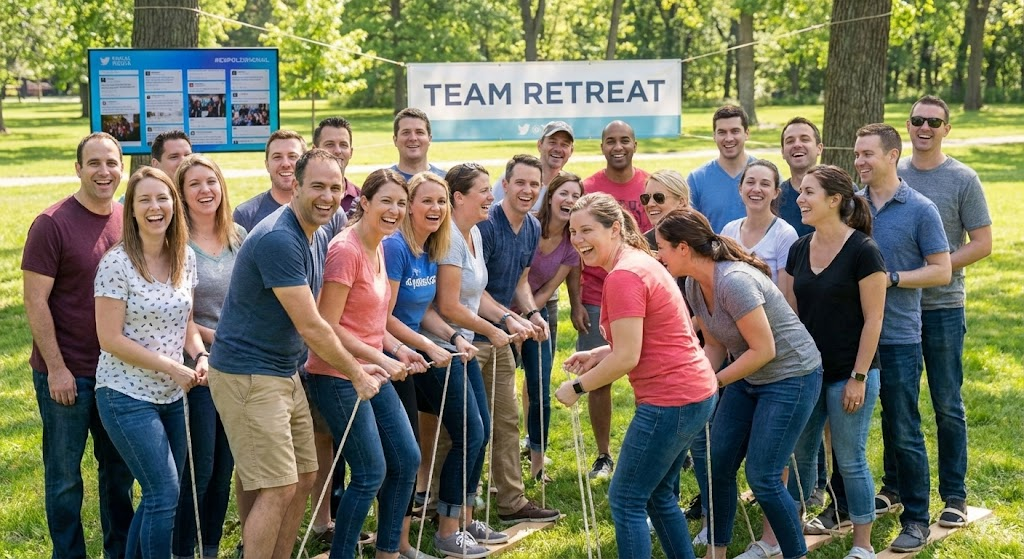
Get everybody out of the office, throw them into trust falls or cooking battles, then circle up for real talk. The point is tighter bonds and fresh energy. Mix hard fun with actual work so Monday feels different. A social wall collecting goofy pics and quick quotes keeps the vibe rolling long after the bus heads home.
3. Product Launches
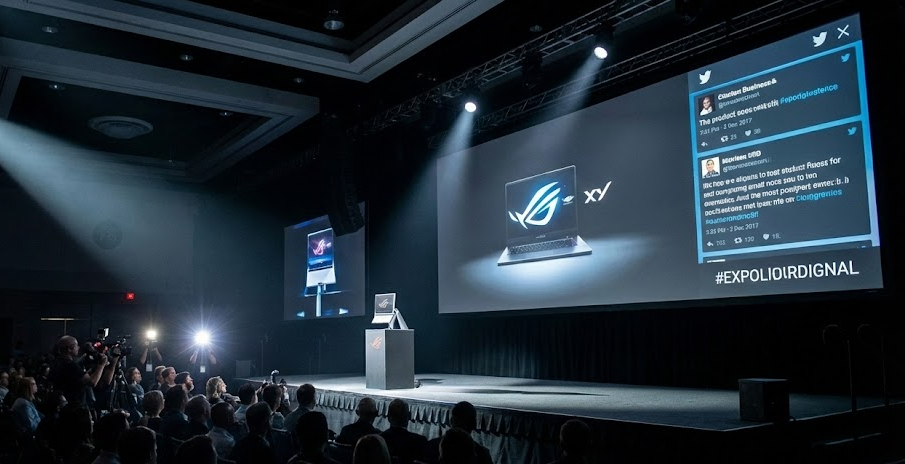
Lights, countdown, curtain drops, cameras flashing. The product owns the room. Demos run smooth, press gets exclusives, influencers post live. A social wall blasts first reactions across screens the moment the reveal hits. Suddenly the whole internet is talking about what just launched.
4. Holiday Parties & Celebrations
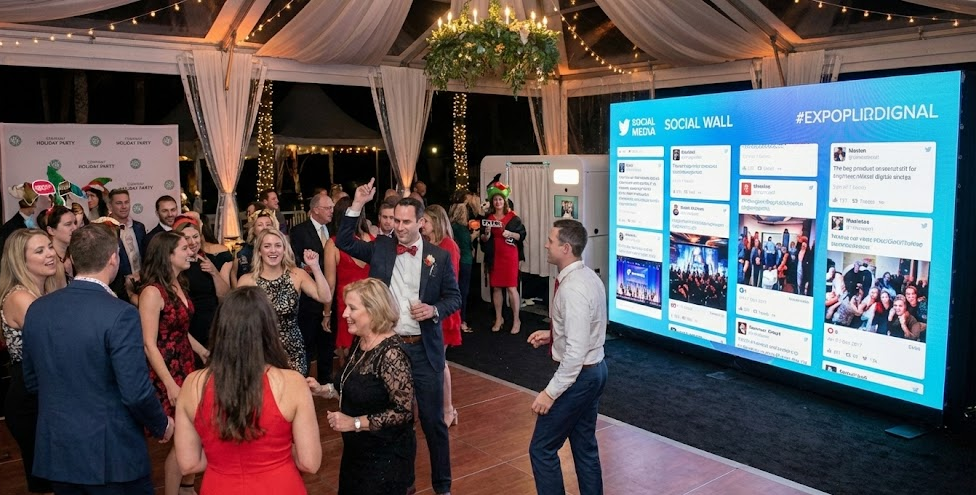
Open bar, awards, bad dance moves, zero shop talk. The one night nobody checks email. Feed people well, keep the photo booth rolling, run a social wall so every toast and ugly sweater ends up in the company chat by morning. Pure gratitude in action.
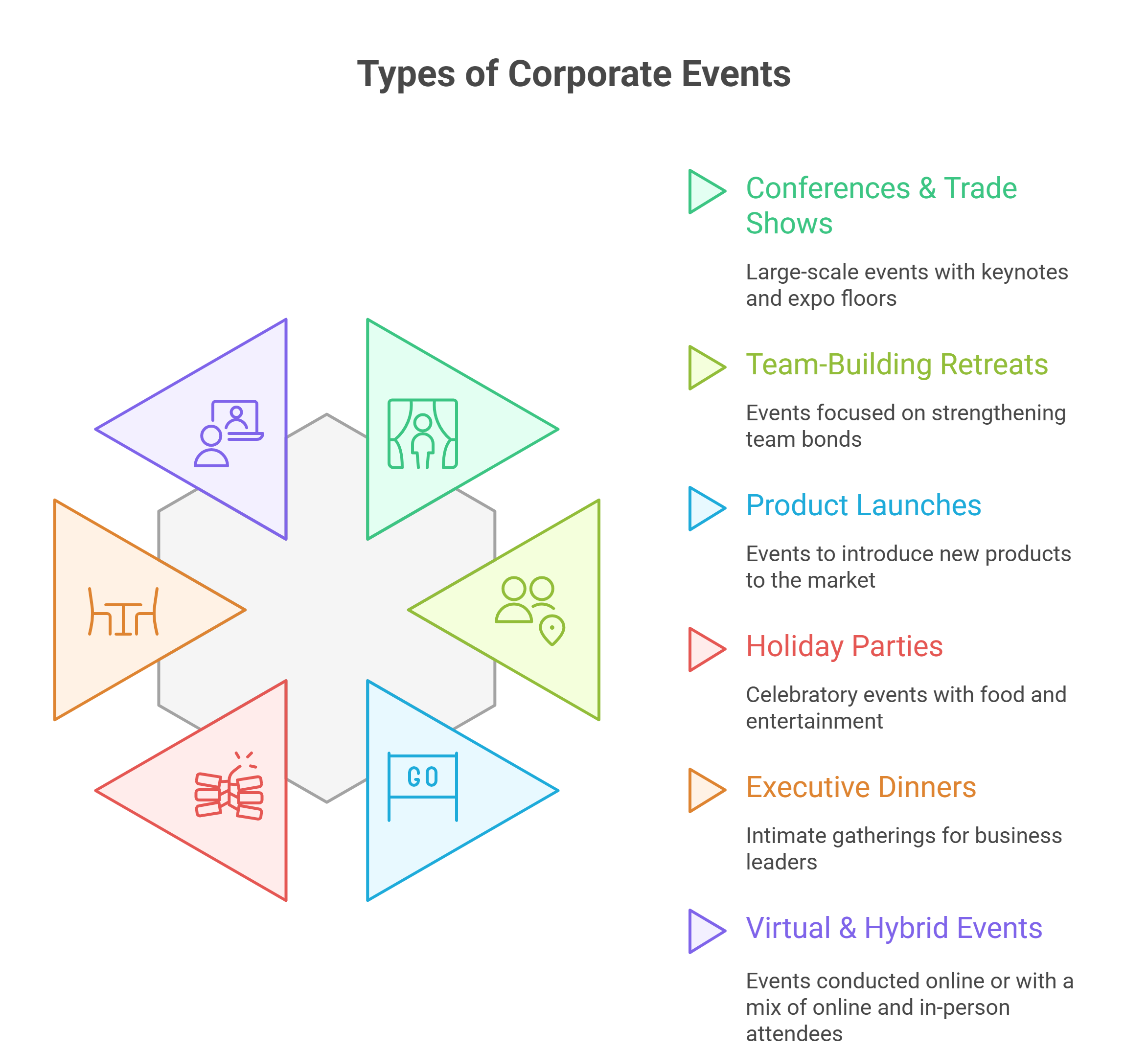
5. Executive Dinners or Meetings
Ten to thirty power players, perfect wine, zero PowerPoint. Seating charts matter more than the menu. Conversations close deals between courses. A quiet social wall in the corner lets people drop photos if they want; memories stay classy and private.
6. Virtual & Hybrid Corporate Events
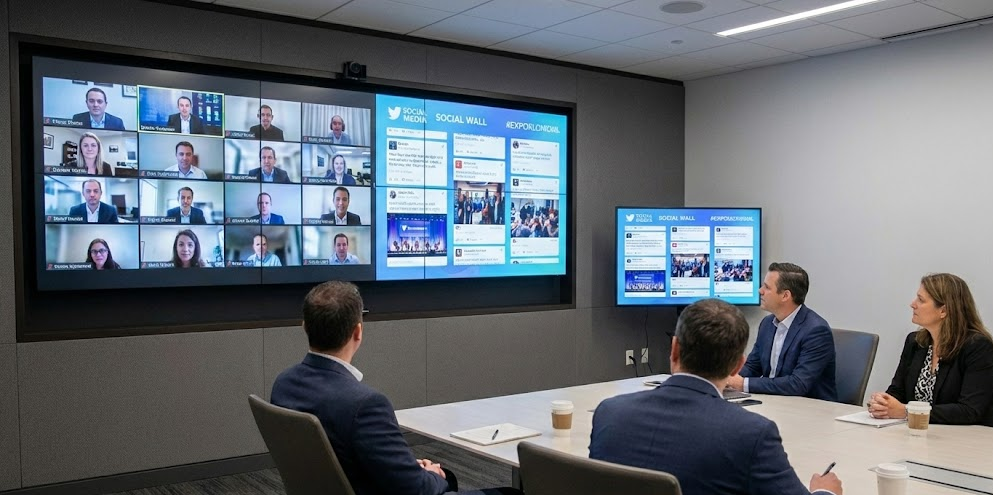
Global reach, lower cost, same impact. Virtual gets chat storms and breakout rooms. Hybrid and virtual events gives live VIPs plus digital passes. Two social walls (one on venue screens, one inside the platform) make sure everyone sees the same energy whether they flew in or logged in from the couch.
Turn Any Event Type Into a Win
Design the right experience for the right audience with Social Walls

 No Credit Card Required
Step-by-Step Corporate Event Planning Process
The event planning process is not that simple, hence to make it achievable for you, here are few steps that you can follow to make your event successful.
Step 1 – Define Goals & Objectives
- Kick off with one sentence nobody can twist: “We leave with 200 booked demos and happier reps.” Make it specific, measurable, and tied to real business numbers.
- Write it on a sticky note and slap it on every screen in the war room. List the exact people who need to show up and why they care.
- If the goal is fuzzy, every decision after this becomes a coin flip. Nail it now, save months of drama later.
Step 2 – Establish Budget & Resources
- Open a fresh spreadsheet and dump every possible expense: venue deposit, coffee, Wi-Fi, speaker flights, swag, last-minute Uber rush.
- Add a fat 20% buffer because something always breaks. Chase sponsors early for cash or free stuff.
- Put one person in charge of updating the sheet daily and screaming when anyone goes rogue.
- Share the link with finance so nobody gets a heart attack when the invoice lands.
Step 3 – Choose Venue & Date
- Start hunting 9–18 months out unless you love paying double. Walk the space yourself, test the Wi-Fi with a speed app, check where the trucks unload. Lock two backup dates.
- Get cancellation terms in writing. Book the room that makes attendees say “damn, they thought of everything” instead of “why is it so cold in here?”
Step 4 – Create Event Marketing Plan (Hashtag Campaign)
- Pick a short hashtag the day the date is set (#Peak25). Build a 90-day war calendar: save-the-date, speaker drops, early-bird countdowns, partner blasts.
- Set up a social wall widget on the website and venue screens so every selfie becomes free advertising. Seed the hashtag early for hashtag campaign and watch the buzz build itself.
Step 5 – Arrange Logistics (catering, AV, transport)
- Book food that doesn’t make vegans cry. Get AV riders signed six weeks out. Arrange shuttles or ride-share codes so nobody circles the block for an hour.
- Create one master run-of-show Google Doc every vendor lives in.
- Test every mic and clicker the afternoon before, never the morning of, unless you enjoy public sweating.
Step 6 – Plan Engagement Activities (UGC walls, polls, gamification)
- Install Taggbox social walls on every big screen and inside the event app. Run live polls, photo contests, and a leaderboard for top hashtag posters.
- Give small fun prizes to winners. When people see their photos on the screen, they start posting more and the feed fills up fast. Energy stays sky-high from the first coffee to the last drink.
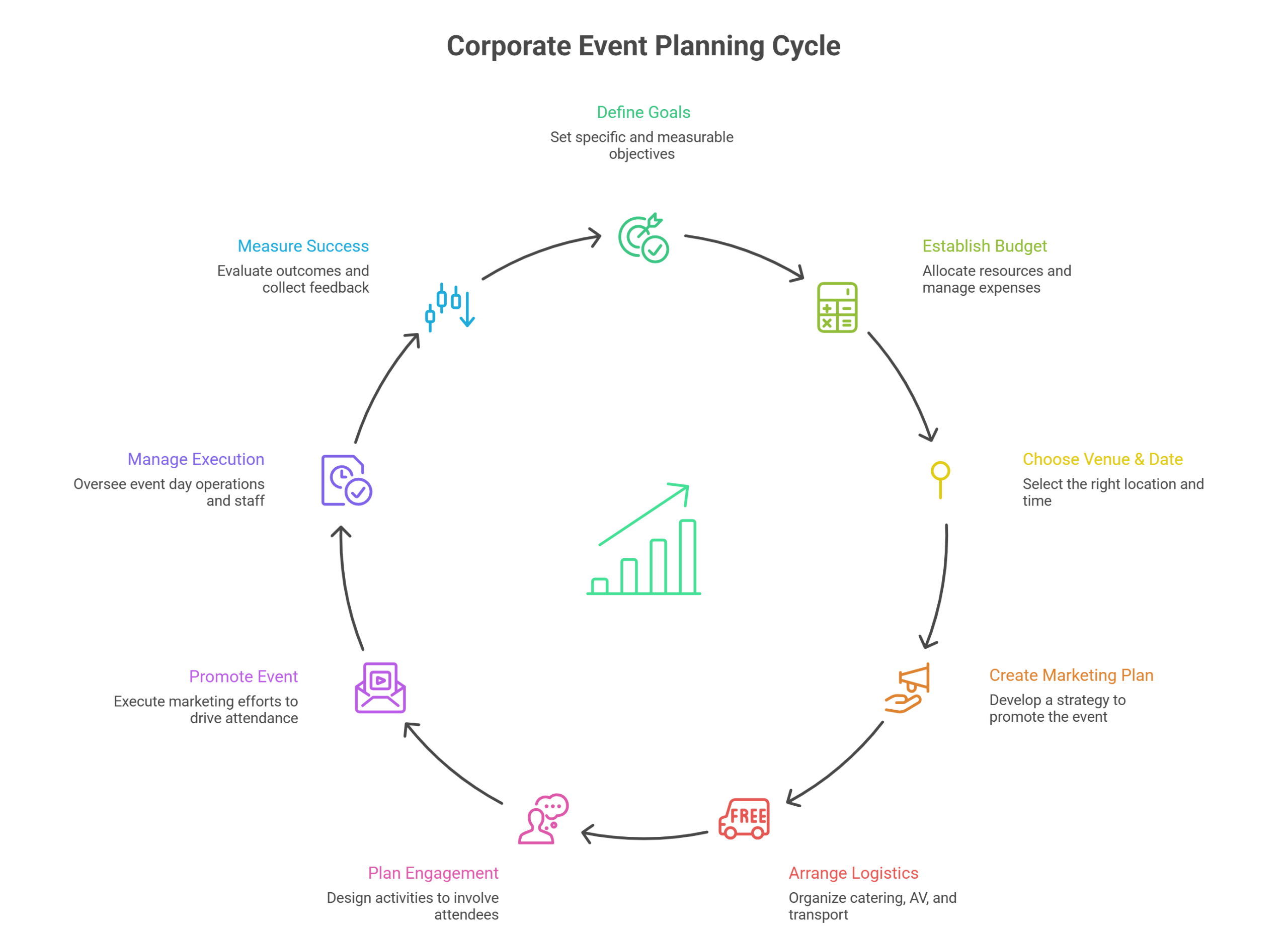
Step 7 – Promote the Event (Using Hashtag and all)
- Start the email drip 12 weeks out. Post daily on LinkedIn, send speaker toolkits so they brag to their lists.
- Run retargeting ads to anyone who visited the site.
- Keep the social wall clean and moderated.
- Hammer the hashtag until the second registration closes and the FOMO is unbearable.
Step 8 – Manage Event Day Execution
- Print the final run-of-show on paper for every lead. Do a 7 a.m. full tech rehearsal. Station runners with walkie-talkies.
- Keep one calm human owning the backstage WhatsApp group.
- Watch the social wall like a hawk so the first-timers walk in and immediately feel the party already started.
Step 9 – Measure Success & Collect Feedback
- Blast a five-question survey while they’re still buzzing, not next week. Pull hard numbers: attendance vs registrations, leads captured, cost per lead.
- You can use tools like Social Walls that provide you with details such as total posts, reach, and top photos.
- Screenshot everything, slap it in a deck, and show the boss why the next budget should be bigger.
Build Corporate Events That Run Smoothly
Use these step-by-step system that removes chaos from event planning.
No Credit Card RequiredHow to Plan an Event: Key Considerations
Before you plan your event, you need to keep a few things under consideration that can help your event to be the talk of the town.
1. Event Management Software
Pick one productivity tool that handles registration, check-in, badge printing, and attendee comms. Cvent, Eventbrite, or Hopin for hybrid. The right platform saves hundreds of hours and kills double-bookings. Export lists in one click, send reminders automatically, and track no-shows live. A decent system pays for itself the first time someone forgets to chase RSVPs manually.
2. Event Budget
List every line item up front: venue, food, AV, speakers, swag, marketing, staff travel, contingency. Real planners keep 15–20% buffer because something always breaks. Track spend in a shared sheet everyone can see. Sponsors can cut costs fast—offer them logo placement and a speaking slot for cash or in-kind.
3. Event Objective
Write one sentence nobody can misunderstand: “Get 120 mid-market CEOs to book demos” or “Make the sales team actually like each other again.” Every decision (from coffee brand to speaker choice) gets judged against that single line. No objective = no way to know if the event worked.
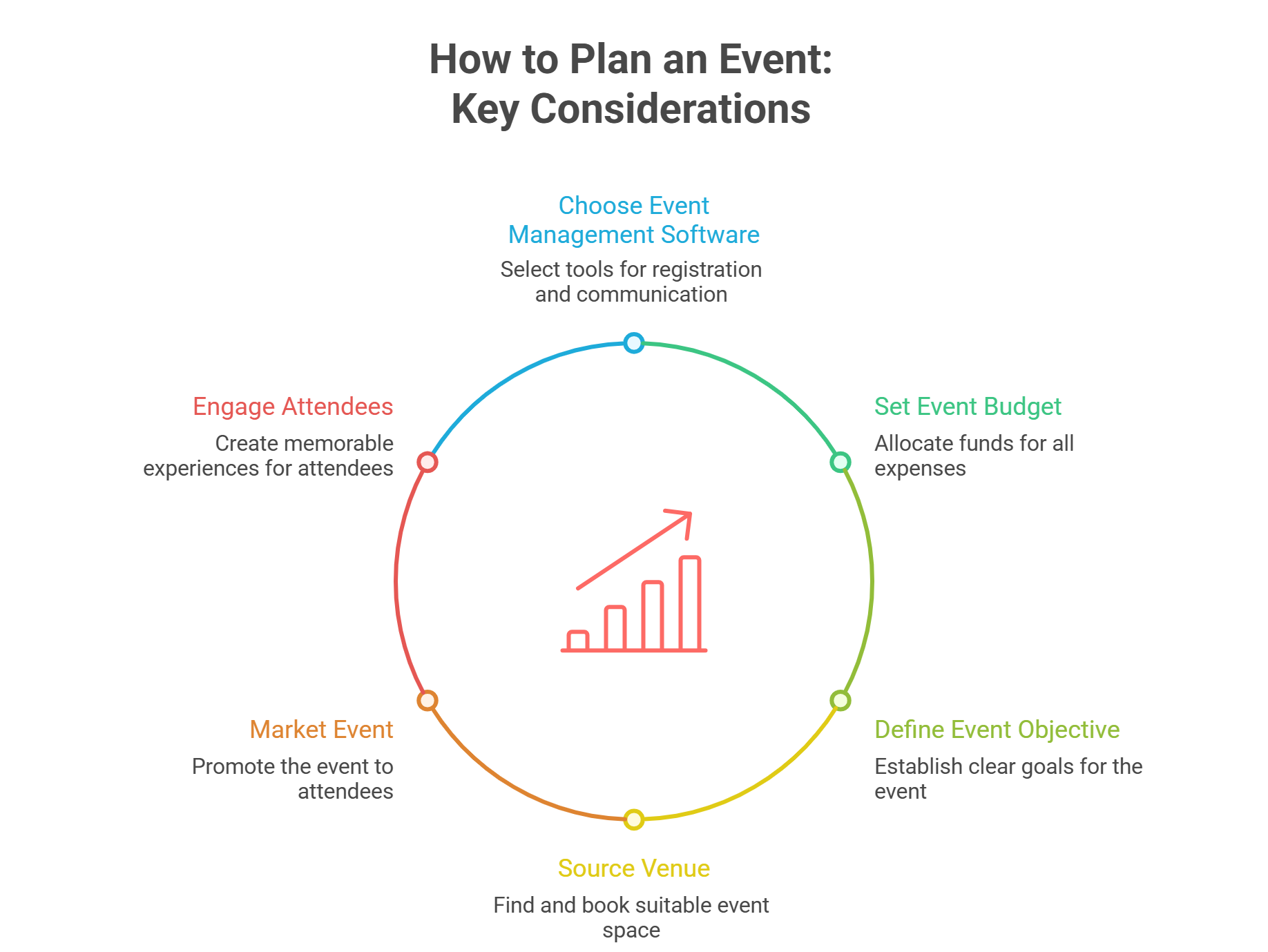
4. Venue Sourcing
Start looking 9–18 months out for big cities. Check capacity, AV packages, load-in times, parking, and Wi-Fi that actually works. Site visits are non-negotiable. Test the projector yourself. Book B-reel spaces (nearby hotel breakout rooms) in case numbers jump. Always get cancellation clauses in writing.
5. Event Marketing
For event marketing, build a hashtag the day the date is locked. Tease speakers, drop early-bird countdowns, run LinkedIn retargeting, and email the list hard. A live social wall on the website and inside the venue turns every attendee post into free advertising. Start the hype 90 days out and never let the foot off the gas until doors open.
6. Attendee Engagement
People remember how you made them feel, not the slide deck. Photo booths, quick polls, gamification, and a loud social wall showing their own posts on giant screens keep energy high. Tools like Social Walls can provide significant help as it enable you to conduct all the mentioned tasks. It is vital to have an excellent tool for your event, as it makes your every venture easy and manageable. Moreover, they can maintain high audience engagement. The more your audiences post, the more free marketing the event gets.
Start Planning Your Next Standout Corporate Event
Follow the process and create meaningful experiences with Us
No Credit Card RequiredConclusion
There you have it, these are steps that you can follow to have a successful corporate event. Keep in mind that a great corporate event planning is the foundation step of making the event talk of the town. So what are you waiting for? Follow the steps now and make your event memorable for all.

Rohan Singh is a dedicated content associate and writer with a passion for crafting compelling narratives that engage and inspire readers....