





机场数字标牌:革新航空,重塑旅客体验

作者: Rohan Singh/8 一分钟阅读/
Airport Digital Signage

Airports can feel like a whirlwind—last-minute gate changes, confusing signs, and the constant race against time. Digital signage in airports steps in like a calm guide, offering real-time flight information, clear directions, and smooth communication. With global air travel projected to reach 8.2 billion passengers annually by 2037, airport digital displays are no longer optional.. This blog explores how these systems, including innovative features like social media walls, address operational challenges and enhance the passenger experience, making it far more pleasant.

Challenges and Solutions

Airport Digital SignageAirports are complex, with thousands of travelers and flights creating a constant buzz. One can imagine how even a slight delay in sharing updates can lead to missed connections and frustrated passengers. Digital signage in airports addresses these challenges directly:

  • Challenge: Confusing layouts and outdated signs leave travelers lost.
    Solution: Airport wayfinding systems with interactive maps and real-time flight information guide passengers clearly, reducing stress.
  • Challenge: Flight changes or emergencies aren’t communicated quickly.
    Solution: Flight information display systems (FIDS) and airport emergency displays deliver instant updates, keeping everyone informed.
  • Challenge: Balancing efficient operations with passenger satisfaction.
    Solution: Digital airport communication systems streamline updates across terminals, saving staff time and boosting traveler trust.

Key Applications and Use Cases

Digital Signage on Airport
Digital signage in airports has emerged as a great help for commuters. Here are some of the use cases:

1. Flight Information Display Systems (FIDS)

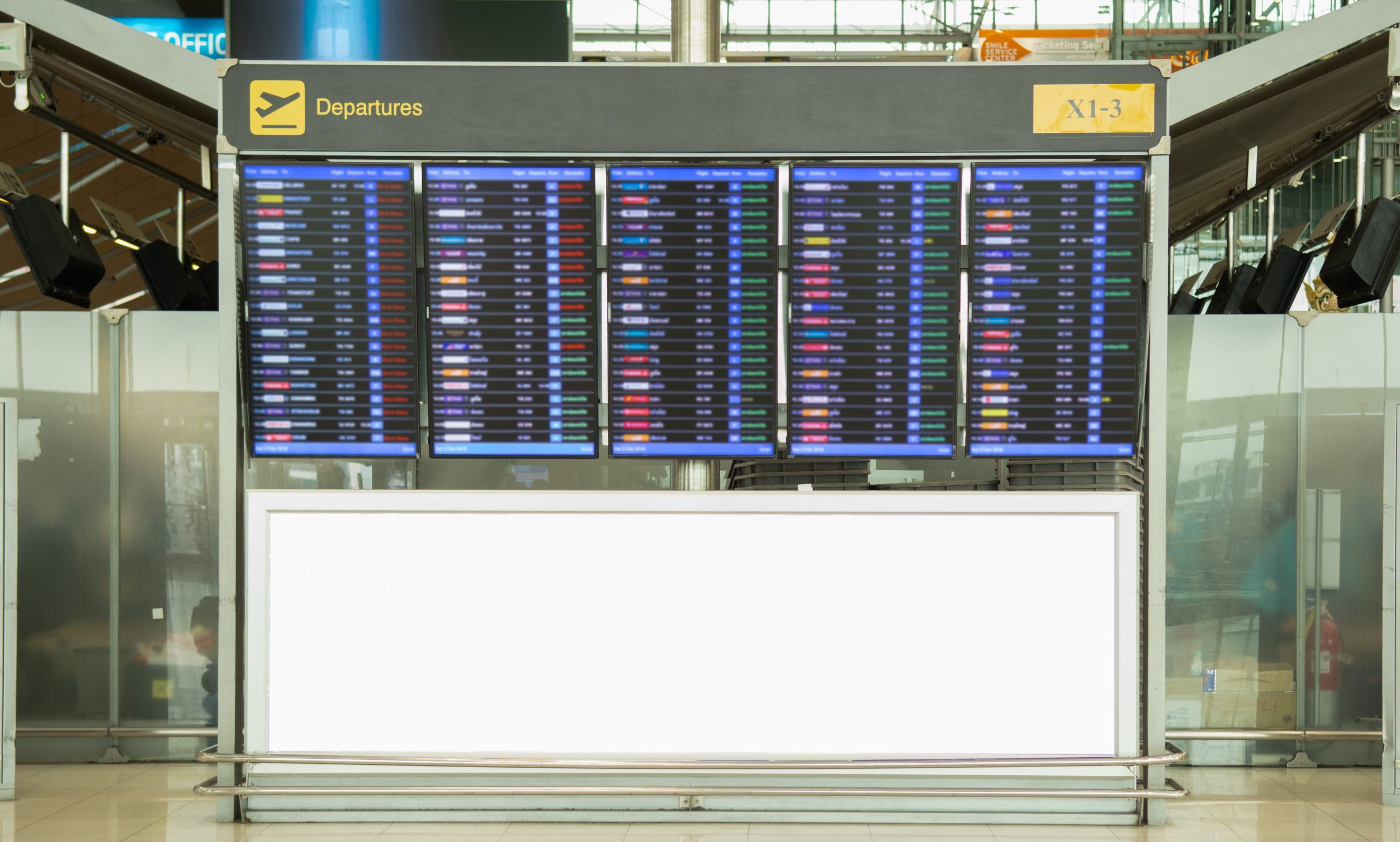
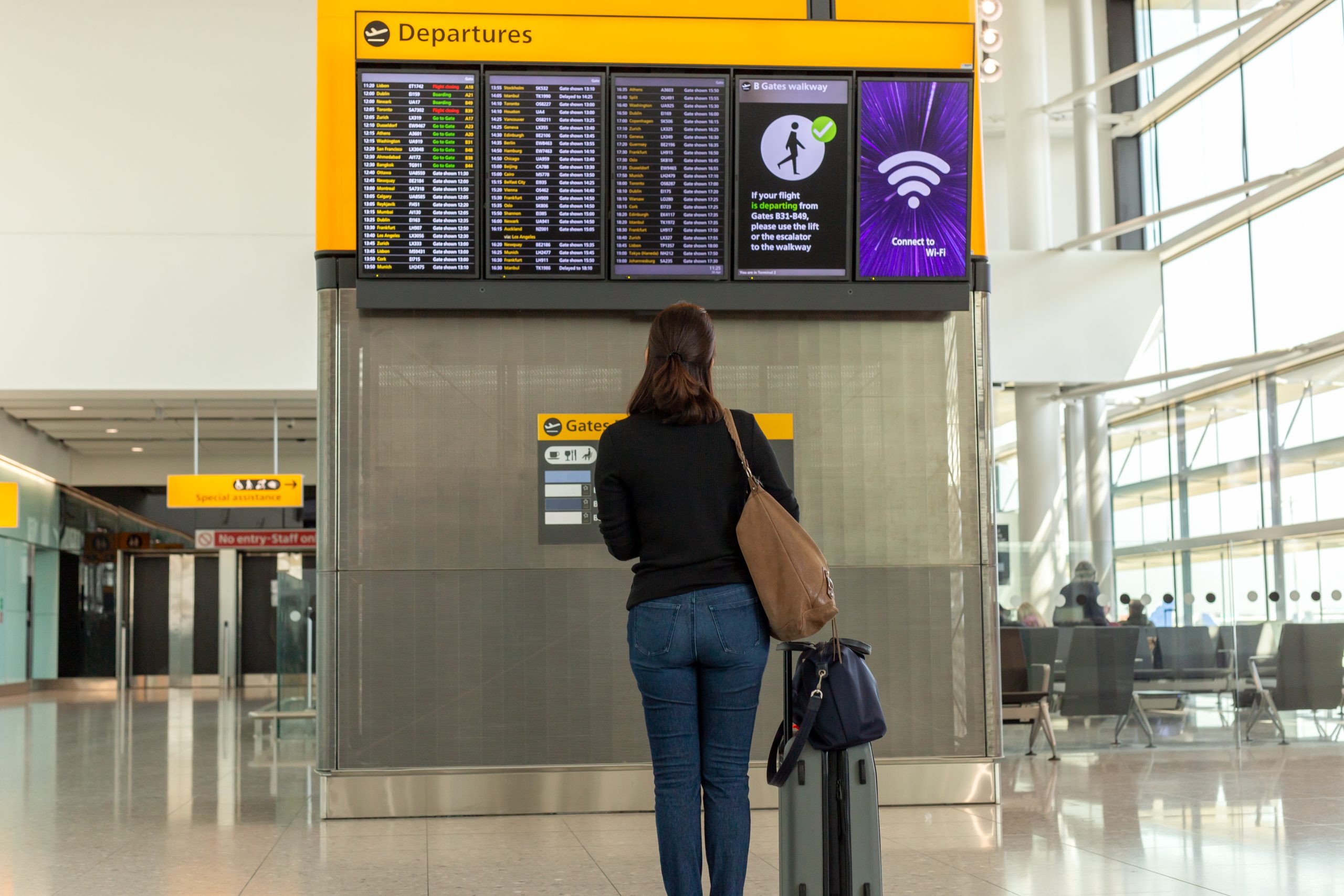
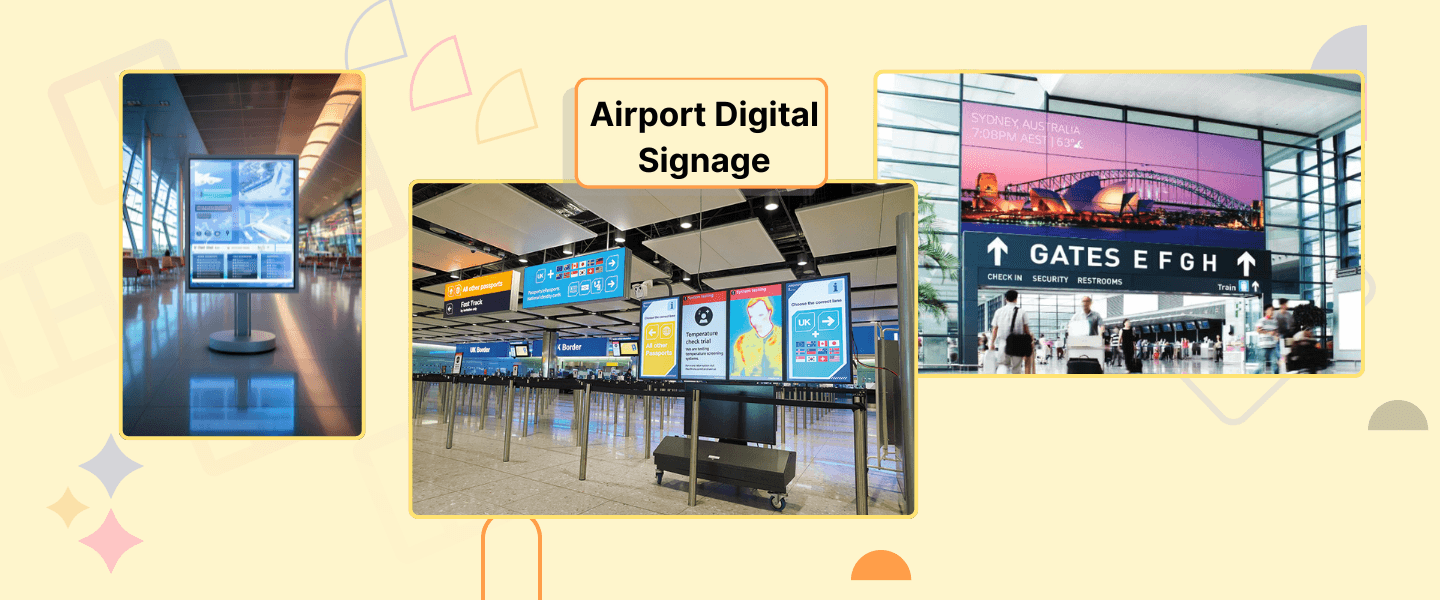
FIDS are the heart of airport digital displays. Positioned in high-traffic areas, these screens show flight schedules, gate changes, and baggage claim details instantly. For example, Singapore Changi Airport’s FIDS is often praised for being clear and plentiful, letting travelers check updates without chasing down staff. These systems free up airport teams to focus on other tasks.

2. Wayfinding and Navigation

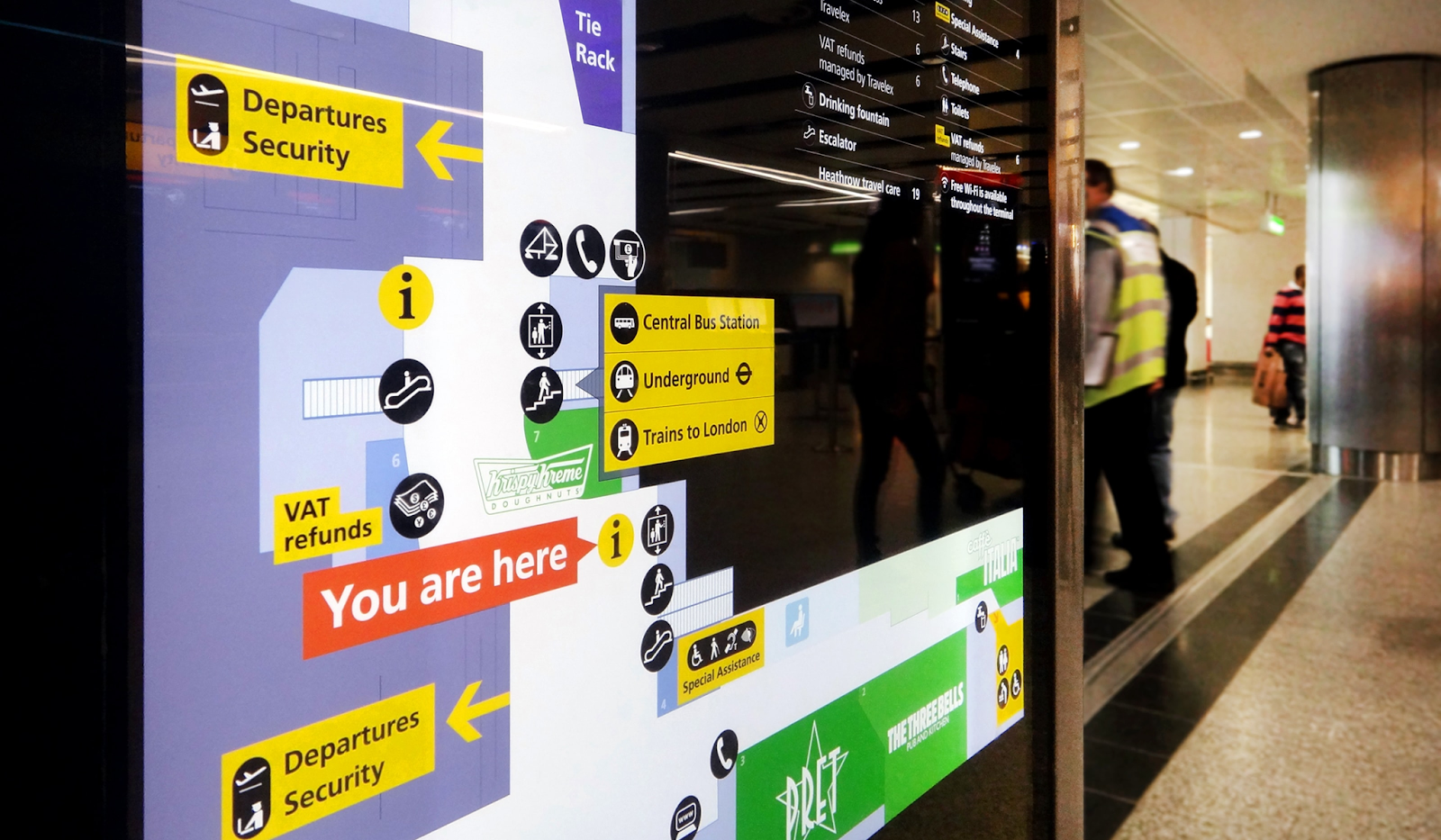
Getting lost in a massive terminal is no fun. Airport wayfinding systems make navigation simple with interactive kiosks and maps. Heathrow Airport’s digital maps display walking times to gates and nearby amenities like restaurants. These tools help travelers, especially those navigating unfamiliar airports, move with confidence.

3. Security and Emergency Communications

In a crisis, clear communication saves the day. Airport emergency displays broadcast urgent alerts, often in multiple languages with visuals or audio. Most people often comment on Dubai International Airport’s signage, which guides passengers calmly during emergencies, thereby enhancing safety and reducing confusion.

4. Commercial and Advertising Opportunities

Airport digital signage relies heavily on your awareness of where you are in the terminal—whether you’ve just arrived at the gate, stepped into immigration, or reached baggage claim. And if you’re preparing to fly to the US, it’s smart to sort out your connectivity before entering a new airport environment. Activating an eSIM for travel to USA ensures that the moment you land, your phone syncs seamlessly with digital signage, location prompts, and real-time alerts—making it easier to find your gate, baggage area, or connecting terminal.

Learn: How using digital signage at restaurants helps promote offers and improve guest satisfaction.

Impact and Advantages of Digital Signage on Airport

Digital Signage in Airport
Digital signage in airports has a highly positive impact on the industry because of the benefits it carries. Here are some of the major advantages of digital signage in airports.

1. Enhanced Passenger Experience

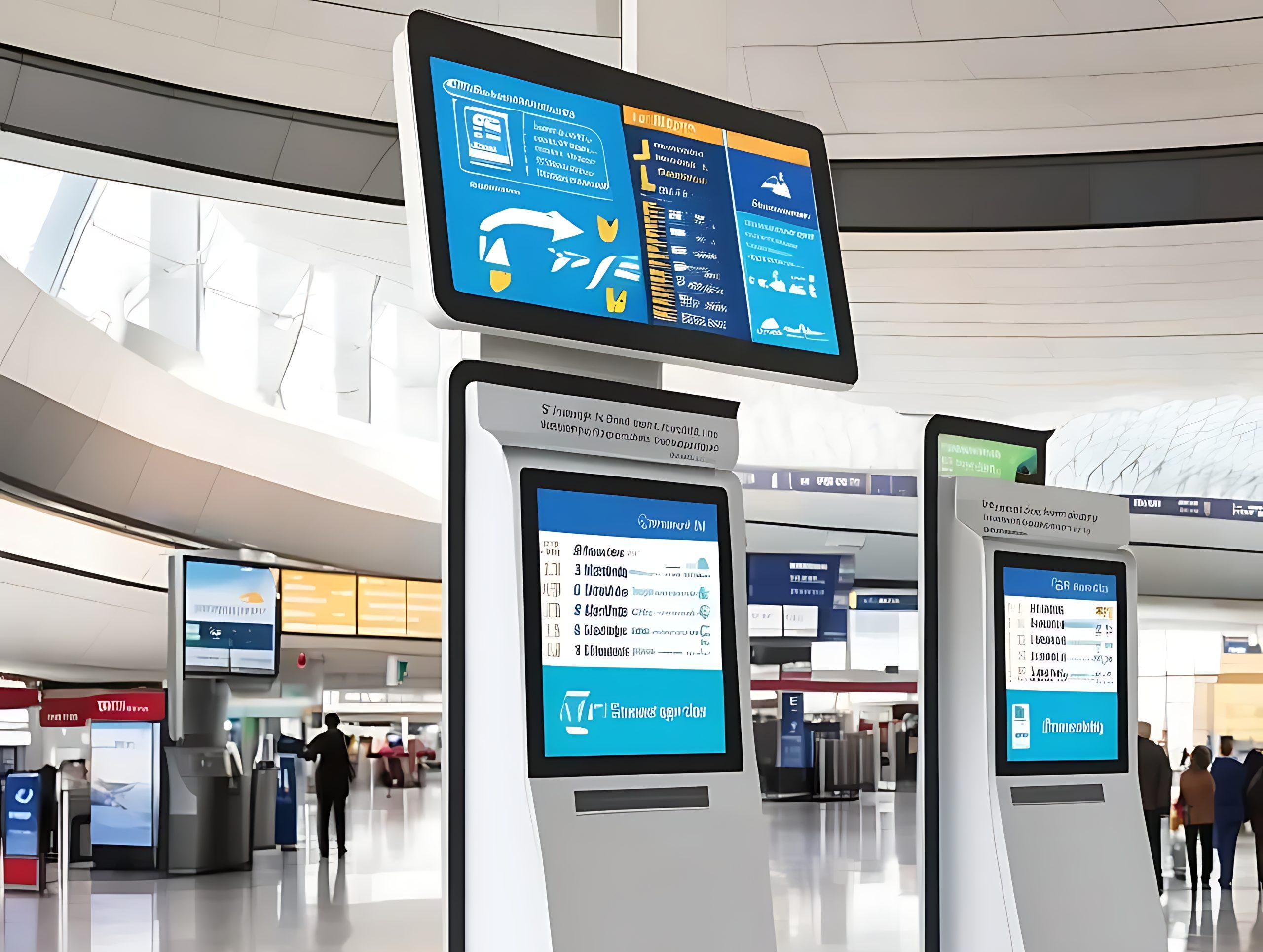
Digital signage in airports transforms trips from chaotic to smooth. Real-time flight information on FIDS keeps passengers updated on delays or gate changes, easing anxiety. Interactive airport kiosks, like those at Vancouver International Airport, let travelers find coffee shops or book duty-free items. One traveler in a YouTube comment called these kiosks a “lifesaver” for turning a dull layover into a chance to explore airport amenities.

2. Operational Efficiency Improvements

Centralized systems allow staff to update airport digital displays instantly, reducing errors and saving time. You can see how Delta Airlines cut security wait times by 15% using smart signage. These smart airport technology solutions integrate with flight databases and security systems, keeping lines moving and operations humming.

3. Real Time Updates

The social wall display allows you to update on-screen information in real time, making it ideal for environments like airports where last-minute changes and announcements are frequent. Whether it is a change of gates for a flight or a delay in departure, everything can be updated at once via effective digital signage at airports.

4. Smooth Wayfinding

One major problem at airports that can be easily solved by placing digital signage is wayfinding. Finding the right gate for the flights can be a hassle for travellers, but with a screen constantly updating them with directions, it can be very convenient.

5. Retail Boost

Shops at the airport can enhance their visibility by displaying themselves on digital signage. With eye-catching visuals and important information about products and services, they can attract any passenger waiting for their flight. They can also use the signage to display people using their product or positive reviews posted by their existing customers to build trust. Tools like Social Walls can help them do the same with ease.

Explore: Creative ways to use Retail digital signage to attract and retain more customers.

Technology Trends and Innovation

Digital Signage at Airport
Just like the world is evolving, technology in digital signage at airports has also been evolving. This shift is part of the broader digital transformation in aviation, which is revolutionizing how airports operate, communicate, and enhance passenger experience. Here are some of the technology trends and innovations.

1. Social Media Walls

Social media walls are vibrant screens displaying real-time posts from travelers, like an Instagram snap of a sleek airport lounge. Tools like Social Walls make it easier to collect and showcase social media content on screens. These walls can create a lively atmosphere in waiting areas, encouraging passengers to share their experiences online. It makes travelers feel connected, and with the airports’ story, they boost engagement.

2. Smart Integration and Connectivity

Smart airport technology solutions rely on seamless connections. IoT links signage to flight data, mobile apps, and baggage trackers. Sensors predict wait times and display them on screens, helping travelers decide whether to grab a snack or head to security. This integration keeps everyone on the same page.

3. Interactive and Touch-Free Solutions

Post-COVID, hygiene is a priority. Interactive airport kiosks now use gesture controls or voice commands. These AI-driven kiosks respond in multiple languages, making navigation easier for international travelers and earning praise in YouTube comments for accessibility.

4. Advanced Display Technologies

Holographic staff at London Luton or massive LED walls at Istanbul Airport? These advanced display technologies grab attention. One can guess how vibrant, high-definition displays ensure travelers notice critical updates while adding a modern, sleek vibe to terminals.

Checkout This: If You Want To Add Digital Signage to Your Lobby.

Implementation Best Practices

Digital Signage on Airport
For digital signage in an airport to shine, it is important to follow best practices. Here are a few of them:

1. Strategic Placement and Design

Position airport digital displays in busy areas, such as check-in counters, gates, and baggage claim, for maximum impact. A Vantage Group YouTube video praised LaGuardia’s signage for showing walking times to gates, calling it a traveler’s dream. Clean designs with bold fonts, like those at Heathrow, reflect strategic design solutions that ensure readability for all.

2. Content Management and Updates

A centralized system for digital airport communication lets staff update screens instantly. One dashboard controls everything, keeping flight information and ads up to date. Regular updates prevent outdated info from confusing travelers.

3. Technical Infrastructure Requirements

Reliable Wi-Fi and durable hardware, like Faytech’s industrial touchscreens, are essential. A Future Travel Experience YouTube video emphasized that robust infrastructure prevents glitches, ensuring screens stay operational in busy environments. Moreover, a social media wall in airports can also keep travelers engaged. Social Walls is a prominent tool that makes this process simple and smooth.,

4. Technical Challenges

Cybersecurity is a concern; digital systems need strong encryption to avoid hacks. Compatibility with older airport systems can also slow implementation, requiring careful planning. Airports are also beginning to adopt identity security practices, such as protecting non-human identities (service accounts) that signage platforms rely on, to reduce the risk of breaches and prevent data leakage that could compromise both passenger information and operational integrity. As airports become smarter and more connected, keeping systems secure from anywhere is crucial. A remote access VPN lets authorized teams log in safely to monitor or update systems offsite without risking sensitive data. The real challenge is finding that balance between easy access and airtight security.

5. Operational Challenges

Staff training is key to avoiding outdated signage. A Wavetec YouTube video emphasized the importance of clear protocols for updates and maintenance to keep systems running smoothly, ensuring travelers receive accurate information every time.

Conclusion

Digital signage in airports is more than flashy tech; it’s a travel game-changer. From flight information display systems that deliver real-time flight information to airport wayfinding systems that guide passengers through terminals, this technology makes trips smoother. With airport digital signage ROI driving revenue and a huge number of passengers expected per day for the next few years, these systems are setting airports up for success. Next time a terminal feels overwhelming, those airport digital displays are working hard to guide travelers to their gates with ease and a smile.

相关文章

数字标牌

谷歌评论数字标牌 – 提升信任度和参与度

您知道您的 Google 评论可以在线下的世界里发挥神奇作用吗?在您的商店、活动和其他地点等各种销售点勤奋地展示它们,可以显著提升您的转化率。在社交屏幕上展示 Google 评论可以帮助您做到这一点。战略性地放置它们可以建立信任 […]

jennet
jennetAugust 28, 2025
谷歌评论数字标牌 – 提升信任度和参与度
数字标牌

数分钟内设置 Instagram 数字标牌

厌倦了无人问津的单调数字标牌?静态内容会被忽视,但为什么不设置一个Instagram数字标牌呢?它不仅能让您的品牌在屏幕上产生社交热议,而且实时内容传递将前所未有地提升参与度。无论是您的商店、咖啡馆、办公室还是任何[…]

jennet
jennetJuly 25, 2025
数分钟内设置 Instagram 数字标牌
数字标牌

医院数字标牌:提升患者体验

医院是一个高压环境,即使是微小的延误也可能危及生命。从在复杂的建筑中导航到接收准确、及时的信息,患者和访客常常会感到困惑和压力。因此,对改善患者体验的需求促使人们投资于医院数字标牌。如果您作为医疗服务提供者,您[…]

Wagisha Adishree
Wagisha AdishreeJuly 24, 2025
医院数字标牌:提升患者体验
Airport Digital Signage Making Travel Easy – Social Walls